

An unexpected employee complaint can turn into a costly legal battle before a business has time to react. EPLI helps companies prepare for risks tied to workplace disputes.
Many owners ask what is EPLI insurance when they want protection from claims involving employees, applicants, or former workers. The right coverage can help manage defense costs and settlements.
EPLI can be valuable for businesses of all sizes because workplace claims may arise from everyday decisions like hiring, discipline, or termination. It also helps clarify what does EPLI cover before problems occur.
Readers will understand the claims EPLI may address, how coverage works, and why strong workplace practices matter when managing employment risks for long term business protection and greater workplace confidence in the future too.
What Is EPLI Insurance?
Employment Practices Liability Insurance (EPLI) is a type of business coverage designed to protect employers against claims brought by employees, former employees, and job applicants over alleged unlawful treatment in the workplace.
It can help cover attorney fees, court costs, settlements, and judgments, depending on policy terms. Companies can purchase EPLI as a standalone policy, add it as an endorsement, or bundle it within a Business Owner’s Policy or commercial package.
Importantly, general liability insurance does not typically extend to employment-related disputes, which is why many businesses add EPLI separately to close that coverage gap and manage workplace legal risk.
What Does EPLI Cover?
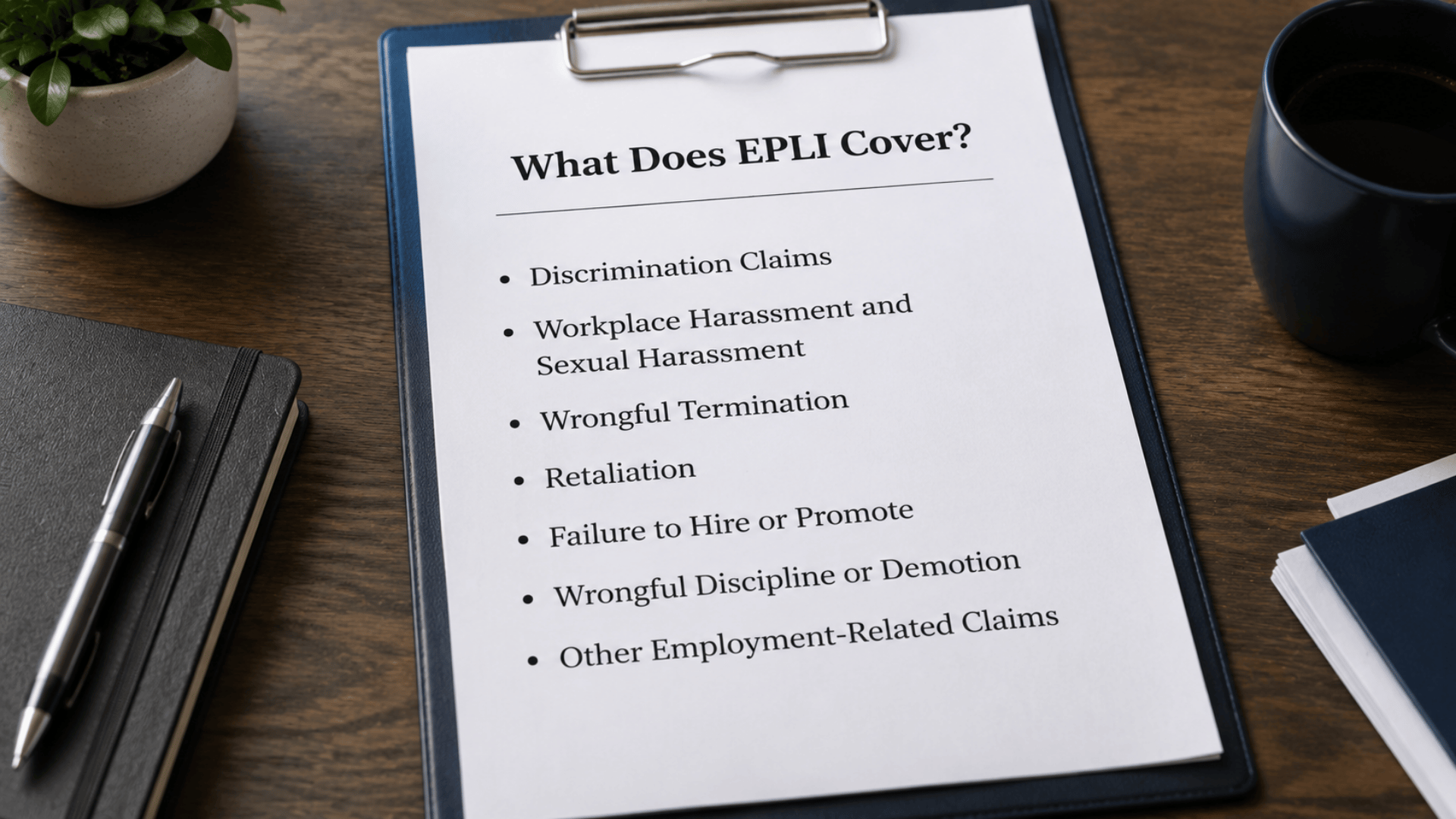
EPLI commonly covers allegations that an employer treated an employee, applicant, or former employee unlawfully during hiring, employment, promotion, discipline, or termination.
Here are the main types of claims it typically addresses:
1. Discrimination Claims
Coverage may apply to allegations involving discrimination based on protected characteristics, which can include discrimination based on religion, race, and more. The following are covered:
- Race
- Color
- Religion
- Sex
- National origin
- Age
- Disability
- Other categories protected by state or local law
Keep in mind that the protected classes actually covered can vary by jurisdiction and by policy.
2. Workplace Harassment and Sexual Harassment
EPLI often responds to allegations involving sexual harassment, hostile work environments, and unlawful workplace harassment claims. Depending on the policy, coverage may apply to conduct by managers, supervisors, coworkers, or third parties.
Such claims can involve various workplace behaviors that create legal risks and require defense support under applicable policies.
3. Wrongful Termination
Coverage frequently extends to allegations that an employee was improperly dismissed. This may include claims involving retaliatory discharge, constructive discharge, and termination allegedly based on discrimination.
EPLI policies can help address defense costs and legal risks arising from these employment disputes when covered under the terms of the applicable policy.
4. Retaliation
Retaliation claims often arise when an employee alleges an adverse action after reporting discrimination or harassment, filing a complaint, participating in an investigation, or exercising legally protected rights.
EPLI may provide coverage for defense costs and related legal expenses associated with these employment disputes when included under the policy terms.
5. Failure to Hire or Promote
EPLI may respond to allegations involving discriminatory hiring decisions, failure to promote, or denial of career opportunities.
These claims can arise when applicants or employees believe employment decisions were unfairly influenced by protected characteristics. Coverage may help address legal defense costs and related expenses under the terms of the policy.
6. Wrongful Discipline or Demotion
A policy may cover situations where an employee claims that disciplinary action, demotion, or another adverse employment decision was unlawful.
EPLI coverage can help address defense costs and related legal expenses arising from these workplace disputes when included under the policy terms and conditions.
7. Other Employment-Related Claims
EPLI may extend beyond common workplace disputes and address several additional employment-related allegations. The exact protection depends on the policy terms, exclusions, and coverage limits.
- Breach of employment contract
- Defamation
- Privacy violations
- Emotional distress
- Mismanagement of employee benefits
- Certain FMLA-related allegations
These additional claims show why businesses should review EPLI policies carefully before selecting coverage. A clear understanding of policy details can help avoid unexpected gaps.
Who Can Make an EPLI Claim?
EPLI is not necessarily limited to lawsuits from current employees. Potential claimants may include:
- Current employees
- Former employees
- Job applicants
- Temporary or seasonal employees
- Leased employees
- Independent contractors, under some policies
- Vendors or other third parties where third-party coverage applies
The important qualification here is that the categories of claimant a policy will recognize differ from one insurer to the next.
Two policies that look similar on the surface can treat contractors or third parties very differently, so it pays to read the definitions closely.
What Is Not Covered by EPLI?
EPLI does not cover every workplace dispute, and this is one of the areas where businesses run into trouble by assuming too much. Common exclusions or limitations may include:
- Intentional dishonest or criminal acts
- Bodily injury
- Property damage
- Workers’ compensation claims
- Certain wage-and-hour violations
- OSHA violations
- ERISA claims
- National Labor Relations Act claims
- WARN Act claims
- Cyber-related privacy breaches
- Certain punitive damages where prohibited or excluded
There is some nuance worth flagging. Wage-and-hour defense coverage, for instance, may sometimes be available separately or included on a limited basis, even though full wage-and-hour liability is usually excluded.
Because exclusions vary so significantly between insurers, the safest approach is to review the actual policy wording rather than assuming a particular workplace claim will be covered.
How Does EPLI Work When a Claim Is Filed?
When a workplace dispute turns into a formal complaint, EPLI coverage follows a fairly predictable process. Here’s how a typical claim moves from report to resolution:
- An employee, former employee, or applicant makes an allegation or files a lawsuit against the business.
- The employer promptly reports the claim to the EPLI insurer, since most policies require timely notice.
- The insurer reviews the allegation to determine whether it falls within the policy’s covered claims and terms.
- If the claim qualifies, the insurer typically assigns defense counsel or approves legal representation to manage the case.
- Covered defense costs, such as attorney fees and court expenses, are paid out as the case progresses, subject to policy limits and deductibles.
- If a settlement or judgment results, the insurer may cover that amount as well, depending on coverage terms.
One detail worth understanding upfront: most EPLI policies are written on a claims-made basis, meaning coverage depends on when the claim is reported, not just when the underlying conduct occurred. Reviewing retroactive dates and reporting deadlines in advance can prevent coverage surprises later.
EPLI vs. General Liability Insurance
EPLI and general liability insurance protect businesses from different types of risks. While EPLI focuses on employee-related claims, general liability typically handles injuries, property damage, and third-party incidents.
The table below highlights the key coverage differences between EPLI and general liability insurance:
|
Coverage |
EPLI |
General Liability |
|---|---|---|
|
Employment discrimination |
Often covered |
Usually not covered |
|
Workplace harassment |
Often covered |
Usually not covered |
|
Wrongful termination |
Often covered |
Usually not covered |
|
Retaliation |
Often covered |
Usually not covered |
|
Customer bodily injury |
No |
Typically covered |
|
Third-party property damage |
No |
Typically covered |
Because these two policies address different categories of liability, many businesses end up needing both rather than choosing between them.
Which Businesses Should Consider EPLI?
EPLI can be relevant to businesses of almost any size that hire employees, interview job candidates, promote or discipline workers, terminate staff, or handle complaints about harassment or discrimination.
In short, any company with people on payroll carries some level of employment-practices exposure.
Small businesses may be especially vulnerable, since they often lack dedicated HR or employment-law resources to catch issues early.
Even a routine termination or hiring decision can unexpectedly lead to a claim. While EPLI isn’t legally required, it’s a practical risk-management decision for employers who want to protect their business from the financial impact of employment-related disputes.
How Businesses Can Reduce Employment Practices Claims
Coverage matters, but reducing the odds of a claim in the first place matters just as much. Practical steps include:
- Maintain written employment policies.
- Create clear anti-harassment and anti-discrimination procedures.
- Establish complaint-reporting channels.
- Train managers and employees.
- Document hiring, performance, disciplinary, and termination decisions.
- Use clear job descriptions.
- Investigate complaints consistently.
- Regularly review policies for changes in employment law.
Sound risk management like this can lower a business’s exposure considerably. It won’t eliminate the possibility of a claim entirely, but pairing good practices with the right coverage puts a company in a far stronger position when a dispute does arise.
Conclusion
Workplace disputes can affect a company’s finances, reputation, and daily operations. Having the right protection helps business owners handle employment risks with more confidence.
Knowing what is EPLI insurance allows employers to make better decisions about protecting their teams and reducing the impact of costly claims. It also makes it easier to evaluate what does EPLI cover before selecting a policy.
EPLI is one part of a broader risk plan that works best alongside fair workplace practices, clear policies, and proper documentation. Preparing early can help businesses respond more effectively when challenges arise.
Review your business risks today and consider whether EPLI coverage fits your needs.
Frequently Asked Questions
Does Every Business Need EPLI Insurance?
No, EPLI is not mandatory for every company. However, businesses with employees, hiring processes, or management responsibilities may consider it to reduce financial risks linked to workplace-related legal disputes.
How Much Does EPLI Insurance Usually Cost?
EPLI costs vary based on factors like business size, number of employees, industry, claims history, coverage limits, and policy terms. Smaller businesses may pay less than companies with higher workplace exposure.
Can EPLI Help with Employee Lawsuits Before They Reach Court?
Yes, EPLI may help with legal defense costs when a covered claim is reported. Early support can help businesses manage attorney expenses, negotiations, and potential settlements during disputes.