

Your HR team just signed an ASO deal, and now everyone has questions. What changed? Who handles what now?
Most large employers today self-fund their health plan instead of buying a fixed insurance policy, and questions about the ASO meaning tend to follow right after signing.
This blog walks through both sides of ASO: health insurance and HR. By the end, you’ll know exactly what your company signed up for.
What Does ASO Mean?ASO stands for Administrative Services Only. Under this setup, the employer pays for its own employee benefits. A separate company handles the paperwork, claims, and daily tasks. The meaning of ASO shifts a bit by field. In health insurance, it means a self-funded plan run by an outside administrator. In HR, it can mean a wider deal that covers payroll, benefits, and compliance work. Either way, the employer keeps control of the money and pays only for services it actually uses. |
What Does ASO Mean in Health Insurance?
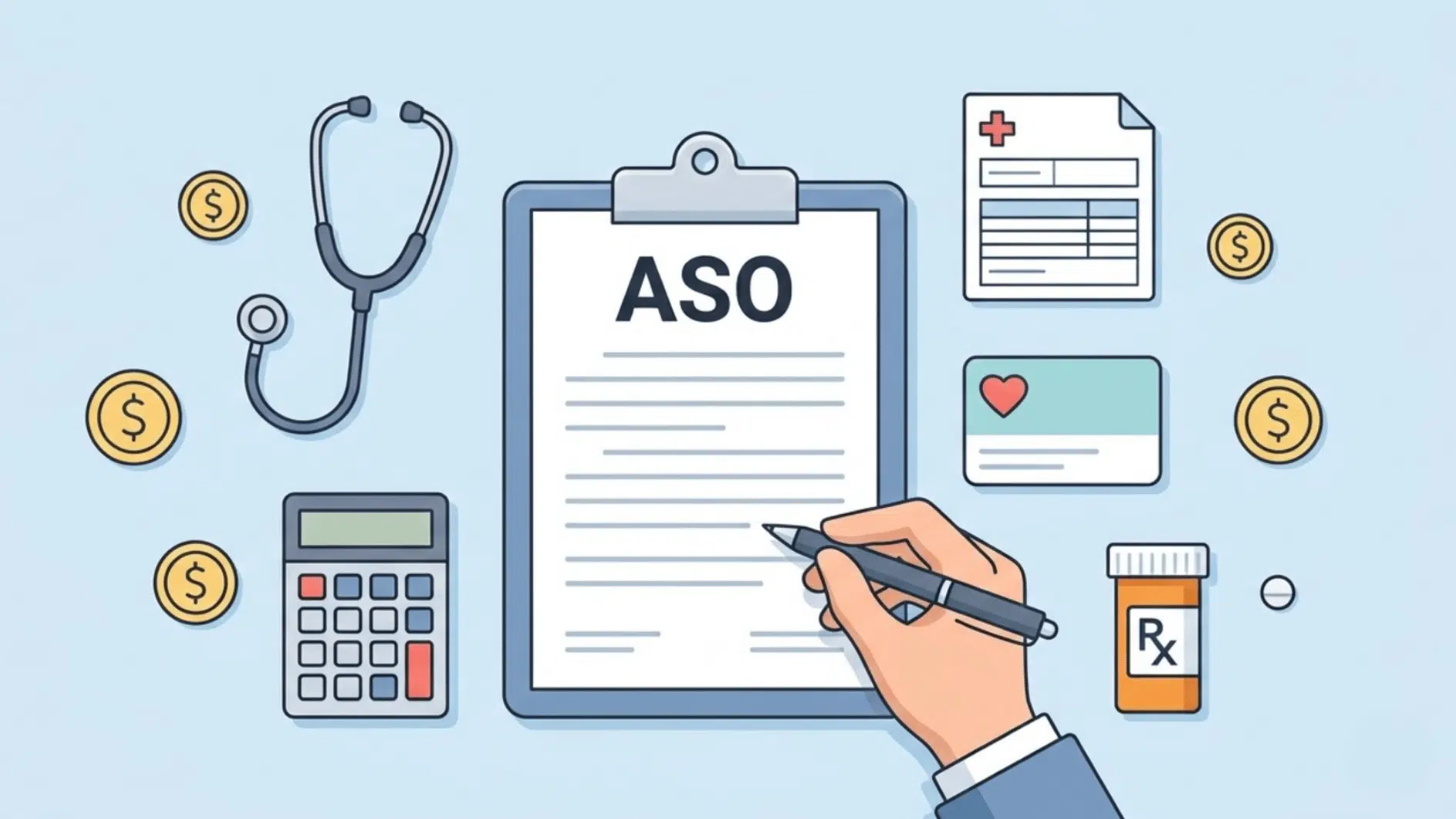
An ASO health plan flips the usual insurance model: the employer pays real claims as they happen, while an outside administrator runs the plan day to day.
The employer still decides what’s covered and carries the cost when claims run high.
1. Employer Funds the Health Plan
Costs move with claims volume, dropping in a light-claims year and rising in a heavy one, so the company’s health spend isn’t fixed the way a premium would be.
Many mid-size and large companies pick this route. It gives them more say over plan design, provider networks, and where the savings go when claims stay low.
2. Administrator Handles Claims and Plan Services
The administrator processes claims, manages the provider network, and answers member questions, running daily operations without taking on the financial risk.
Aetna, Cigna, and UnitedHealthcare all offer ASO deals, giving employers brand access and a network without full insurance risk.
The employer sets plan rules and benefit design; the administrator handles execution. Some plans also use separate plan deductibles for individuals versus families, worth checking before enrollment.
3. Stop-Loss Coverage Helps Manage Risk
Most employers pair an ASO plan with stop-loss coverage. This kicks in once one person’s claims get too high. The NAIC sets a starting floor of $20,000 per person, and many states use this as their baseline.
Nevada sets its floor lower, at $10,000 per person. Most mid-size and large employers set theirs much higher, usually $100,000 to $250,000 per person.
ASO vs Administrative Services Organization: Key Differences
These two terms get mixed up a lot, but they mean different things, as the acronym stays the same, but the scope does not.
| Particulars | Administrative Services Only (ASO) | Administrative Services Organization (ASO) |
|---|---|---|
| Scope | Health plan claims and administration | Full HR outsourcing, including payroll, benefits, and compliance |
| Funding | Employer self-funds medical claims | Not tied to health plan funding |
| Who runs it | Insurance carrier or third-party administrator (TPA) | Specialized HR outsourcing firm |
| Employer’s role | Sets plan rules and keeps the financial risk | Remains the employer of record while outsourcing HR tasks |
| Covers | Health benefits only | The entire employee lifecycle |
How ASO Supports HR and Employee Benefits
In HR, an ASO deal means the company outsources back-office tasks to a specialist firm while staying the legal employer.
- Benefits administration: Runs open enrollment, tracks eligibility, and handles billing as part of a broader total rewards package
- Vendor contact: One point of contact for plan questions instead of several vendors
- Payroll and HR support: Runs payroll, tax filings, and time-tracking
- Compliance tracking: Covers ACA reporting, COBRA administration, and state labor law updates
- Employee help desk: Handles questions on benefits, leave, or pay
- HR bandwidth: Frees up internal staff for bigger projects, sometimes by leaning on staff augmentation for short-term overflow work
Is an ASO Plan Right for Your Business?
An ASO plan may suit businesses with a stable workforce, reliable cash flow, and an HR team that can manage plan decisions. It works well for employers that want more control over benefits and access to claims data.
However, smaller businesses or those with limited cash reserves may find the financial risk difficult to manage. Stop-loss insurance can help limit losses from unusually high claims.
Before choosing an ASO plan, employers should compare expected costs, workforce size, claims history, administrative capacity, and risk tolerance.
Common Terms Related to ASO
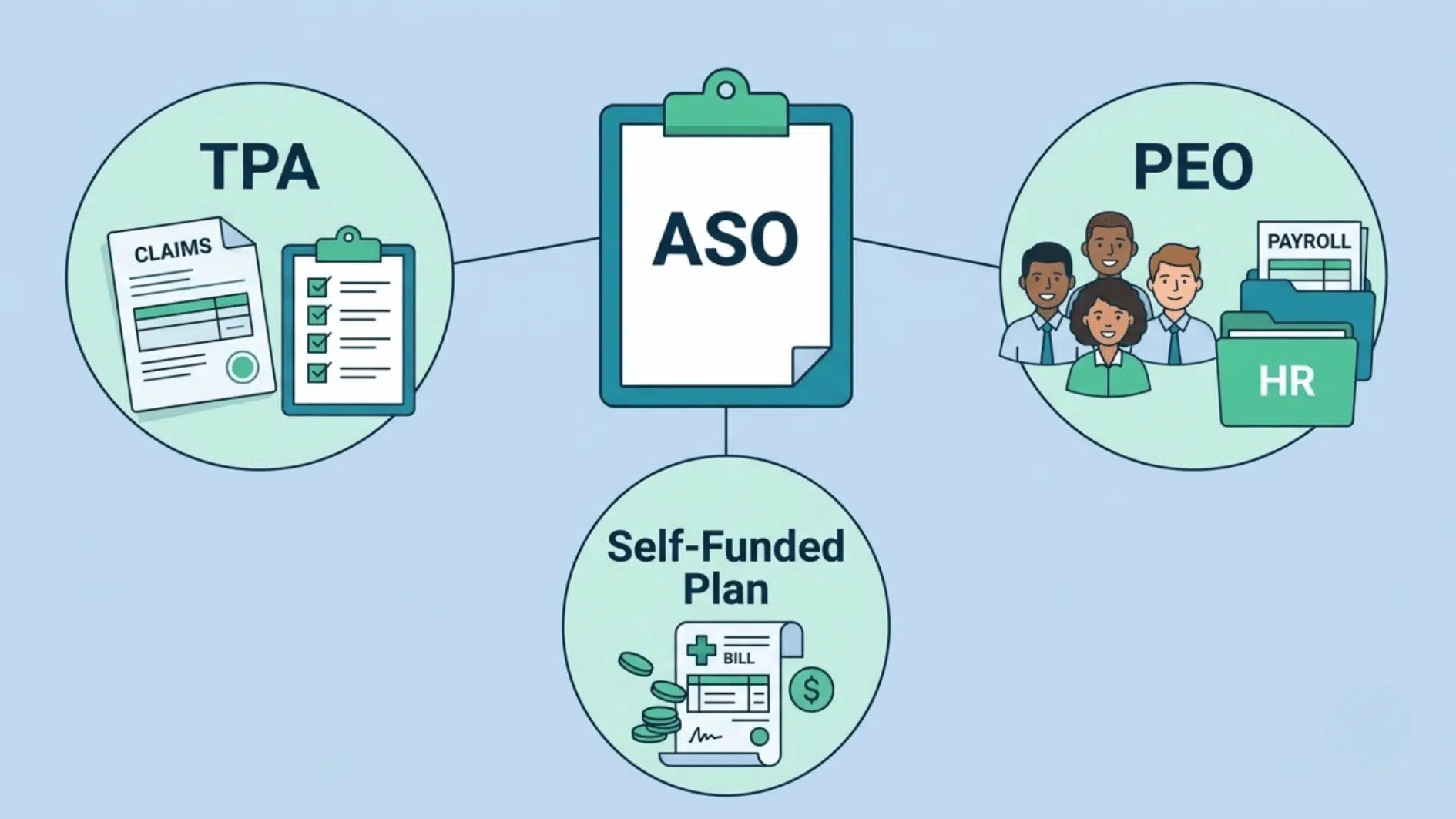
Several acronyms often appear alongside ASO, which can make their meanings confusing. Here is a simple comparison showing how each option differs.
Third-Party Administrator
A Third-Party Administrator processes claims for a self-funded employer, much like an ASO carrier.
The gap: a TPA is often independent, while ASO services usually come from a large carrier that also sells fully insured plans.
Professional Employer Organization
A Professional Employer Organization becomes the co-employer of a company’s staff, sharing legal duty for payroll taxes and compliance.
This is the biggest gap between ASO and PEO in HR: an ASO client stays the sole employer, while a PEO client shares that role, similar to how employee leasing works.
Self-Funded Health Plan
This is the money structure behind most ASO health deals. Claims get paid from the employer’s own funds instead of premiums.
Why Employers Use ASO Arrangements?
Employers pick ASO plans mainly to control costs and shape their own benefits. A healthy workforce with fewer claims can save real money compared to a fully insured plan with fixed premiums.
Employers can also choose specific provider networks, wellness perks, or coverage tiers instead of a standard insurer menu.
Larger employers with steady claims patterns tend to gain the most from this setup. They also need enough cash on hand to cover a rough year.
Smaller employers facing the same trade-offs often turn to fractional HR instead, getting similar oversight without a full internal team.
The Bottom Line
ASO is more than a claims-processing checkbox. It reflects how much control a company wants over its own benefits and back-office work.
For growing businesses, the right ASO setup can free up cash, sharpen plan design, and give HR room to focus on people instead of paperwork.
Still, self-funding carries real risk, so a close look at claims history and stop-loss terms matters before signing anything.
Used well, ASO becomes less of an insurance acronym and more of a long-term strategy for running a leaner, more flexible workplace.
Frequently Asked Questions
Is ASO Cheaper than a Fully Insured Health Plan?
It can be, but not always. Costs depend on claims volume. A healthy workforce with low claims usually saves money; a high-claims year can cost more than a fixed premium.
What Size Company Typically Qualifies for an ASO Health Plan?
Most carriers require at least 50 to 100 employees, though this varies. Smaller groups often lack the claims volume and cash reserves to self-fund safely.
Can a Small Business Use an ASO Arrangement for Hr Outsourcing?
Yes. Unlike ASO health plans, ASO-style HR outsourcing has no strict size requirement. Many providers work with businesses as small as 10 to 20 employees.
How Long Does It Take to Switch to an ASO Health Plan?
Most transitions take 3 to 6 months. This covers underwriting, stop-loss quoting, network setup, and employee communication before the new plan year starts.
Does an ASO Plan Affect Employee Out-Of-Pocket Costs?
Not directly. Employees usually see the same deductibles, copays, and network access as before. The funding change happens behind the scenes, not at the point of care.