

A hospital nurse or a grocery store worker feels obviously essential during a crisis. A payroll accountant at that same hospital, or a truck driver hauling office supplies, is less clear-cut.
The line gets blurry fast, and it often depends on the state, the industry, or the employer making the call.
This blog looks at what actually counts as an essential worker and why the answer changes depending on who’s asking.
What is an Essential Worker?
An essential worker is someone whose job has to continue in person during an emergency because it keeps a core service running. Health care, food supply, safety, and utilities all fall under this.
Their work can’t shift online or wait until conditions improve.
The term gained wide use in March 2020, when the Cybersecurity and Infrastructure Security Agency issued guidance identifying critical infrastructure jobs that needed to stay staffed during COVID-19.
No single federal law defines the list. Each state adapts that guidance on its own, so a job can count as essential in one place and not in the next.
Which Jobs are Essential in Each Industry?
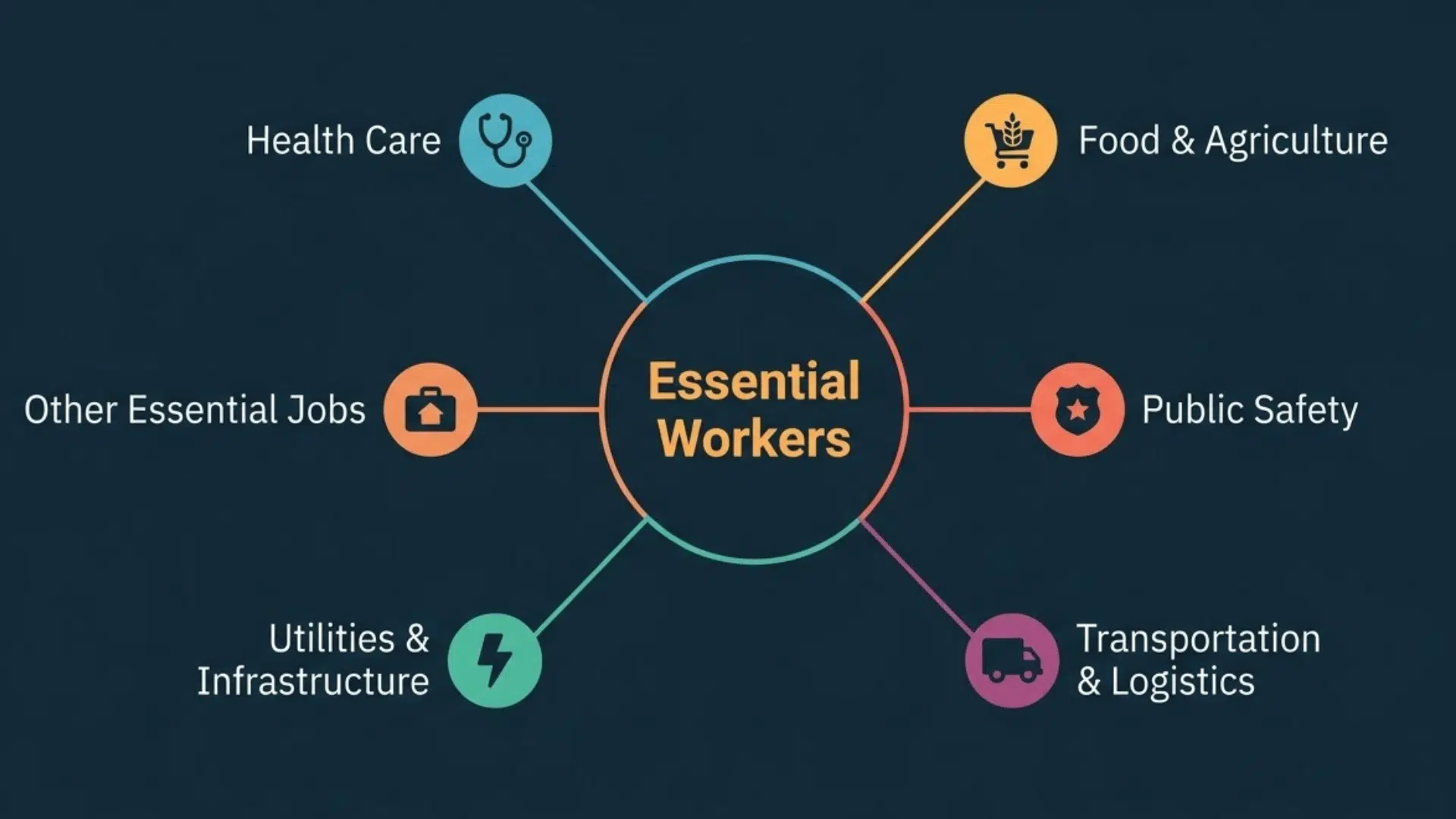
Essential jobs span industries that keep people fed, safe, and cared for. Below is a working essential workers list by sector, with examples from state and federal guidance.
1. Health Care Workers
Health care workers make up the largest group of essential employees. Doctors, nurses, physician assistants, and certified nursing assistants treat patients directly, while pharmacists and lab technicians keep treatment and diagnosis running.
Home health aides and hospice staff extend this care into private homes, often working alone with patients who can’t be left unattended even during a lockdown.
2. Food and Agriculture Workers
Food and agriculture workers keep groceries stocked and meals available. This includes farmworkers, food processing staff, grocery clerks, and restaurant employees preparing takeout during closures.
Delivery drivers and warehouse staff move that food from farms and plants to stores, often working overnight shifts to keep supply chains from stalling.
3. Public Safety and Emergency Workers
Public safety and emergency workers respond to threats that can’t wait for a shift change. Police officers, firefighters, and emergency medical technicians handle calls around the clock.
Corrections staff and emergency dispatchers also fall into this category, since jails and 911 lines have to stay operational no matter what’s happening outside.
4. Transportation and Logistics Workers
Transportation and logistics workers keep goods and people moving. Truck drivers, bus operators, and transit staff carry both essential supplies and the workers who need to reach their jobs.
Warehouse and distribution employees sort and route those shipments, a step that rarely gets attention but breaks down fast if it stops.
5. Utility and Infrastructure Workers
Utility and infrastructure workers maintain the systems everyone depends on without noticing.
Electricians, water treatment operators, and HVAC technicians keep power, water, and climate control running in hospitals and homes alike.
Telecom and IT staff maintain the networks that let other essential workers communicate and coordinate during an emergency.
6. Other Essential Jobs
A few essential jobs don’t fit neatly into one category but still keep daily life running. Childcare providers watch children of other essential workers, and school staff maintain limited operations for that reason.
Bank tellers, funeral home staff, and sanitation crews round out the list, each tied to a basic need that doesn’t pause during a crisis.
What Makes a Job Essential or Non-Essential?
Essential and non-essential jobs differ mainly in where work happens, how much flexibility workers have, and what pay and protections typically look like across each group.
| Factor | Essential Jobs | Non-Essential Jobs |
|---|---|---|
| Work Location | Mostly in-person, on-site | Often remote-capable |
| Median Pay | Lower in several industries (food, retail) | Higher on average overall |
| Job Flexibility | Limited, tied to fixed hours or shifts | More flexible scheduling common |
| Risk Exposure | Higher, especially during emergencies | Lower, reduced public contact |
| Legal Status | Defined by state executive orders | No special classification needed |
How are Essential Jobs Determined?
States decide essential job status using federal guidance as a starting point, then adjust the list based on local needs, industries, and how the emergency unfolds.
- Federal guidance sets the baseline: CISA issued the original essential critical infrastructure list in March 2020, covering health care, food, and energy.
- States adapt the list on their own: Governors issue executive orders naming essential jobs, so the same role can differ across state lines.
- Local conditions shape the final call: A farming-heavy state may add categories a state without that industry skips.
- Industry lobbying plays a role: Business groups often petition to get their sector added to the list.
- Updates happen as situations change: CISA revised its guidance four times during COVID-19, and states amended their lists in step.
- No single national standard exists: Without a federal law defining “essential worker,” each list stays state-specific rather than fixed
What Do Essential Workers Earn?
The Bureau of Labor Statistics’ Occupational Employment and Wage Statistics shows most large occupations posted below-average wages in May 2025, from $32,150 for fast food workers to $46,590 for customer service reps.
Health care shows the widest pay gap in essential work. Registered nurses earned an annual mean wage of $101,420, while home health and personal care aides earned a median of just $34,900 in May 2024.
Retail and food service jobs sit near the bottom of the pay scale.
Cashiers and fast food workers rank among the largest essential occupations, yet their wages trail nearly every other category the government tracks. Essential worker pay varies by industry.
Essential Worker Demographics and Workforce Trends
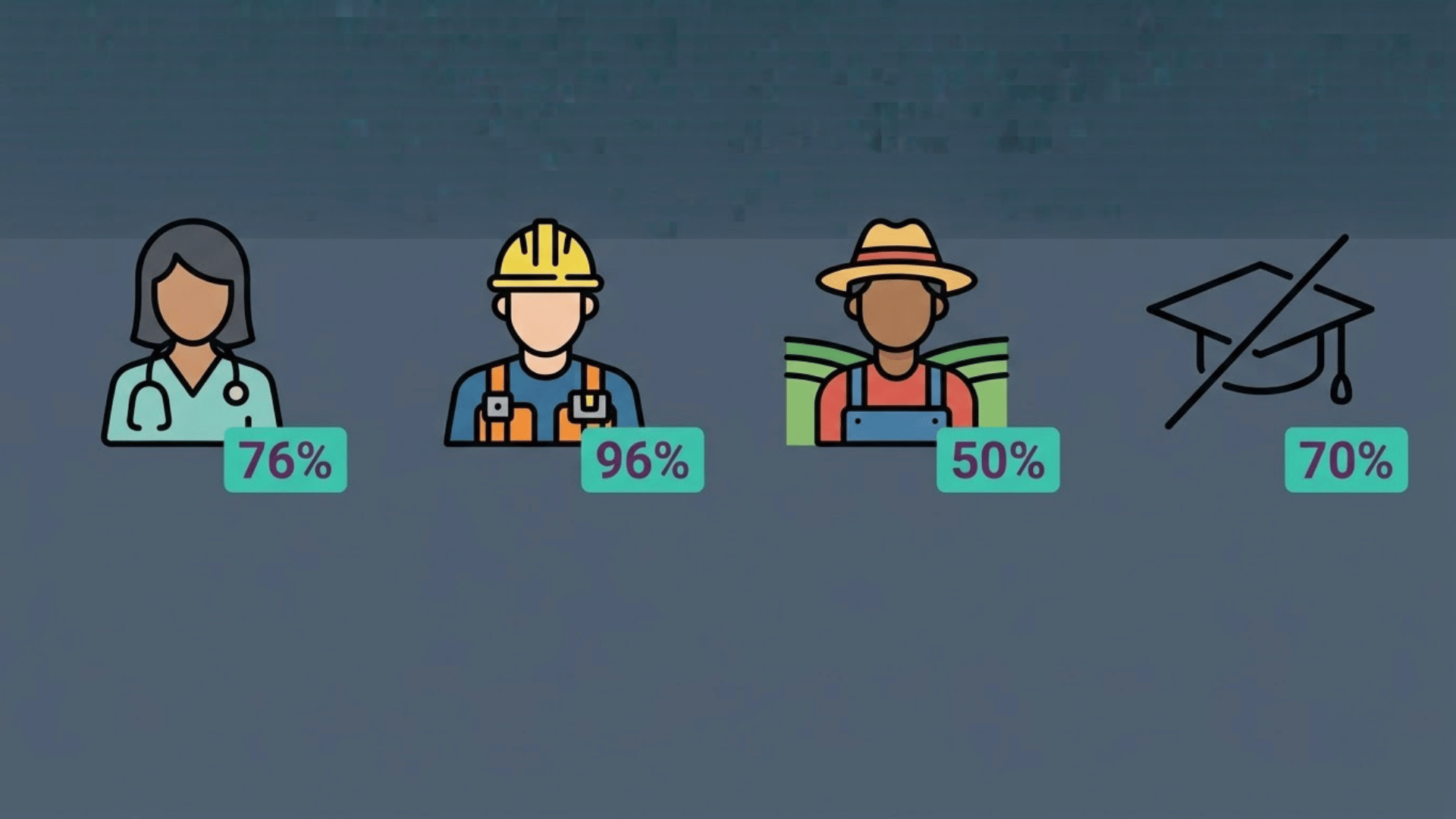
Essential workers vary widely by gender, education, and race across industries. Data from the Economic Policy Institute and the Georgetown Center on Poverty and Inequality show where these gaps run widest.
Women Dominate Health Care Roles
Women make up 76% of essential health care workers and 73% of government and community-based service workers, two of the largest essential industries by headcount.
Men Dominate Energy and Infrastructure Jobs
Men account for 96% of essential energy sector workers, 91% of water and wastewater management workers, and 88% of critical manufacturing workers.
Most Essential Workers Lack a College Degree
About 70% of essential workers have no college degree, with 29% holding only a high school diploma and 30% having some college but no degree.
People of Color Lead in Lower-Paying Industries
People of color make up 50% of essential workers in food and agriculture and 53% in facilities and residential services, both industries with below-average median wages.
Many Essential Workers Earn Low Household Incomes
31% of essential workers live in households earning under $40,000 a year, compared with 19% of other employed workers, according to KFF polling data.
Race and Pay Gaps Persist Within the Same Jobs
Black and Hispanic essential workers earn less than white essential workers in most industries, even after accounting for similar education levels
What Legal Protections Do Essential Workers Have?
Essential workers are covered by the same core federal labor laws as other employees, though a few programs and emergency orders added extra protections during COVID-19.
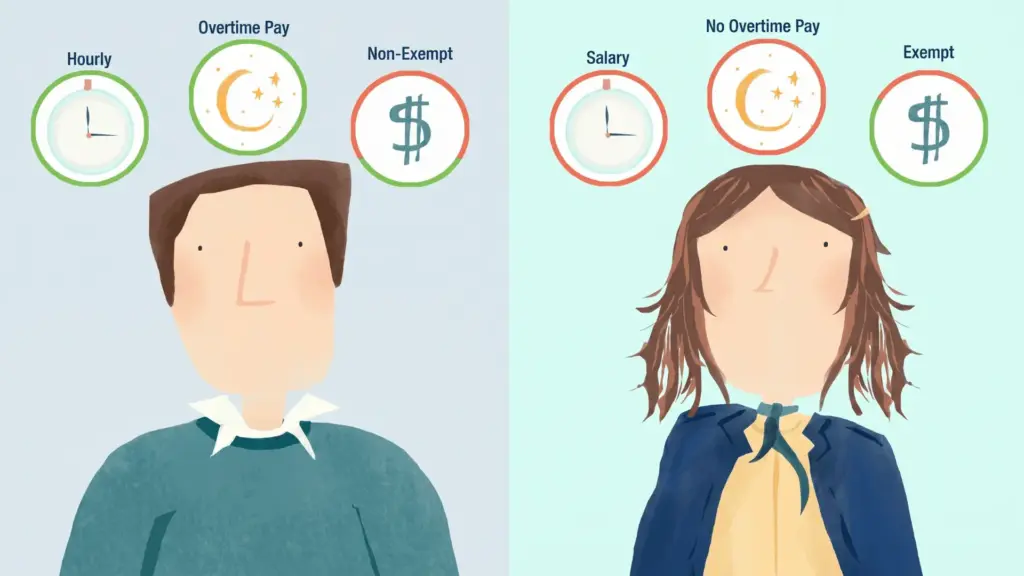
- FLSA: Guarantees minimum wage and overtime, enforced by the Department of Labor’s Wage and Hour Division.
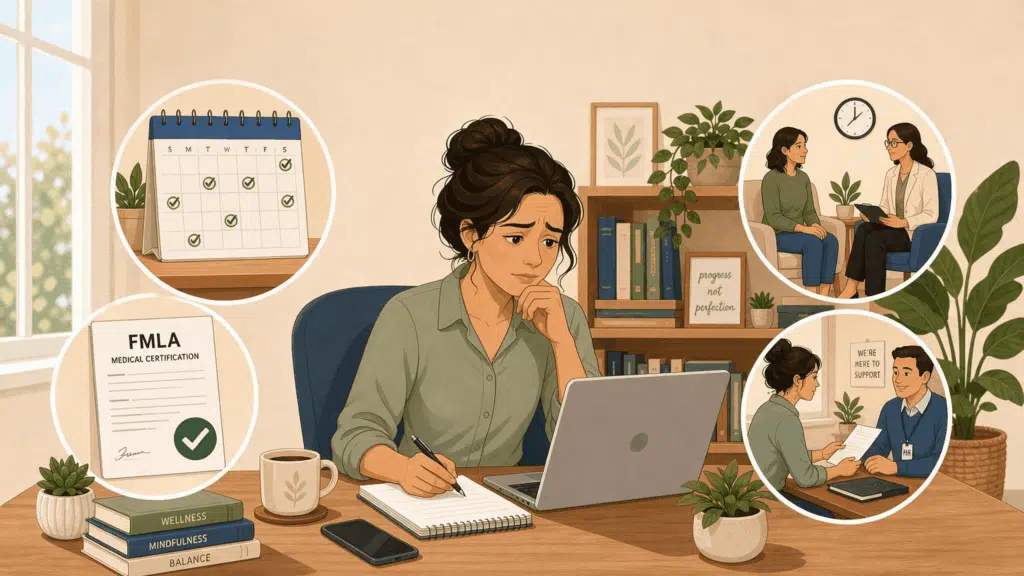
- FMLA: Provides unpaid, job-protected leave for serious illness or family care, including COVID-19 conditions.
- OSHA standards: Require employers to provide PPE and safety protocols in high-exposure jobs like health care.
- State hazard pay orders: Some states passed temporary premium pay rules during the pandemic, most of which have since expired.
- Union contracts: Added extra PPE, sick leave, and safety terms, especially in grocery, postal, and transit unions.
- No federal essential-worker law: No standalone law covers essential workers beyond these existing labor statutes.
Are Essential Workers Unionized?
Essential workers have a slightly higher union coverage rate than non-essential workers, at 12% versus 11%, based on 2019 Current Population Survey data from the Economic Policy Institute. That small gap hides big differences across industries.
Emergency services lead by far, with 51% of workers covered by a union contract. Water and wastewater management (26%) and the energy sector (28%) also see strong coverage.
Health care and food and agriculture, two of the largest and riskiest essential industries, sit near the bottom at 10% and 8% coverage.
The Bottom Line
Essential worker status shapes far more than who reports to a job site during a crisis. It touches pay, safety, and the rights a person can actually claim from an employer.
That gap between the label and the support behind it is worth watching, since states continue to write and rewrite their own rules on essential jobs.
If you work in an industry that’s been called essential, check your state’s current guidance and confirm which federal protections actually apply to your role, since assumptions rarely hold up in practice.
Frequently Asked Questions
Are Teachers Considered Essential Workers?
Teachers are considered essential in most states, since school staff maintains limited operations, and educators are often listed under critical government and community-based service categories in state guidance.
Can Essential Workers Refuse Unsafe Work Assignments?
Workers generally have limited legal grounds to refuse assignments, though OSHA allows refusal when facing imminent danger with no reasonable alternative and no time to fix the hazard.
Do Essential Worker Protections Still Apply Today?
Most COVID-era hazard pay orders and emergency leave rules have expired. Baseline protections like FLSA wage rules and OSHA safety standards remain in effect regardless of emergency status