
Quitting a job is rarely just “I’m leaving” and a handshake. There’s paperwork to finish, a handover to plan, and a boss who needs time to prepare.
A two week notice gives your employer that time. It also protects your reputation on the way out.
This blog covers what to do before you resign. It also walks through how to deliver the notice and what to wrap up before your last day.
You’ll also find quick answers on whether two weeks is actually required.
Do You Have to Give Two Weeks Notice When You Quit?
No, in most cases you don’t have to give two weeks’ notice. It’s a heads-up, not a legal contract. You can walk away without giving one unless your contract says otherwise, though it can still burn bridges.
It matters most for your reference. Managers remember who left them scrambling, and who helped them plan.
Two weeks is convention, not a requirement. It’s enough time for most teams to adjust, though executive or specialized roles often need four weeks or more.
Legally, almost no state requires it. Nearly every state follows at-will employment, so neither side owes the other advance notice by default.
Steps to Take Before You Resign
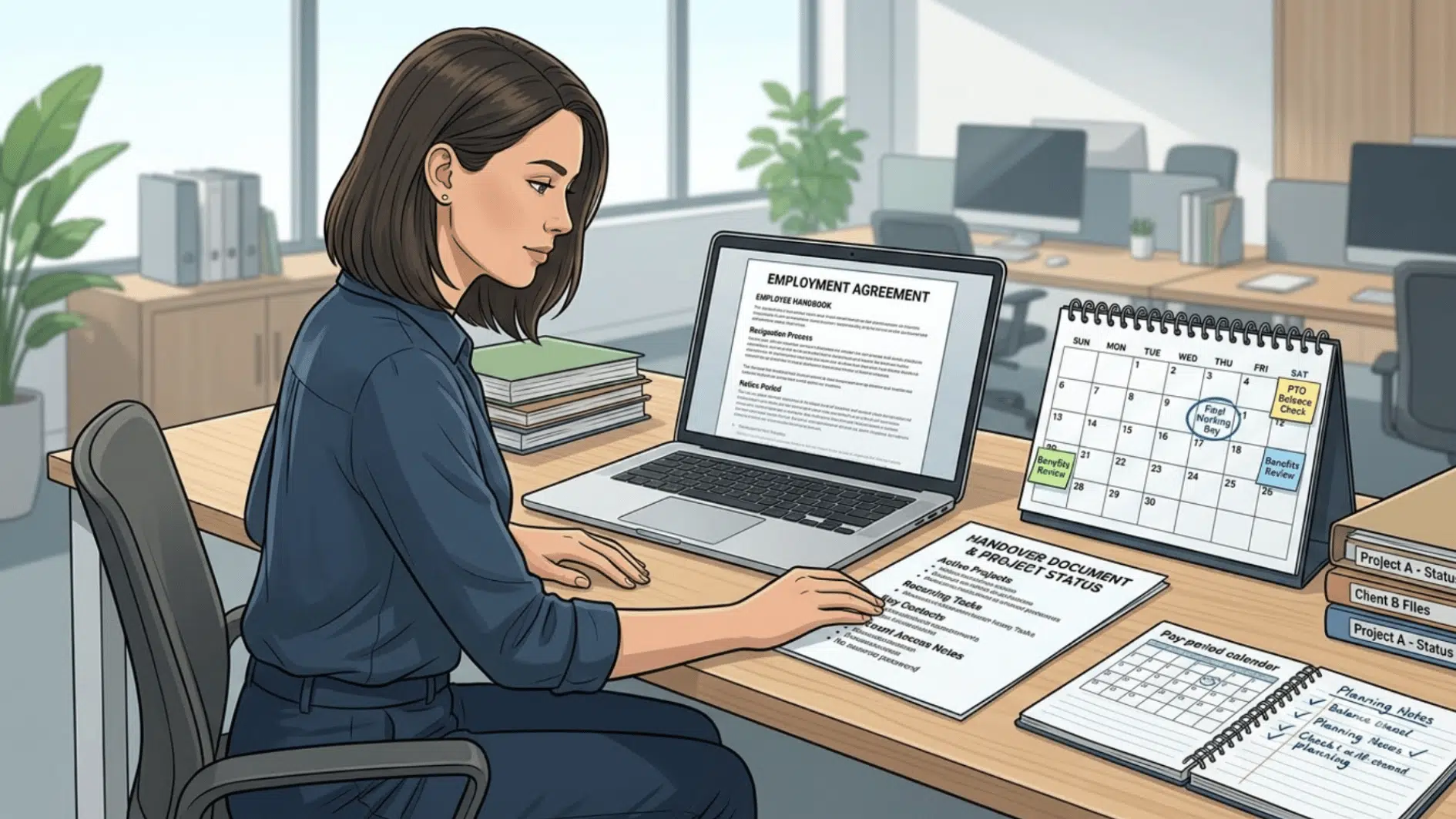
A little prep work before you say anything makes the whole process smoother. Three things are worth sorting out first.
1. Review Your Employment Agreement and Company Policy
Find your job offer, employment agreement, and employee manual. Take this step before speaking to your boss about your plans.
Check for a required notice period, a non-compete clause, or a policy for paying out unused PTO. Most organizations require a specific resignation letter, which you may submit through a system such as Workday.
2. Set Your Last Day at Work
Count 14 calendar days from your planned resignation date. Check that date against your pay period schedule, ongoing projects, and any planned time off.
If you are currently working on an important project, try to change your date slightly to get a clearer ending of the project.
3. Organize Your Work for Handover
Before you tell anyone, list your active projects and recurring tasks. Note any passwords or access only you hold.
This prep turns your notice period into a smooth handover, not a scramble. A rough doc, even three bullet points per project, saves your team hours later.
How to Give 2 Weeks Notice Professionally?

These four steps keep your exit calm and clear from the first conversation to the final signature. Run through them in order, and nothing gets left to guesswork on either side.
First, Talk to Your Manager
Schedule an appointment and discuss the matter in person rather than announcing it on any platform. Stay calm and objective, confirm that you are resigning, and specify your final day.
Give your manager time to respond and ask how the news should be shared with the team. Follow the meeting with a brief resignation letter so there is a written record.
Submit Your Resignation in Writing
Following the discussion, provide a brief, dated letter or email to confirm your decision. Specify the day you will leave your job. Also send it to the HR Department.
Get Your Manager to Confirm the Date
Say the date out loud in the meeting, then get it back in writing from your manager, either in their reply to your resignation email or in a follow-up message.
Don’t leave the exact day as something only you remember. This matters most if PTO or a hybrid schedule is part of the picture.
Set Clear Handover Expectations
Offer to document your work and train whoever picks up your tasks during your remaining time. Put the agreed plan in writing so both sides expect the same thing on day fourteen.
List active projects, key deadlines, important contacts, and any steps needed to complete unfinished work.
What to Include in a Two Week Notice?
A two week notice works best when it stays short. Open with the date and a clear statement of resignation, such as “I am resigning from my position as [title].”
Next, add your exact last working day, counted from the notice date. Include one or two lines of brief thanks for the opportunity.
Add a short offer to help with the transition. Close with your signature. Add your title too, if the letter is going to HR or a formal personnel file.
Skip long explanations of why you’re leaving; save that for in person or an exit interview.
How to Use Your Notice Period Effectively
Once your notice is in, your last two weeks are really about closing loops cleanly. Four areas deserve most of your attention.
| Handover Task | What to Do | Handover Consideration |
|---|---|---|
| Complete key work | Finish tasks that are difficult to transfer. | Reduce disruption for the team |
| Flag unfinished work | Clearly identify outstanding items. | Prevent missed responsibilities |
| Document responsibilities | Record duties, deadlines, and dependencies. | Support a smooth transition |
| Share access needs | List required tools, reports, and permissions securely. | Maintain business continuity |
| Confirm project owners | Identify who will take over each project. | Establish clear accountability |
| Hold handover calls | Explain status, questions, and next steps. | Provide practical context |
| Answer questions | Support transition-related queries. | Help resolve knowledge gaps |
| Offer post-exit help | Provide limited support if comfortable. | Optional professional courtesy |
Last-Day Checklist Before You Walk Out
A short checklist before you walk out the door protects your final paycheck and your future references. Three things matter most.
Return Company Property
Return laptops, badges, phones, and any physical gear on or before your last day. Remove personal files from company devices first. Confirm with IT exactly what you need to hand in and where.
Confirm Final Pay, PTO, and Benefits
Ask HR how unused PTO gets paid out and confirm your final paycheck date, including any bonuses owed. If you’re leaving after a layoff or long tenure, ask if severance pay terms apply.
Check the COBRA timeline too, if health coverage matters for your next step.
Request Employment Documents or References
Ask for a character reference letter or LinkedIn recommendation while your manager still remembers your work.
Request an employment verification letter or copies of performance reviews you might need later. Confirm who future employers should contact for verification.
Resignation Errors That Can Leave a Poor Impression
Most resignations go wrong in small, avoidable ways rather than big dramatic ones. Watch for these six before you hand in your notice.
- No Confirmed Start Date: Wait for a written offer and confirmed start date before announcing your resignation.
- Resigning by Text: Speak with your manager directly before sending your formal written notice.
- Too Many Complaints: Keep the resignation letter brief, factual, and free from workplace grievances.
- Poor Final Performance: Continue meeting your responsibilities throughout the notice period to protect your professional reference.
- Ignoring Contract Terms: Review non-compete and confidentiality clauses, including the risks of breaking an NDA.
- No Written Notice: Follow the conversation with a written resignation to create a clear record.
The Bottom Line
Most of this comes down to what you settle before the conversation and what you follow through on after it. Skip either half, and the exit gets messier than it needs to be.
Two weeks isn’t long. It’s long enough to decide what your manager tells the next person who calls for a reference.
Keep a copy of everything you send for your own records, not just HR’s file. The same checklist works if you are leaving a startup or a large company.
Frequently Asked Questions
Can My Employer Make Me Leave the Same Day I Give Notice?
Yes. Employers can end your employment immediately after you resign, even if you offered two weeks. If you get paid for the notice period depends on the employer’s choice.
Do You Get Paid for Two Weeks Notice If They Tell You to Leave Immediately?
Often, yes. Many employers pay out the notice period anyway to avoid a former employee with system access hanging around. It’s not required by law everywhere, so check your handbook or offer letter.
Can You Take Back a Two Weeks Notice Once You’ve Given It?
You can ask, but your employer doesn’t have to say yes. Some will have already started backfilling the role; if there’s any chance you’ll want to stay, raise it before you put anything in writing.