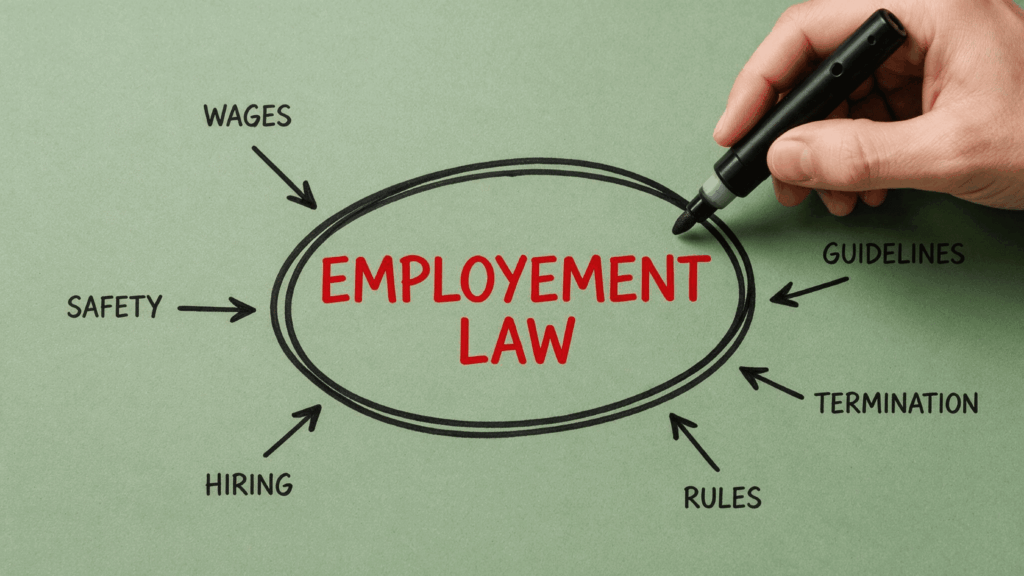
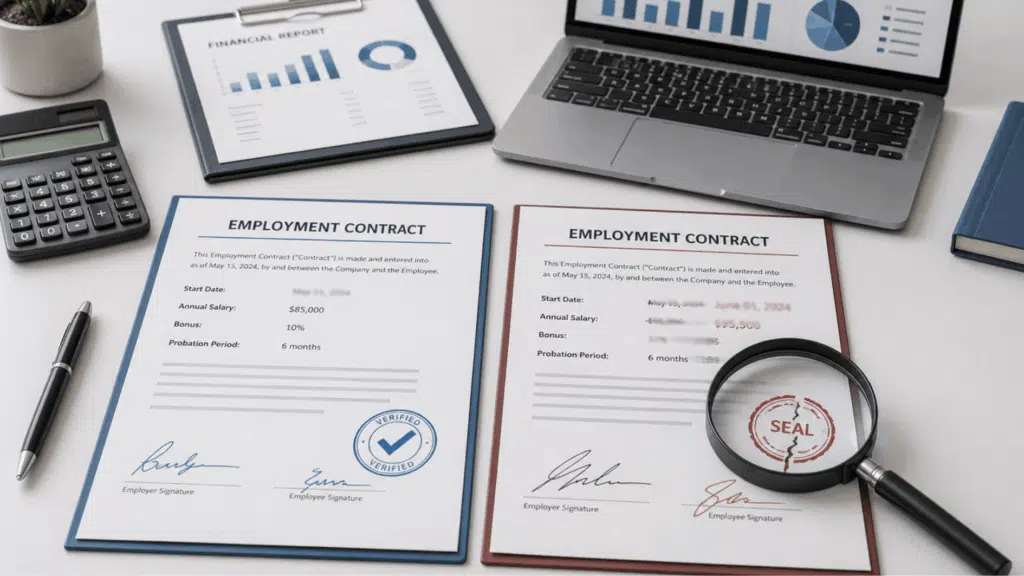

A business deal, job offer, or contract can quickly become a legal issue when one party relies on false information.
The key question is whether the statement was an honest mistake or a deliberate misrepresentation that influenced the other person’s decision.
This blog explains what fraudulent misrepresentation is, the elements usually required to prove it, common examples, and the legal remedies that may be available if you were harmed by false statements.
What is Fraudulent Misrepresentation?
It happens when an employer or a candidate says something they know isn’t true, hoping the other side will act on it, and that person ends up losing real money because they believed it.
In hiring, that might look like a company still advertising a role after quietly freezing it, or a candidate handing in a degree they never earned.
To hold up in court, Restatement (Second) of Torts § 525 generally asks for five things: a false statement, knowledge that it was false, intent to get someone to rely on it, actual reliance, and real damages that followed.
The Legal Information Institute states that it constitutes a valid tort and enables the affected party to claim damages when those elements are fulfilled.
Where is Fraudulent Misrepresentation Most Common?
This is most common in situations that are based on trust, such as business sales, contracts, hiring, real estate, insurance, and investments.
- Business sales: A seller makes false statements about revenue or hides liabilities to increase the price.
- Contracts: Misrepresentation about price, product quality, or capacity to deliver.
- Employment: An employer exaggerates salary or bonus while a candidate gives false qualifications.
- Real estate: Seller conceals facts about structure or flooding.
- Insurance: Applicant falsely states information regarding loss, medical history, or asset value.
Elements of Fraudulent Misrepresentation
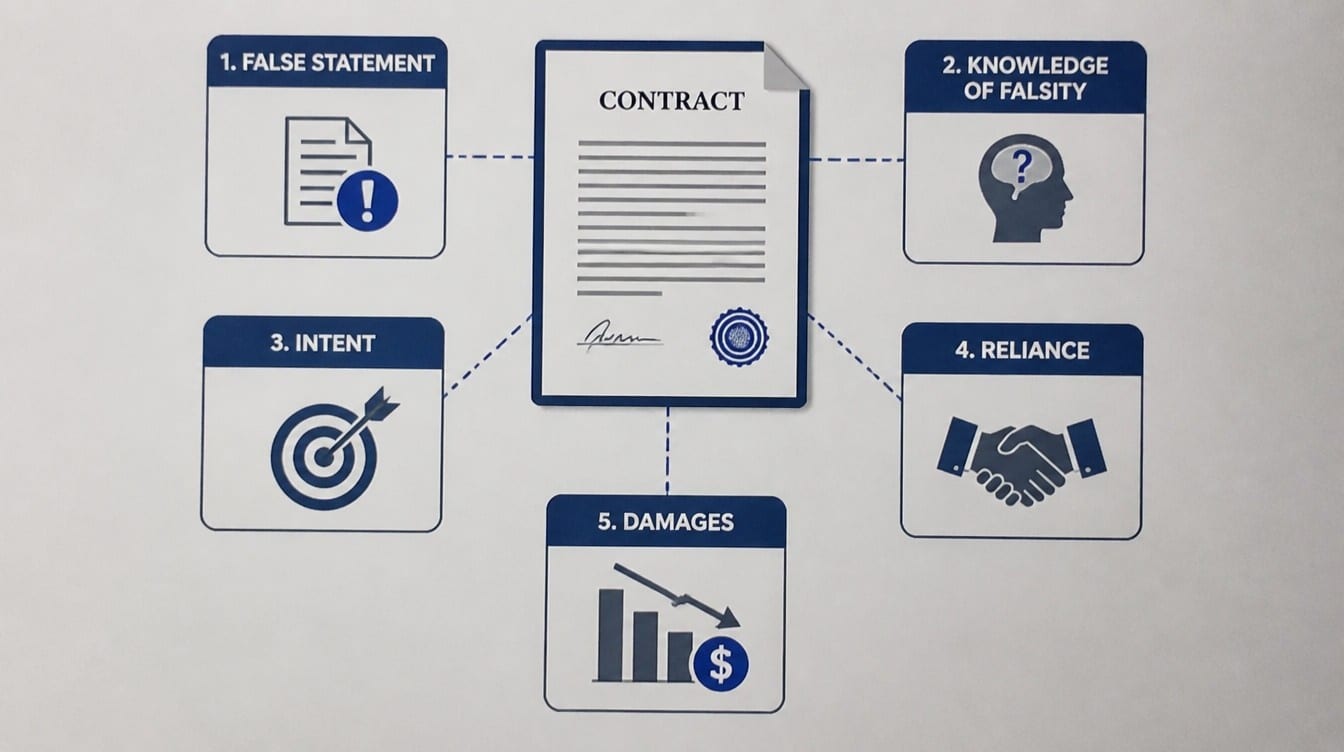
A claim based on misleading information made with the intention of deceiving will be successful if the relevant legal criteria are proven.
1. False Statements
A false statement involves information presented as true when it is not. It usually concerns an important fact that could affect someone’s decision.
For example, a recruiter states that the base salary is $95,000 even though the approved role is capped at $78,000.
2. Knowledge That the Statement Was False
The person making the statement generally must know it is false or act recklessly without knowing whether it is true. An ordinary mistake does not necessarily amount to it.
For example, HR keeps promising guaranteed bonuses after the company has officially ended the bonus program.
3. Intent to Make Someone Rely on the Statement
The false information must generally be given with the intention of influencing another person’s decision. The statement should encourage the person to act or avoid taking an action.
For example, a manager exaggerates future growth plans to convince a candidate to reject another job offer.
4. Actual and Reasonable Reliance
The person must actually rely on the false information when making a decision. That reliance generally also needs to be reasonable under the circumstances.
For example, a candidate resigns from a current job and relocates after relying on specific promises made during hiring.
5. Loss or Damage Caused by the Misrepresentation
Fraudulent misrepresentation generally requires the false statement to result in actual harm or loss. The damage must be connected to the decision made in reliance on that information.
For example, a candidate could lose wages, pay relocation expenses, or give up benefits from a previous job after relying on false information.
How Does Fraudulent Misrepresentation Affect Hiring and Employment?
In Lazar v. Superior Court (1996), the California Supreme Court recognized a claim based on false promises that induced an employee to leave a secure job. Similar workplace examples include:
- A recruiter states a salary or equity figure that exceeds what has actually been approved by finance.
- The company continues to advertise a commission or bonus scheme even though it has already been abandoned.
- A candidate hands in fake certifications, degrees, or licenses, which often ties back to employment identity theft when stolen credentials are used.
- A former employer gives a reference they know is false, and it costs someone a job offer that was already confirmed.
- An employer hides an upcoming layoff just to get someone to sign a resignation or settlement.
Innocent vs Negligent vs Fraudulent Misrepresentation
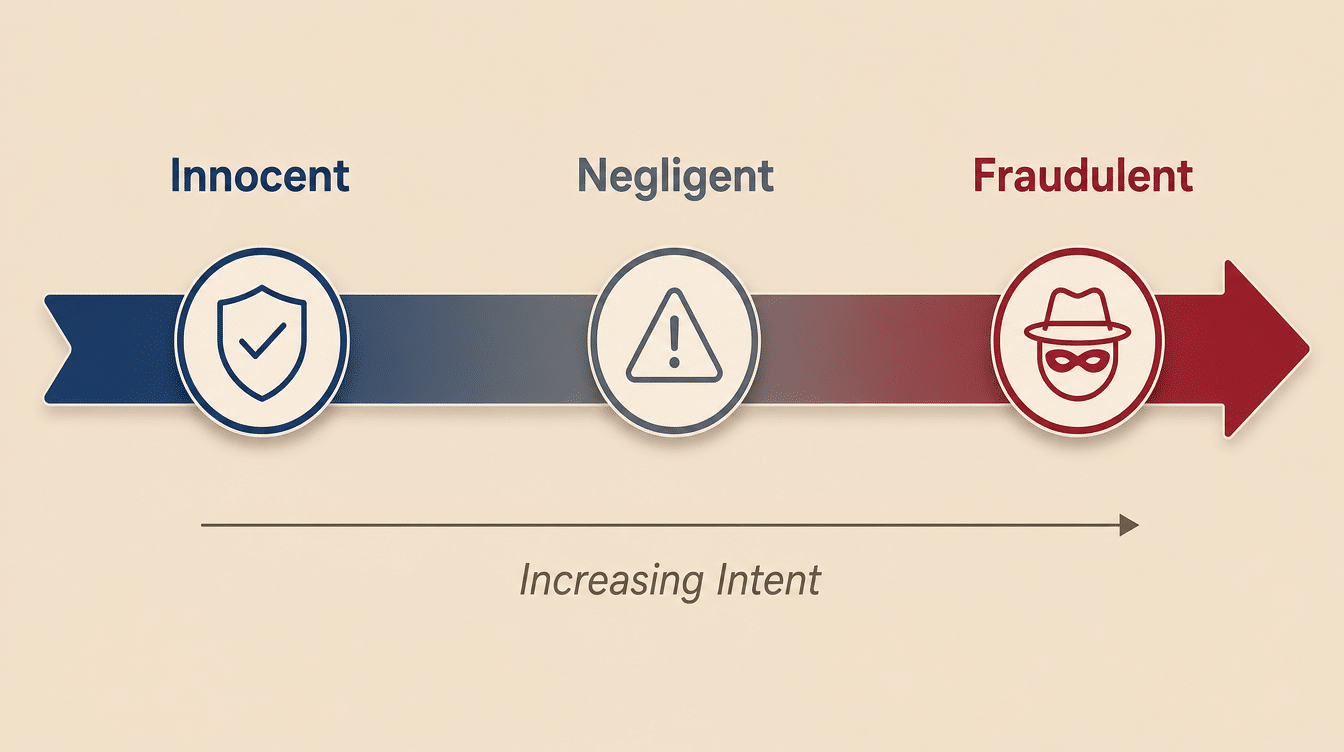
There are three main types of fraudulently misleading statements, and when assessing such cases, courts take into account not only what was said but also what the speaker knew at the time.
| Factor | Innocent | Negligent | Fraudulent |
|---|---|---|---|
| How It Happens | False statement believed to be true. | False statement made without checking. | False statement made knowingly. |
| State of Mind | Honest mistake. | Carelessness. | Intent to deceive. |
| Level of Care | Relied on seemingly accurate information. | Failed to verify important facts. | Hid or invented information. |
| Workplace Example | Outdated stock-option details. | Unverified remote-work promise. | Bonus promised despite cancellation. |
| Possible Result | Contract cancellation or correction. | Compensation for proven losses. | Damages and possible contract cancellation. |
Note: Definitions, proof requirements, and remedies depend on the jurisdiction and facts of the case.
How Can You Prove Fraudulent Misrepresentation?
It’s not enough to say someone misled you. You need to prove the false statement, your reliance on it, and the harm it caused.
Courts look at both the legal elements and the evidence supporting them.
To build a successful claim, you generally need to prove:
- A false statement: The other party made an untrue statement about an important fact.
- Knowledge of falsity: They knew the statement was false or acted with reckless disregard for the truth.
- Intent to induce reliance: The statement was made to persuade you to act.
- Reasonable reliance: You relied on the statement when making your decision.
- Damages: You suffered a measurable financial or legal loss because of that reliance.
| Supporting evidence may include: Emails, text messages, or letters can provide a direct record of the disputed statement. Employment contracts, financial records, advertisements, and business documents may show that the statement was inaccurate. Witness statements can confirm what was said during meetings, interviews, or negotiations. Expert reports may help establish the facts and calculate any financial loss connected to the claim. |
What You Can Recover If Your Claim is Accepted?
If a fraudulent misrepresentation claim succeeds, the court may award remedies that put you in the position you would have been in had the misrepresentation never occurred. If the claim is successful, you may recover:
Compensatory Damages
You may recover the money you lost because you relied on the false information, such as lost wages, relocation costs, or benefits you gave up (Restatement (Second) of Torts § 549).
Rescission
The court may cancel the contract and treat it as if it never happened, putting both parties back in their original position.
Punitive Damages
In some cases, courts may award extra money to punish someone for intentionally committing fraud. These damages are only available in certain jurisdictions and situations.
If the deception caused documented emotional harm, that raises a separate question if you can sue an employer for emotional distress. If the matter settles instead of going to trial, a typical severance package shows what a fair exit usually looks like.
How Do Employers Defend Against It?
Employers may defend these claims by challenging the statement, intent, reliance, or filing deadline.
They may argue that the statement was accurate when made or that incorrect information resulted from an honest mistake rather than deliberate deception.
They may also claim that the employee did not rely on the statement, or that relying on it was unreasonable because other information contradicted it.
Another defense is that the claim was filed after the statute of limitations expired. The outcome depends on the available evidence and the laws of the relevant jurisdiction.
The Bottom Line
If you think that a job offer, a reference, or a bonus promise was deliberately false, you should keep a copy of every offer letter, email, and text message connected with the promise before you discuss the matter with anyone.
Next, determine which of the five points you are currently able to back up with documentation. Generally, reliance and damages are the ones most difficult to prove when there is no record to support them.
When two or more elements are missing, it is advisable to consult an employment attorney before resigning, agreeing to a settlement, or filing a claim, as the incorrect sequence could cause a case that would otherwise be successful to fail.
Frequently Asked Questions
Is Fraudulent Misrepresentation a Crime or A Civil Claim in Employment Cases?
Ans: It’s most often pursued civilly to recover lost wages or damages. Some conduct, like forged credentials, can separately trigger criminal charges.
Can a Job Offer Be Rescinded for Fraudulent Misrepresentation?
Ans: Yes, courts can unwind an offer or resignation induced by a knowingly false statement, though the remedy depends on the jurisdiction and facts.
Does an NDA Block a Fraudulent Misrepresentation Claim?
Ans: Generally no. Most jurisdictions won’t enforce a confidentiality clause to shield intentional fraud, though the specific language matters.
How Long Do You Have to File a Claim?
Ans: It varies by state, generally two to six years depending on jurisdiction.