

A pay stub includes much more than the amount that reaches your bank account. It also keeps a running record of your earnings, taxes, and deductions throughout the year.
One entry that often causes confusion is YTD. The abbreviation appears in several places on a paycheck, but many employees are unsure what those numbers actually represent.
This blog explainswhat does YTD mean on a pay stub, howgross pay YTD is calculated, where these totals appear, and why they matter.
What is YTD on A Pay Stub?
YTD stands for Year-to-Date. On a pay stub, it shows the running total of a specific payroll item from the beginning of the calendar year through your most recent paycheck.
Instead of showing only the numbers for your latest pay period, the YTD column adds together everything that has already been processed. That includes earnings, taxes, deductions, and other payroll items.
The YTD column usually appears beside earnings, taxes, and deductions, so it helps to know how the rest of the pay stub sections are arranged.
For example, if your first paycheck of the year shows $2,000 in gross earnings, your Gross Pay will also be $2,000. If your next paycheck adds another $2,000, the YTD amount becomes $4,000.
What are the Key YTD Totals on a Payslip?
The YTD section of a payslip shows how much you have earned, paid in taxes, and received since January 1. These totals help you track your income and deductions throughout the year.
YTD Gross Pay
YTD gross pay is the total amount you have earned before taxes, insurance, retirement contributions, and other deductions. It may include regular wages, overtime, bonuses, and commissions.
YTD Deductions
YTD deductions show the total amount taken from your earnings for workplace benefits and other authorized payments. These may include health insurance, retirement contributions, or flexible spending accounts.
YTD Taxes Withheld
YTD taxes withheld represent the total federal, state, local, Social Security, and Medicare taxes deducted from your pay so far. The exact taxes shown may depend on where you live and work.
YTD Net Pay
YTD net pay is the total amount you have received after all taxes and deductions have been removed. It reflects the money actually deposited into your bank account or issued through paychecks.
How is Current Amount Different from YTD Pay Stub?
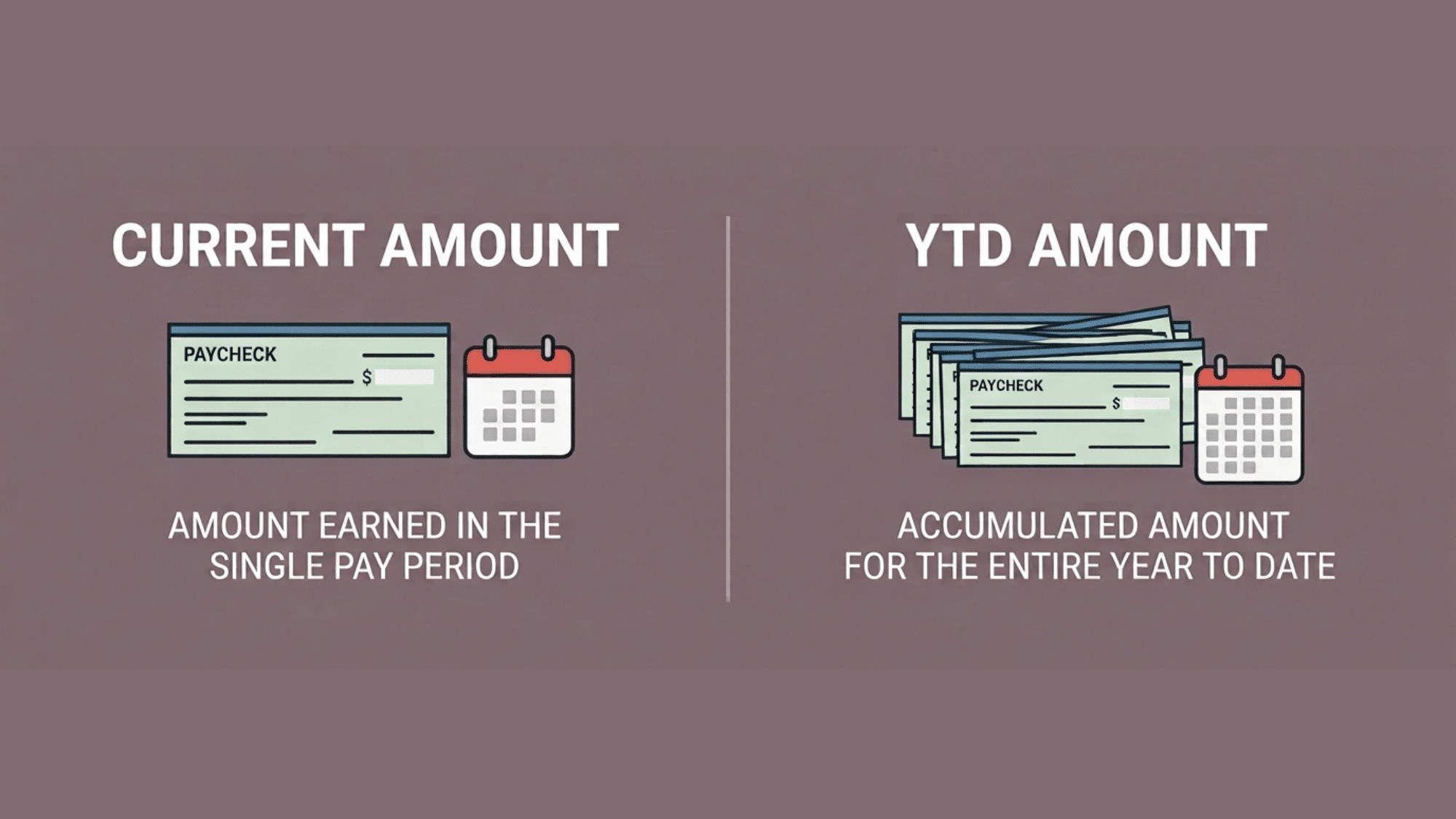
Each pay stub separates the amount from the latest pay period from the total recorded since the start of the year. Reading both columns together makes earnings, taxes, and deductions easier to track.
| Pay Stub Section | Current Amount | YTD Amount |
|---|---|---|
| Gross Pay | Earnings for this paycheck | Total earnings this calendar year |
| Net Pay | Current take-home pay | Total take-home pay received |
| Federal Income Tax | Tax withheld this paycheck | Total federal tax withheld |
| State Income Tax | State tax withheld | Total state tax withheld |
| Social Security | Current FICA deduction | Total Social Security withheld |
| Medicare | Current Medicare deduction | Total Medicare withheld |
| Retirement Contributions | Current contribution | Total contributed this year |
| Health Insurance | Current deduction | Total deducted this year |
What is Gross Pay YTD?
Gross pay is one of the first numbers employees notice on a pay stub. It represents earnings before payroll taxes, insurance premiums, retirement contributions, and other deductions are taken out.
The YTD figure beside gross pay keeps adding those earnings together after every payroll run. By the end of the year, it shows the total gross wages paid during that calendar year.
This number is useful because it provides a running record of annual earnings without needing to total every paycheck manually. It is used for reviewing payroll records.
The IRS defines taxable wages and employer reporting requirements. Gross pay usually includes all taxable earnings paid during the year, from regular wages to overtime to paid time off.
How to Interpret YTD Numbers on Their Paycheck
YTD figures grow automatically every time payroll is processed. Each paycheck adds the latest earnings, taxes, deductions, and contributions to the existing totals. Here is a simple example:
| Paycheck Date | Gross Pay | Gross Pay YTD |
|---|---|---|
| January 10 | $2,000 | $2,000 |
| January 24 | $2,000 | $4,000 |
| February 7 | $2,200 | $6,200 |
| February 21 | $2,000 | $8,200 |
Note: The third paycheck is higher because it includes additional earnings. The YTD total reflects that increase immediately after payroll is completed.
Why Do YTD Figures Matter on a Pay Stub?
YTD figures show how much you have earned so far in the year, including regular pay, overtime, bonuses, and commissions. This makes it easier to compare your actual earnings with your expected salary.
The IRS explains how paycheck withholding works. YTD also shows how much has been taken out for federal tax, state tax, Social Security, Medicare, and employee benefits.
Your pay stub can also help you follow retirement contributions, insurance premiums, and other deductions.
The final YTD figures are useful when you compare your last pay stub with your Form W-2 or provide income records for a mortgage, rental, or loan application.
Why YTD Numbers May Look Different Than Expected
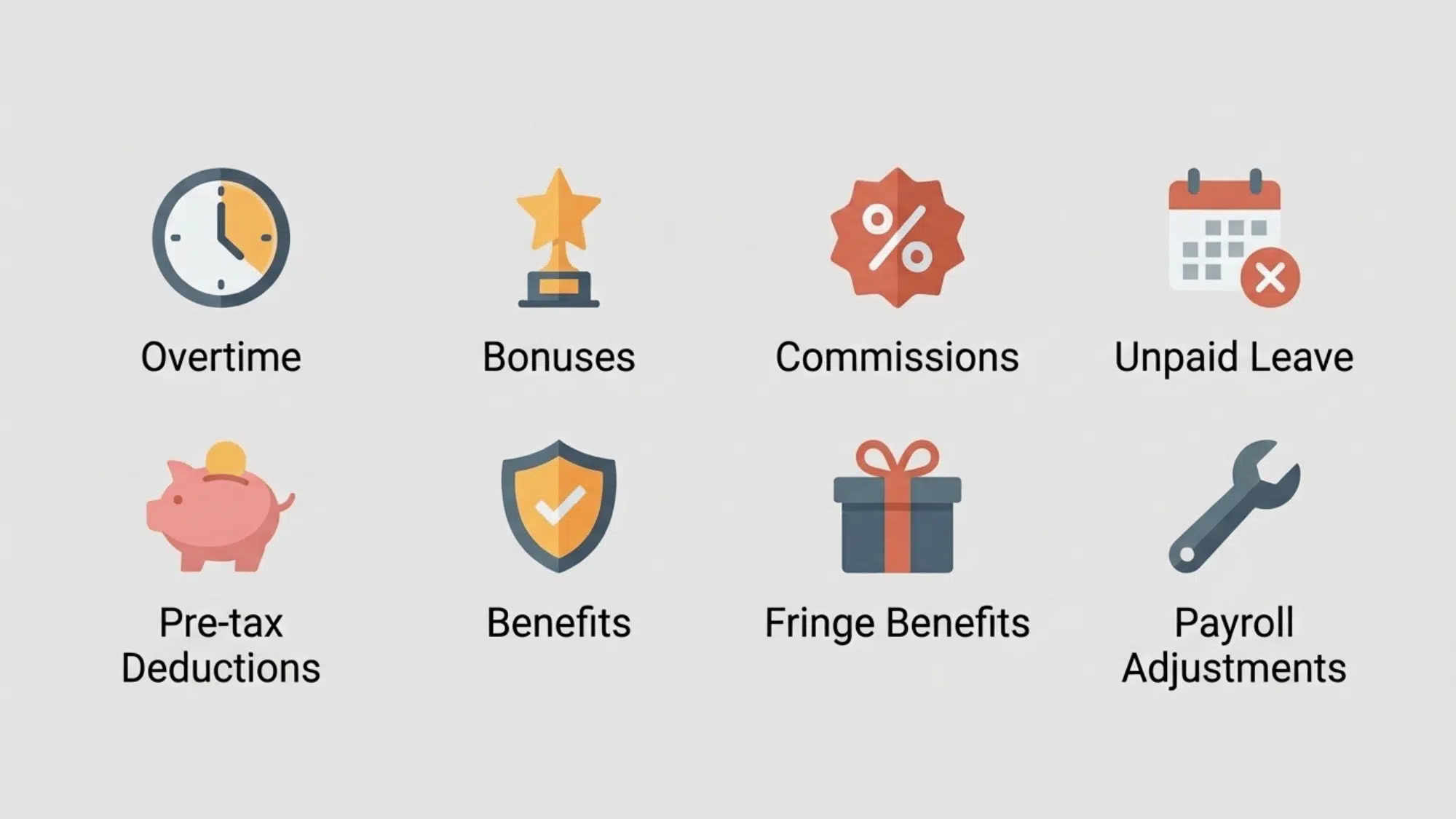
In many cases, the difference comes from normal payroll processing rather than an error. Knowing what affects YTD totals can make those numbers easier to interpret.
- Overtime earnings: Extra hours worked increase gross earnings beyond regular pay.
- Bonuses or incentive pay: One-time payments are added to Gross Pay during the payroll period in which they are paid.
- Commission payments: Sales commissions can increase earnings unevenly throughout the year.
- Unpaid leave: Time away from work without pay may reduce annual earnings.
- Pre-tax deductions: Contributions to retirement plans, HSAs, or FSAs reduce taxable wages but do not reduce gross earnings.
- Benefit deductions: Insurance premiums lower take-home pay without changing gross wages.
- Taxable fringe benefits: Certain employer-provided benefits count as taxable income and can increase taxable wage totals. HRsimple explains this.
- Payroll adjustments: Corrected time records or payroll corrections may change YTD figures on a later paycheck.
Wrapping It Up
YTD gives you a simple way to see how your pay has added up during the year. Once you know what each figure means, reading a pay stub becomes much easier.
The main point is to check that the numbers make sense as the year goes on. A quick review now can prevent confusion when your W-2 arrives.
If something looks wrong, compare recent pay stubs and contact payroll or HR with the details. Keep any corrected records with your tax documents.
Frequently Asked Questions
Does YTD Reset Every Year?
Yes. Most employers reset YTD totals at the beginning of each calendar year, usually with the first payroll processed in January. New totals then begin accumulating for the new tax year.
Does Gross Pay YTD include Overtime?
Yes. It generally includes regular wages, overtime, bonuses, commissions, holiday pay, and other taxable earnings paid through payroll.
Why Doesn’t My Gross Pay YTD match My Annual Salary?
Your annual salary represents your expected earnings for the full year. Gross Pay only reflects wages that have been paid so far during the current calendar year.
Does YTD Include Taxes?
Yes. Most pay stubs include separate YTD totals for federal income tax, state income tax where applicable, Social Security tax, Medicare tax, and other payroll deductions.
Is YTD the Same as The Information on My Form W-2?
They are closely related but may not always match during the year because your Form W-2 is prepared after the calendar year ends.