

A difficult week does not always mean the culture is unhealthy. Still, repeated tension, unfair treatment, and constant pressure can make employees question the toxicity of their work environment.
The problem may be hard to name at first. Poor communication can look like disorganization, while favoritism or fear may be brushed off as part of a manager’s personality.
In this blog, you’ll find the signs of a toxic workplace, real worker experiences for comparison, and practical steps for assessing repeated problems at work.
What are the Signs of a Toxic Workplace?
A toxic workplace is usually marked by repeated behavior that weakens trust, fairness, safety, or respect. The problem may come from managers, coworkers, company rules, or the way complaints are handled.
In the American Psychological Association’s 2023 Work in America Survey, 19 percent of workers called their workplace very or somewhat toxic.
The signs of a toxic workplace often appear together. A team may face unclear expectations, fear-based management, heavy workloads, weak boundaries, and silence when someone raises a concern.
The US Surgeon General’s workplace framework lists five basic needs, including protection from harm, connection, work-life harmony, feeling valued, and room to grow.
Signs of a Toxic Workplace

Some problems are obvious, such as yelling or threats. Others are quieter and may look like shifting rules. Here are some signs of a toxic workplace you watch for.
1. Poor Communication Is Normal
Employees receive incomplete instructions, late updates, or conflicting answers. They may still be blamed when missing information causes a delay.
Example: A manager changes a client request but tells only one team member. The rest of the team follows the old instructions and is criticized for submitting the wrong work.
2. Priorities Change Without Warning
Deadlines and targets move with little notice. Staff must redo work but are still expected to meet the new deadline.
Example: An employee spends three days finishing a report, then learns that management wants a different format by the same afternoon without giving them more time.
3. Favoritism Shapes Decisions
Certain employees receive better assignments, flexible schedules, inside information, or promotions without consistent standards.
Coworkers may notice that workplace rules depend on who is asking rather than what is fair. This can weaken trust and make capable employees feel that strong performance will not lead to equal treatment.
Example: One employee is regularly allowed to work from home, while coworkers in the same role have similar requests denied without any explanation.
4. Employees Are Afraid to Speak Honestly
Meetings stay quiet because people expect criticism, punishment, or exclusion when they disagree or ask difficult questions.
Example: A team knows a deadline is unrealistic, but no one speaks up because the last employee who raised a concern was removed from the project.
5. Managers Lead Through Fear
Threats, sudden write-ups, angry messages, or comments about job security are used to control staff. Employees begin making decisions based on avoiding punishment rather than completing thoughtful, accurate work.
This atmosphere can increase anxiety and discourage people from asking for help when they need it.
Example: A manager warns that anyone who misses the monthly target may be replaced, even though the target changed halfway through the month.
6. Public Criticism Is Common
Managers embarrass employees in front of others instead of discussing mistakes privately and respectfully.
Public humiliation rarely helps someone correct an error or improve their performance. It often creates shame, damages confidence, and makes the rest of the team afraid of becoming the next target.
Example: During a team meeting, a supervisor reads an employee’s mistake aloud and asks why they cannot complete a simple task correctly.
7. Micromanagement Replaces Trust
Routine tasks need repeated approval. Experienced employees are watched closely and have little say over their work. Constant monitoring slows progress and suggests that employees are not trusted to use their judgment.
It can also prevent people from developing confidence, independence, and stronger decision-making skills.
Example: A manager asks to be copied on every email and requires approval before an experienced employee can answer routine client questions.
8. Employees Carry Responsibility Without Authority
A worker is answerable for team results but cannot approve work, set priorities, or join key decisions.
They are expected to solve problems without access to the authority or resources needed to address them. This creates an unfair situation in which responsibility is assigned without meaningful control.
Example: A team lead is blamed when a project runs late, even though senior managers rejected requests for more staff and a revised deadline.
9. Blame Always Moves Downward
Managers take credit for good results but blame junior staff for weak planning or staffing gaps. Employees may be held responsible for decisions they did not make and conditions they could not control.
When blame consistently moves downward, people focus more on protecting themselves than working together.
Example: A manager presents a successful campaign as their own work, then blames an assistant when another project struggles because of poor planning.
10. Leaders Avoid Accountability
Senior staff excuses their own mistakes while holding everyone else to stricter rules. Missed deadlines, poor decisions, and unprofessional behavior are overlooked when they involve someone in authority.
This double standard tells employees that workplace expectations are based on status rather than responsibility.
Example: A director repeatedly misses approval deadlines but writes up an employee for submitting one document a few hours late.
11. Heavy Workloads Never Ease
Temporary staff shortages become permanent.
Duties grow, but time, staffing, and pay stay the same. Employees may keep absorbing extra responsibilities without receiving updated job descriptions, realistic deadlines, or additional support.
Work quality and health can suffer when an emergency workload becomes the normal expectation.
Example: Two employees leave, and their duties are divided among the remaining staff. Months later, no replacements have been hired, and the extra work remains.
12. Burnout Is Treated as Loyalty
Working late, skipping breaks, and replying during personal time are praised. Rest is treated as poor commitment. Employees may feel pressured to prove their dedication by ignoring exhaustion and personal responsibilities.
This rewards unhealthy habits and makes reasonable working hours appear unacceptable.
Example: Employees who answer emails at midnight are praised during meetings, while those who log off on time are described as less dedicated.
13. Personal Boundaries Are Ignored
Managers call after hours, question time off, or expect replies during weekends and vacations.
Employees may feel that they are never fully away from work, even during approved personal time. Repeated interruptions make it difficult to rest, manage family responsibilities, or return to work refreshed.
Example: A supervisor repeatedly sends urgent messages during an employee’s approved vacation and becomes annoyed when the employee does not reply immediately.
14. Breaks and Leave Are Discouraged
Employees feel guilty for taking lunch, using paid leave, attending appointments, or staying home when sick.
Managers may not directly forbid time off, but their comments and reactions create pressure to avoid using it. Employees can begin working through illness or skip necessary breaks to protect their reputation.
Example: A manager makes negative comments whenever someone takes a full lunch break, causing employees to eat at their desks instead.
15. Gossip Shapes the Culture
Managers and coworkers discuss private matters, criticize absent staff, or pass rumors through the team.
Example: A supervisor shares details about an employee’s health-related absence and asks coworkers what they think is really happening.
16. Cliques Control Access
A small group receives information, recognition, and better opportunities. Other employees are left out. Important decisions may happen through private conversations rather than open workplace channels.
People outside the preferred group can struggle to perform well because they receive updates late or miss opportunities entirely.
Example: Important project updates are shared during private lunches with a preferred group, leaving other team members unprepared for meetings.
17. Disrespectful Behavior Goes Unchecked
Yelling, insults, interruptions, and mocking comments continue because managers do not step in.
When disrespect has no consequences, it can quickly become accepted behavior across the team. Employees may feel pressured to tolerate mistreatment simply because leadership refuses to address it.
Example: One employee regularly interrupts and mocks a coworker during meetings, while the manager laughs along instead of stopping the behavior.
18. Harassment Complaints Are Dismissed
Employees who report offensive behavior are called too sensitive or told to handle it alone.
Their concerns may be minimized before anyone properly reviews what happened. This can allow harmful conduct to continue and discourage other employees from reporting similar experiences.
Example: An employee reports repeated comments about their age, but HR says the coworker is only joking and advises them not to take it personally.
19. Employees Face Retaliation After Speaking Up
A complaint is followed by worse shifts, added scrutiny, exclusion, threats, or a lower review. The change may appear subtle at first, but the timing can make employees fear that speaking up caused it.
This warns the rest of the workplace that reporting problems may carry personal consequences.
Example: After reporting discriminatory comments, an employee loses regular shifts and is suddenly criticized for minor issues that were previously ignored.
20. Good Work Receives Little Recognition
Employees hear from managers mainly when something goes wrong. Reliable work passes without acknowledgment.
When effort is consistently ignored, employees may feel that nothing they do will be noticed unless they make a mistake. Motivation often falls when criticism is frequent but useful feedback and appreciation are rare.
Example: An employee meets every deadline for months without receiving feedback, but one small error leads to an immediate meeting and written warning.
21. Training and Help Are Missing
New employees receive urgent duties without enough instruction, then face criticism for avoidable mistakes. Questions may be treated as weakness even when procedures are unclear or undocumented.
Without proper training, employees are expected to learn through errors while carrying the full blame.
Example: A new hire is asked to use unfamiliar software on the first day. When the report contains errors, the manager says they should have figured it out.
22. Growth Opportunities Are Unequal
Promotion standards stay vague, training requests are refused, or preferred employees move ahead despite weaker results.
Example: A qualified employee applies for a promotion but never receives an interview, while the role goes to a manager’s friend with less experience.
23. Turnover Stays High
New hires leave quickly, long-serving staff resign close together, and leaders avoid questions about the pattern. Constant departures increase pressure on the employees who remain and disrupt team knowledge.
When management treats every resignation as an isolated event, the underlying workplace problems continue.
Example: Four people leave the same department within six months, but management treats each resignation as unrelated and never reviews the working conditions.
24. Employees Look Withdrawn or Exhausted
Coworkers stop sharing ideas, avoid managers, call out often, or show dread before meetings and shifts.
Changes in energy and participation can reveal that employees no longer feel safe, supported, or hopeful about their work. A team that once communicated openly may begin doing only what is necessary to get through the day.
Example: A once-talkative team becomes silent during meetings. Employees stop volunteering, avoid discussions, and leave as soon as the workday ends.
25. Safety or Ethical Concerns Are Ignored
Workers are pressed to overlook unsafe tasks, false records, dishonest behavior, or practices that may harm others. Employees may be told to stay quiet, follow orders, or avoid creating delays.
Ignoring these concerns can place workers, customers, and the organization at serious risk.
Example: An employee reports damaged safety equipment, but the manager tells the team to keep using it until money becomes available for a replacement.
How to Tell when Workplace Problems Form a Pattern
A problem becomes more concerning when it repeats, spreads across teams, or continues after someone reports it. Several signs of a toxic workplace appearing together deserve closer attention.
| Workplace issue | Possible isolated problem | Repeated workplace pattern |
|---|---|---|
| Poor communication | One missed update | Information is regularly withheld |
| Heavy workload | A short busy period | Understaffing never stops |
| Manager criticism | One badly handled talk | Public humiliation keeps happening |
| Favoritism | One disputed choice | The same group gets special treatment |
| Employee complaints | A slow response | Concerns are ignored or used against staff |
What Workers Say About Toxic Workplaces
The accounts below come from workplace and career communities. They show how employees describe confusing behavior in ordinary terms.
“I was just told what to do, and if things went wrong, I was 100% to blame.”
One worker said they managed people but had no place in decisions, then carried the blame when something failed.
“I felt my self-confidence being slowly chipped away until I was full of doubt.”
A former employee linked unfair promotion choices and favoritism with anxiety and declining self-belief.
“Four days in and I was the only member of staff working late on a Friday evening.”
A new employee received urgent client work before learning the skill needed to finish it.
“Favoritism, cliques, high turnover, poor management and communication were the things I experienced.”
A worker looked back on a firm where several problems appeared at the same time.
“Gossip, exclusion, managers pitting employees against one another.”
A commenter described quieter behavior that can break trust across a team.
Practical Steps to Take when Your Workplace Feels Toxic
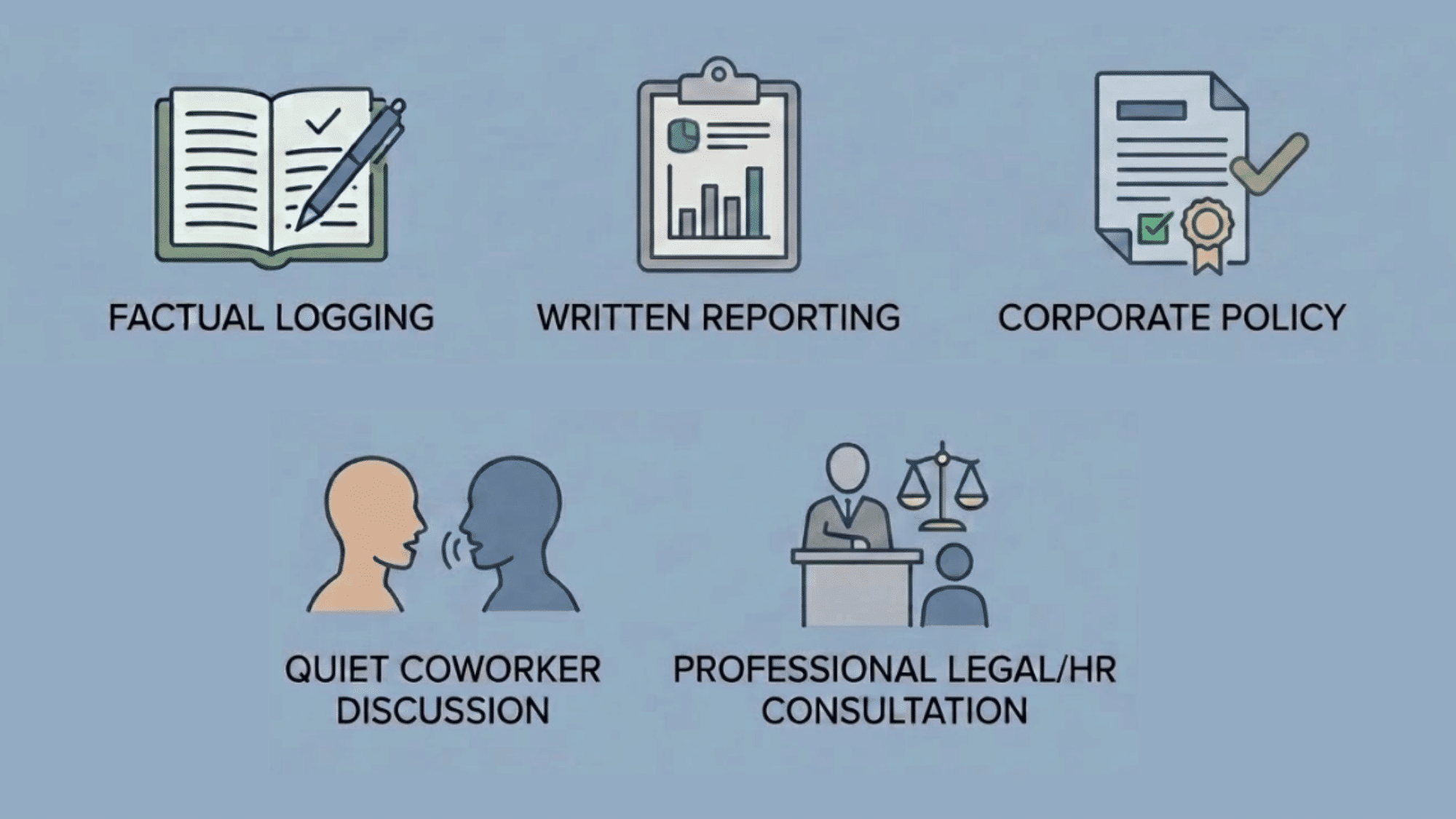
Not everyone can resign right away, and an internal complaint may not bring a quick result. The next step should match the behavior, available records, and any legal or safety concern.
- Keep factual notes: Write down dates, statements, witnesses, schedule changes, and related messages to keep track of appointments.
- Read company policies: Check reporting steps, anti-retaliation rules, leave terms, and contacts outside the direct manager.
- Put concerns in writing: State what happened, how it affected the work, and what response is being requested.
- Talk with coworkers carefully: Many private-sector employees have rights to act together over pay and working conditions, even without a union.
- Seek outside support: Contact HR, a union representative, an employment attorney, or the appropriate government agency if the issue involves discrimination, retaliation, unpaid wages, or workplace safety.
Wrapping It Up
Recognizing the signs of a toxic workplace can help you trust what you have been noticing instead of dismissing every concern as a bad day. Repeated unfairness, fear, or disrespect deserves attention.
You do not need to make a rushed decision. Start by keeping clear records, reading company policies, and speaking with someone you trust.
Small steps can bring clarity and help you regain a sense of control. Whatever you decide, your concerns are valid, and a healthier work situation is possible.
Frequently Asked Questions
Can a Workplace Be Toxic without An Abusive Manager?
Yes. Coworker exclusion, gossip, unclear rules, chronic understaffing, or ignored complaints can harm a team even when the direct manager appears polite.
Is High Turnover Always a Sign of A Bad Workplace?
No. Seasonal work, restructuring, relocation, and industry conditions may also raise turnover. It becomes more concerning when departing workers report the same unresolved problems.
Can One Department Be Toxic While the Rest of The Company Is Healthy?
Yes. A single manager, team, or location can have serious culture problems even when other parts of the company function well.