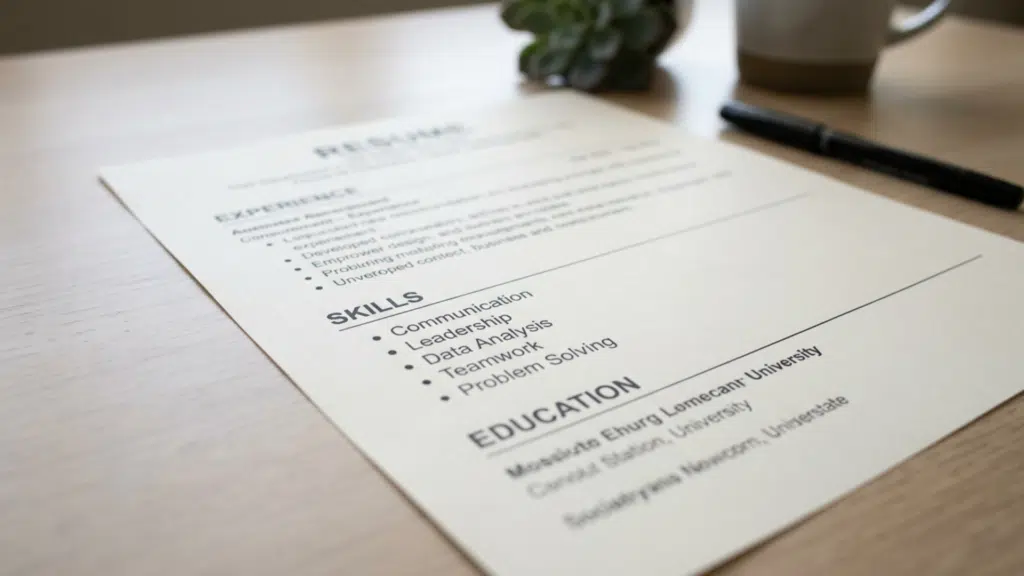

A resume does more than list your education and work experience. Recruiters often review resumes quickly, and the right skills section can help you stand out from other applicants.
Including relevant skills shows employers that you have the abilities needed to perform well and adapt to workplace demands.
Choosing a list of skills for a resume can be challenging, especially when different industries value different strengths.
This blog covers the best skills to include on a resume and explains why they matter for career growth.
What Exactly Do Employers Look for in a Resume?
When reviewing resumes, employers pay close attention to the skills candidates bring to the role.
A strong skills section highlights abilities that align with the position and demonstrates the candidate’s practical knowledge and experience.
It can also reflect qualities such as teamwork, organization, communication, and problem-solving, which are valued across many industries.
Employers also look for skills that show you can grow with the role, not just fulfill its current requirements.
Best Soft Skills to Add to Your Resume
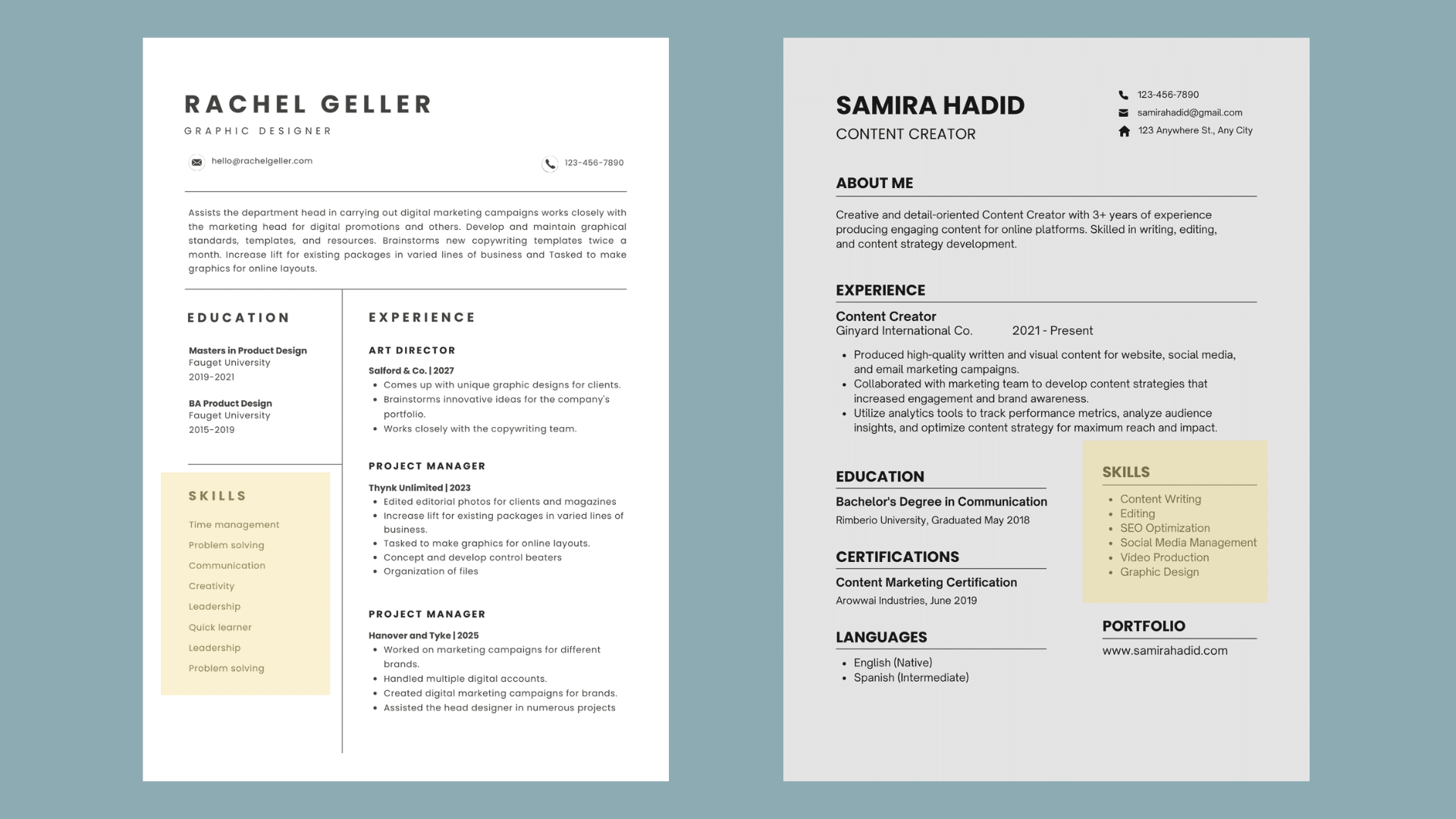
A strong list of skills for resume writing should include both technical abilities and workplace strengths.
Technical skills depend on the specific role you’re applying for, but these soft skills are important across every industry and workplace.
1. Communication Skills
Communication skills demonstrate that you can share ideas clearly, listen to others, and provide useful information professionally.
This skill is important in almost every job because employees often need to work with managers, team members, clients, or customers.
2. Problem-Solving Skills
Problem-solving skills show that you can identify issues and find practical ways to fix them.
Employers value this skill because workplaces often need people who can stay calm, think clearly, and handle challenges without constant guidance.
3. Teamwork and Collaboration
Teamwork and collaboration demonstrate that you can work well with others to complete tasks and achieve shared goals.
This skill is useful in roles that require group projects, shared duties, or regular communication with different departments.
Strong team dynamics and collaboration can directly affect how well a team performs.
4. Leadership Skills
Leadership skills show that you can guide people, take responsibility, and support a team’s progress.
You do not need to be in a manager role to show leadership. It can also include taking initiative, helping coworkers, and making sound decisions.
Being aware of common leadership weaknesses can also help you present a more honest and grounded skills profile.
5. Time Management
Time management shows that you can plan your work, meet deadlines, and complete tasks in an organized way. This skill helps employers see that you can handle your responsibilities without delays or poor planning.
6. Adaptability and Flexibility
Adaptability and flexibility show that you can adjust to changes in tasks, tools, schedules, or work processes.
This skill is important because many jobs require employees to learn new methods and respond well to changing needs.
7. Critical Thinking
Critical thinking shows that you can review information, compare options, and make careful decisions. Employers value this skill because it supports better planning, fewer mistakes, and stronger work results.
8. Project Management
Project management skills show that you can plan, organize, and complete work within a set timeline.
This skill is useful for roles that involve managing tasks, coordinating teams, tracking progress, or handling several responsibilities at once.
9. Customer Service Skills
Customer service skills show that you can support customers, answer questions, solve concerns, and maintain a professional attitude. These skills are useful in sales, support, hospitality, healthcare, retail, and many client-facing roles.
10. Technical Skills
Technical skills are your ability to work with specific tools, systems, software, or methods directly tied to a particular role or industry.
Depending on the field, technical skills might include proficiency in programming languages such as Python or JavaScript and familiarity with design platforms such as Adobe Creative Suite or Figma.
11. Data Analysis
Data analysis shows that you can read information, find patterns, and use facts to support decisions. This skill is useful in business, marketing, finance, operations, technology, and many other fields.
12. Computer Proficiency
Computer proficiency refers to your comfort and competence with the digital tools commonly used in professional settings.
This includes writing documents, managing spreadsheets, handling emails, and attending virtual meetings through platforms like Zoom or Microsoft Teams
13. Creativity and Innovation
Creativity and innovation show that you can bring fresh ideas and improve the way tasks are done. This skill is useful for roles in marketing, design, content, product development, business planning, and problem-solving.
14. Organizational Skills
Organizational skills show that you can manage tasks, files, schedules, and priorities in a clear way. Employers value this skill because organized employees can work more efficiently and reduce confusion.
15. Attention to Detail
Attention to detail shows that you can complete work carefully and notice small errors before they become bigger problems.
This skill is important in roles that require accuracy, quality checks, reporting, record-keeping, or handling customer information.
16. Emotional Intelligence
Emotional intelligence shows that you can understand your own emotions and respond well to others. This skill supports better communication, stronger teamwork, and a more respectful workplace.
17. Decision-Making Skills
Decision-making skills show that you can review information and choose a practical course of action.
Employers value this skill because it shows confidence, responsibility, and the ability to move work forward.
Hard Skills to Add According to Different Professions
This is an in-demand, job-ready list of skills for a resume, widely used across the creative, tech, and digital industries. Adding them can make your resume more relevant and competitive.
| Profession | Top Hard Skills to Add to a Resume |
|---|---|
| Software Developer / Engineer | Python, JavaScript, SQL, Git & GitHub, REST APIs, Cloud Platforms (AWS/GCP/Azure), Docker & Kubernetes, Data Structures & Algorithms |
| Data Analyst / Data Scientist | SQL, Python (Pandas, NumPy), Excel, Tableau / Power BI, Machine Learning (Scikit-learn), R, Google Analytics, Statistical Analysis |
| Digital Marketer / SEO Specialist | SEO & SEM, Google Analytics 4, Google Ads, Meta Ads Manager, Ahrefs / SEMrush, Email Marketing (Mailchimp), Content Management Systems (WordPress) |
| Graphic Designer / UI-UX Designer | Adobe Photoshop, Illustrator, Figma, Sketch, InVision, After Effects, Wireframing & Prototyping, Typography |
| Project Manager | PMP Certification, Agile / Scrum, JIRA, Microsoft Project, Risk Management, Budget Planning, Stakeholder Reporting, Confluence |
| Financial Analyst / Accountant | Financial Modeling, Excel (Advanced), QuickBooks, SAP, Bloomberg Terminal, Tally ERP, GAAP / IFRS Knowledge, Forecasting & Budgeting |
| Human Resources (HR) Professional | HRIS Software (Workday, SAP SuccessFactors), ATS Tools (Greenhouse, Lever), Payroll Processing, Labor Law Knowledge, Employee Onboarding Systems |
| Content Writer / Copywriter | SEO Writing, CMS (WordPress), Grammarly, Surfer SEO, Keyword Research (Ahrefs/SEMrush), Basic HTML, Social Media Writing |
| Sales Representative / Business Development | CRM Software (Salesforce, HubSpot), Cold Outreach, Lead Generation, Sales Forecasting, Pipeline Management, Excel / Google Sheets |
| Nurse / Healthcare Professional | Electronic Health Records (EHR/EMR), IV Insertion, Patient Triage, CPR/BLS Certification, Medication Administration, Vital Signs Monitoring |
| Teacher / Educator | Learning Management Systems (Google Classroom, Canvas), Curriculum Development, Assessment Design, MS Office Suite, E-learning Tools (Kahoot, Nearpod) |
| Civil / Mechanical Engineer | AutoCAD, SolidWorks, MATLAB, Revit, BIM Software, Structural Analysis, MS Project, Technical Drawing |
| Cybersecurity Analyst | Network Security, Penetration Testing, SIEM Tools (Splunk), Firewalls & VPNs, Ethical Hacking, CompTIA Security+, Python Scripting |
| Lawyer / Legal Professional | Legal Research (Westlaw, LexisNexis), Contract Drafting, Case Management Software, Regulatory Compliance, Microsoft Office Suite |
| Photographer / Videographer | Adobe Lightroom, Premiere Pro, After Effects, Final Cut Pro, DSLR/Mirrorless Camera Operation, Color Grading, DaVinci Resolve |
Other General Skills to Strengthen Your Resume
Along with core technical and creative skills, adding a few supporting abilities can help show that you are well-rounded and adaptable in different work environments.
- Language Skills: Ability to speak or understand multiple languages, improving communication with diverse teams and clients.
- Digital Literacy: Comfortable using modern digital tools, online platforms, and workplace software effectively.
- Research Skills: Ability to gather, analyze, and use information effectively for projects and decision-making.
- Presentation Skills: Ability to present ideas clearly using slides, visuals, or verbal communication.
- Basic Analytics Skills: Understanding of simple data interpretation using Excel, reports, or dashboards.
- Multitasking: Ability to handle multiple tasks or responsibilities efficiently without losing focus or quality.
- Workflow Management: Ability to organize tasks and follow structured processes to complete work smoothly and on time.
How to Choose the Right Skills for Your Resume?

The skills section should be customized to the position you are applying for rather than used as a fixed list for every application.
Different roles require different abilities, so it is important to focus on skills that align with the responsibilities of the job.
A balanced mix of technical and workplace skills can create a stronger profile and present a more accurate picture of your professional strengths.
Keeping your skills section up to date also helps ensure your resume reflects your current capabilities and career direction.
Understanding the qualities employers look for in candidates, from communication and critical thinking to emotional intelligence and leadership, can help you align your skills section with what actually moves candidates forward in the hiring process.
Tips for Building a Strong Resume Skills Section
A well-organized skills section can make your resume easier to read and help employers quickly identify your strengths. Keep these tips in mind when creating or updating your list of skills for resume applications:
- Focus on skills that support your work experience and achievements.
- Use clear and specific skill names instead of broad terms.
- Highlight skills that are most relevant to your target role.
- Keep the skills section concise and easy to scan.
- Add industry-specific skills when they are important for the position.
- Update your skills regularly as you gain new knowledge and experience.
- Place your strongest and most relevant skills first.
- Ensure the skills listed align with the rest of your resume.
Wrapping it Up
A strong resume is more than a summary of your qualifications and work history.
The skills you choose to include can help employers understand your strengths, working style, and ability to contribute in a professional environment.
Rather than treating the skills section as a simple checklist, use it to highlight abilities that support your career direction and reflect the expectations of your target role.
It also gives recruiters a quick way to understand the value you can bring to a position and how you may support goals.