

A good manager brings out the best in a team while keeping its work aligned with the organization’s goals. Your role is to create the conditions for people to succeed rather than doing everything yourself.
Good management also requires adaptability. What works for a small, experienced team may not work for a larger team with new employees.
You need to recognize when your approach is working and when it needs to change.
While every workplace is different, certain management practices can help you lead your team effectively, regardless of your experience or industry.
Essential Management Practices for Every Manager
Effective management comes down to what you do consistently. These 11 practical habits can help you handle everyday responsibilities and become more confident in your role.
1. Set Clear Goals and Expectations
Picture an employee finishing a project on time, only to learn the target had changed. Clear expectations prevent this.
Define each person’s responsibilities, set realistic deadlines, and explain how you’ll measure success.
Link every assignment to a business objective. What if priorities shift midway?
Tell your team immediately, before anyone spends hours on work that no longer matters.
2. Communicate Clearly and Listen Actively
Effective communication involves making information easy to understand and giving others your full attention.
Avoid vague instructions, unnecessary jargon, and assumptions about what employees already know.
-
Let People Finish: Hear the full point before you form or share your response.
-
Confirm Understanding: Summarize what you heard and check it with the speaker before replying.
-
Explain the “why”: Share organizational updates so decisions make sense instead of fueling guesswork.
3. Build Trust and Psychological Safety
Trust develops when employees feel comfortable admitting mistakes, asking questions, and expressing different opinions without fear of embarrassment.
Managers play an important role in creating this sense of psychological safety.
When someone respectfully challenges your decision, listen without becoming defensive. Keep sensitive conversations confidential and follow through on promises whenever possible.
4. Delegate Tasks Without Micromanaging
Delegation means giving employees responsibility for a task along with enough authority to complete it. Assign work based on their abilities and availability rather than relying on the same people every time.
-
Define Decision-Making Authority: Explain which decisions employees can make independently and when they need your approval.
-
Provide Resources: Make sure people have the information, tools, and access the task requires.
-
Agree on Checkpoints: Schedule a few progress reviews rather than checking in constantly.
-
Step Back: Let employees choose their own methods whenever the situation allows.
5. Hold Regular One-on-Ones and Give Constructive Feedback
Some concerns never surface in a group setting. Regular one-on-one meetings give you space to understand individual challenges, discuss progress, and offer constructive feedback.
Avoid turning these meetings into routine status updates. Instead, focus on conversations that help your employees improve.
-
Ask Meaningful Questions: Find out what your employees struggle with and what support they need from you.
-
Focus on Behavior: Address specific actions rather than making personal judgments.
-
Explain the Impact: Show how their actions affect teammates, deadlines, or project outcomes.
-
Agree on Next Steps: Work together to find solutions and prevent recurring issues.
Don’t wait for a scheduled meeting to address urgent performance concerns. Give feedback while the details are still fresh.
6. Recognize and Reward Good Performance
A quick “good job” is nice, but telling someone exactly what they did well makes your appreciation more meaningful.
Recognize completed projects, creative solutions, and steady improvement. Find out if your employees prefer public or private appreciation.
Where your company’s policies allow, consider rewards such as performance bonuses or additional paid time off.
Don’t forget the quiet contributors who keep things running behind the scenes.
Looking for better ways to appreciate your employees? Try these great work team quotes to celebrate their efforts and achievements.
7. Handle Workplace Conflicts Fairly
Unresolved friction can lower morale and slow down work. When handling workplace disputes, focus on solutions rather than blame, and give everyone a chance to share their perspective.
-
Separate Facts from Assumptions: Check what actually happened before accepting anyone’s interpretation.
-
Find the Root Cause: Look past the surface argument to the issue driving it.
-
Set Clear Next Steps: End with agreed actions and expectations for respectful communication.
-
Escalate Serious Issues: Involve HR right away for harassment, discrimination, or misconduct.
The EEOC advises employers to take prompt and appropriate action to address harassment as soon as they become aware of it.
8. Invest in Employee Career Development
Where does each person on your team want to be in three years? If you can’t answer, start asking.
Then create paths toward those goals through mentorship, professional training, or stretch assignments.
Revisit career progress every few months, so growth feels planned rather than something employees must fight for.
9. Hold Yourself and Your Team Accountable
Accountability means standards apply to everyone, every time. When expectations bend for some people and not others, the team stops taking them seriously. Consistency turns standards from suggestions into shared commitments.
-
Track Agreed Commitments: Follow up so slipping becomes the exception, not the norm.
-
Tackle Repeated Problems: Name the pattern directly and offer reasonable support, such as training or guidance.
-
Own Your Missteps: When your decision causes problems, accept responsibility and say what you’ll do differently.
10. Support a Healthy Work-Life Balance
Review employee workloads regularly to ensure tasks and deadlines are manageable. Set clear priorities so employees know which tasks need immediate attention and which can wait.
Respect employees’ approved time off and set clear expectations for communication outside working hours, especially for remote teams across time zones.
11. Make Informed Decisions and Remove Roadblock
As a manager, one of your responsibilities is to identify and remove obstacles that prevent employees from working effectively.
Delayed approvals, limited resources, and conflicting departmental priorities can affect productivity.
-
Gather the Facts First: Collect relevant information before committing to a course of action.
-
Involve the Right Stakeholders: Bring in people whose input or approval affects the outcome.
-
Decide without Stalling: Make timely calls so blocked work can move forward again.
-
Invite Early Warnings: Encourage employees to flag obstacles before they lose time struggling alone.
What is the 30-60-90 Rule for Managers?
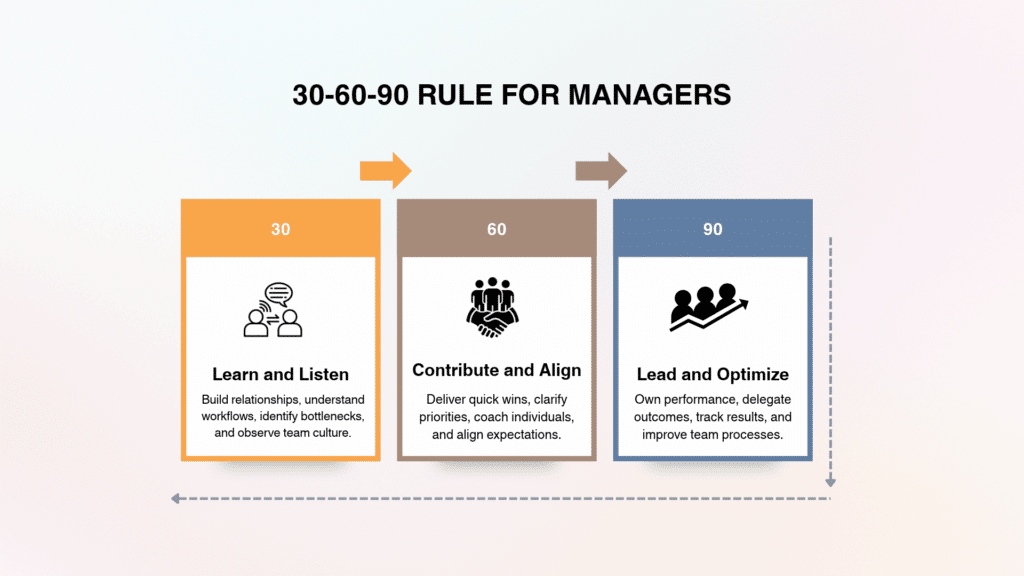
The 30-60-90 rule divides new managers’ first 90 days into three phases: learn, contribute, lead. It helps them set priorities, build trust, and align expectations with their team and boss.
1. Days 1–30: Learn and Listen
Your first month is for gathering context. Meet each direct report and key stakeholder one-on-one to build relationships early.
Map how work really gets done, from tools and bottlenecks to team goals. Delay major changes until you understand the culture.
2. Days 31–60: Contribute and Align
Now turn early observations into small, targeted quick wins that show progress.
Clarify team priorities, set a steady meeting rhythm, and begin coaching individuals.
Extend your reach by working with other departments and confirming expectations with your own manager.
3. Days 61–90: Lead and Optimize
By the third month, you own the team’s performance, metrics, and long-term plans.
Delegate outcomes, not just tasks, and track results through regular reviews. Then tackle bigger process or strategy improvements, and assess your own progress at day 90.
Common Management Mistakes to Avoid
Good intentions don’t prevent bad habits. Even seasoned managers slip into patterns that quietly damage morale, trust, and results.
-
Making Immediate Changes: Rushing to make your mark skips the learning phase of the 30-60-90 plan. Find out why current processes exist before rewriting them.
-
Trying to Please Everyone: Chasing approval blurs your role and weakens your authority. Keep professional boundaries and make necessary calls, even the unpopular ones.
-
Making Unrealistic Promises: Never hint at promotions, raises, or new roles before they’re approved. Raised hopes that fall through can push employees out.
-
Using One Management Style: A new hire needs step-by-step guidance, while a veteran wants room to work. Match your involvement to each person’s experience.
-
Becoming inaccessible: Constantly closed doors and unanswered messages leave questions piling up. Set regular hours your team can count on for help.
-
Overloading high performers: Handing every critical task to your strongest employee wears them down and denies other teammates the chance to prove themselves.
How to Be a Good Manager: Insights From a Reddit Discussion
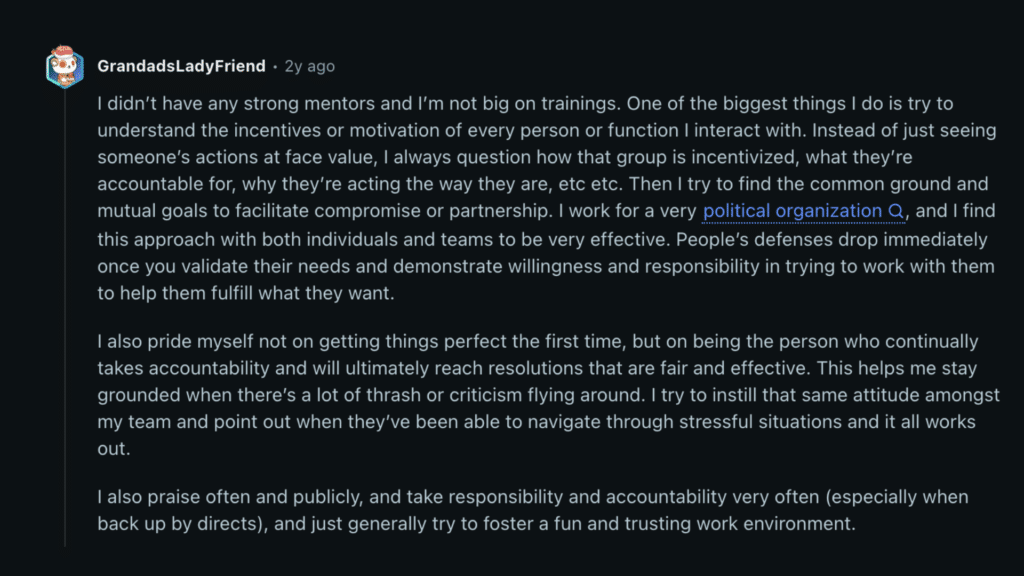
Strong management isn’t limited to mentors or formal training. On Reddit, a manager describes starting with what motivates each person and team.
Instead of taking actions at face value, they ask how a group is incentivized, what it answers for, and why it behaves that way. They then seek shared goals that enable compromise.
Validating people’s needs, they note, quickly lowers defenses. They prize consistent accountability over first-time perfection, which keeps them grounded amid criticism, and encourage the same in their team. They also praise publicly and nurture a fun, trusting workplace.
Frequently Asked Question
How do You Manage People Who Used to be Your Peers?
Talk openly about the change early. Acknowledge the new dynamic, keep friendships but avoid favoritism, and stay out of team gossip. Expect early awkwardness; it fades naturally as trust grows.
What is the Difference Between a Manager and a Leader?
Managers organize work, resources, and processes to meet goals. Leaders inspire people to follow a direction willingly. The strongest managers do both, combining reliable execution with a believable vision.
Can Introverts be Good Managers?
Yes. Introversion is not a barrier to management. Many introverts think carefully before reacting and prefer deep conversations. Scheduling quiet time to recharge helps introverts handle the role’s constant social demands.