

You started a business to sell, build, or serve customers.
Yet somehow you are up late fixing a payroll error, and a tax notice sits unopened on your desk. Sound familiar?
A professional employer organization can take that work off your hands.
So what exactly is a PEO, and how does it work?
This guide breaks it down in plain terms: the services you get, the real costs, the catches, and how to pick a provider you can trust.
What is a Professional Employer Organization (PEO)?
A professional employer organization, or PEO, is a company that handles HR work for small and midsize businesses.
It works through a setup called co-employment. That means you and the PEO share the job of being the employer.
You still run your business and manage your team each day. The PEO handles the paperwork side, like payroll, taxes, and workers’ comp. It also keeps up with labor laws, so you’re less likely to miss a rule.
Since a PEO covers workers from hundreds of companies, it can get better health plans and retirement options than a small business could on its own. I think of it as an HR team you rent instead of hire.
How Does a Professional Employer Organization Work?
The process usually follows a set order, starting with choosing a provider and ending with a yearly review.
Step 1: The business looks at its HR needs and compares a few PEOs. It asks for quotes, reads reviews, and checks for IRS CPEO certification. That shows the provider meets federal standards for handling tax payments.
Step 2: Both sides sign a client service agreement, or CSA. This contract spells out which tasks the PEO takes on and which stay with the business. It also covers fees and cancellation terms.
Step 3: The business shares employee details with the PEO. This includes names, pay rates, job titles, and tax forms.
The PEO then adds everyone to its system, usually within a few weeks.
Step 4: Employees sign up for benefits during an enrollment window. Workers pick the medical, dental, or vision coverage they want. The PEO answers their questions and sets up deductions from each paycheck.
Step 5: Each pay period, the business sends in hours worked, overtime, and any bonuses.
The PEO turns that into paychecks or direct deposits. At year’s end, it also sends W-2 forms to every worker.
Step 6: Employees get access to an online portal. They can view pay stubs, update personal details, and request time off there. They can reach the PEO’s HR staff with questions instead of going to their manager.
Step 8: The business pays the PEO a fee, usually monthly or per pay period.
Some PEOs charge a flat rate per employee. Others take a percentage of total payroll, so costs rise with headcount.
Step 9: The business reviews the partnership once a year. It checks whether the service, costs, and benefits still fit its needs.
It can then renew, ask for changes, or give notice to leave, based on the contract
What Services Does a PEO Provide?
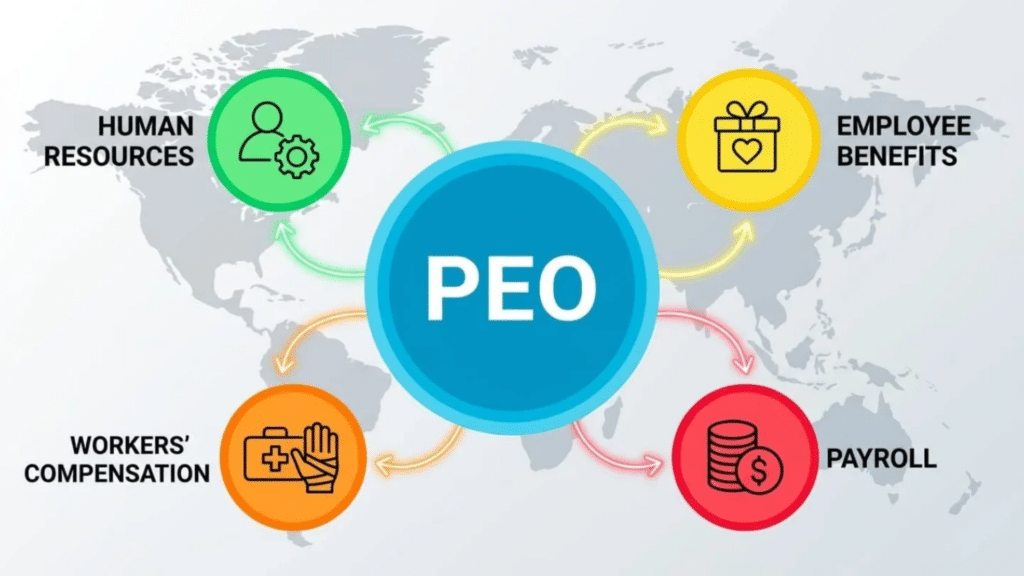
A PEO covers far more than paychecks, and the exact mix depends on the plan a business chooses.
These are the core services providers usually include.
Payroll Processing
Payroll errors cost businesses money and trust. A PEO calculates gross pay, withholdings, and net pay for every worker.
It handles different pay schedules, like weekly or biweekly, and pays hourly and salaried staff alike.
It also tracks paid time off balances and processes final paychecks when someone leaves. It also handles garnishments, such as child support orders. The business gets clear reports showing where every dollar went.
Tax Administration
Payroll taxes come with strict deadlines and heavy penalties for mistakes.
A PEO withholds federal, state, and local income taxes from each check. It pays Social Security, Medicare, and unemployment taxes on time. It files quarterly Form 941 returns and yearly Form 940 returns.
And when a business has staff in more than one state, the PEO keeps each state’s tax rules straight.
Employee Benefits
Good benefits help a small business compete with larger companies for talent. Beyond health coverage, a PEO can offer life insurance, disability insurance, and flexible spending accounts.
Some also include commuter perks, gym discounts, and employee assistance programs for stress or money worries.
The PEO handles insurance carriers, so the business owner doesn’t have to. It also manages COBRA coverage for former employees.
Workers’ Compensation Insurance
Most states require workers’ comp coverage once a business hires its first employee or reaches a set headcount.
A PEO often provides this coverage through its own master policy.
Premiums are usually paid each pay period, not in one big upfront payment.
When an injury happens, the PEO files the claim, works with the insurer, and helps the worker return to the job safely.
HR Compliance
Employment rules change often, and small mistakes can lead to fines or lawsuits.
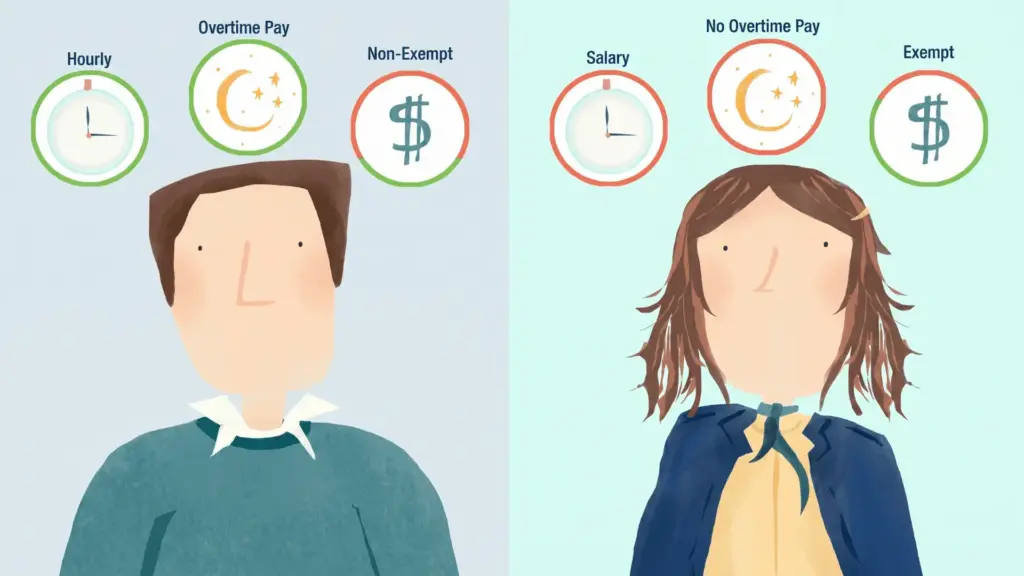
A PEO checks that workers are classified correctly as employees or contractors, and as exempt or nonexempt for overtime.
It supplies required workplace posters and keeps I-9 forms in order. It also stores employee records for the length of time the law requires. Many PEOs send alerts when new laws take effect.
Risk Management and Workplace Safety
A safe workplace means fewer injuries and lower insurance costs. A PEO can visit the job site to spot hazards and suggest fixes. It helps create written safety plans that meet OSHA standards.
It also runs safety training for staff. Many PEOs also offer employment practices liability insurance, which protects the business from claims like harassment or wrongful termination.
Recruiting and Onboarding
Finding the right people takes time a small business owner often doesn’t have.
A PEO can write job descriptions and post openings on popular job boards. Some screen résumés and run background checks. Once a candidate says yes, the PEO sends the offer letter and new hire paperwork online.
That way, the new employee can show up on day one ready to work.
Training and Development
Skilled employees tend to stay longer and work better.
A PEO gives access to online courses on topics like leadership, customer service, and software skills. It also covers mandatory sessions, such as sexual harassment prevention, which states like California and New York require.
Managers can also get one-on-one coaching on leading a team.
The business gets these programs without building them from scratch.
Performance Management
Regular feedback keeps a team on track. A PEO helps set clear goals for each role.
It provides templates for performance reviews and tools to track progress through the year.
It can also advise on raises and pay ranges by comparing local market rates. When a worker struggles, it helps write an improvement plan with specific steps. This keeps feedback fair and well documented.
HR Technology
Most PEOs include software that puts HR tasks in one place. Business owners can approve timesheets, run reports, and see labor costs from a single dashboard. Time-tracking tools let workers clock in from a phone or computer.
Many systems also connect with accounting software like QuickBooks or Xero.
That reduces duplicate data entry and keeps records matching across systems.
What are the Different Types of PEOs?
PEOs vary in structure, oversight, and focus. The main types are:
-
Traditional PEO: Operates under a co-employment model without federal certification.
-
Certified PEO (CPEO): IRS-certified and takes on federal employment tax liability for wages it pays.
-
Administrative Services Organization (ASO): Provides HR services without co-employment, so you remain the sole employer.
-
Industry-specific PEO: Focuses on sectors such as construction, healthcare, or hospitality, with tailored compliance and risk support.
-
Regional or boutique PEO: Serves specific states or smaller client bases, often with more personalized service.
What are the Benefits and Uses of Using a PEO?
A PEO pays off in ways that show up on the balance sheet and in everyday operations, too.
|
Benefit or Use |
What It Means for the Business |
|---|---|
|
More time for core work |
Owners spend fewer hours on admin and more on sales, products, and customers. |
|
Lower HR costs |
There’s no need to hire a full-time HR manager or buy separate HR software. |
|
Expert advice on call |
Owners get quick answers from certified HR pros when tough questions come up. |
|
Lower staff turnover |
Better support and a smoother work experience make people more likely to stay. |
|
Faster growth |
Small firms can hire quickly without building an HR department first. |
|
Remote team support |
Companies can hire talent across the country, not just in their own city. |
|
Smoother first hires |
Startups bringing on their first employees get a ready-made HR setup from day one. |
|
Predictable budgeting |
Fees follow a steady pattern, so cash flow is easier to plan. |
|
Stronger employer image |
A polished HR setup makes a small business look more established to job seekers. |
What are the Disadvantages of Working With a PEO?
A PEO can take a lot of HR work off your plate, but the arrangement comes with trade-offs to weigh before you sign:
-
Less Control Over HR Decisions: You will often need to follow the PEO’s policies, processes, and approved plans instead of setting your own.
-
Limited Benefit Flexibility: The PEO sets plan options, so you may not be able to keep a preferred insurance carrier or fully tailor coverage.
-
Shared Responsibility Can Blur Lines: Co-employment splits certain duties, which can create confusion over who handles what when issues arise.
-
Costs May Outweigh the Value: For businesses with simple HR needs, PEO fees can cost more than managing HR in-house.
-
Dependence on the Provider’s Service: Payroll errors, slow support, or system problems directly affect your employees.
How Much Does a PEO Cost?
PEO pricing usually follows one of two models.
Some providers charge a percentage of your total payroll. Others charge a flat fee per employee per month.
Flat fees are easier to forecast. Percentage-based pricing rises as you hire or increase wages. The headline fee rarely tells the full story. Health insurance premiums are often billed on top. Workers’ comp rates depend on your industry and risk level.
Setup or onboarding fees may also apply. Your location, headcount, and service tier all shape the final price.
To compare quotes fairly, convert each one into an annual cost per employee.
What is a Certified Professional Employer Organization (CPEO)?
A CPEO is a PEO that has passed the IRS certification program.
The program was created under the Small Business Efficiency Act of 2014. Certification is voluntary and must be maintained. Providers face background checks and annual independent financial audits.
They also submit quarterly reports and post a surety bond. These rules add a layer of financial accountability.
Using a CPEO can also help you keep certain tax benefits. Your business may keep eligible tax credits, such as the Work Opportunity Tax Credit. Federal wage bases may not restart when you switch mid-year.
The IRS publishes a list of certified providers. Check it before you sign.
What is the Difference Between a PEO and Other HR Service Providers?
A PEO is one of several ways to outsource HR. Here’s how it compares with other common options:
|
Provider |
Legal Employer |
Core Focus |
Best For |
|---|---|---|---|
|
PEO |
Shared with you |
Bundled payroll, benefits, HR, and workers’ comp |
Small to midsize firms wanting all-in-one support |
|
Employer of Record (EOR) |
The EOR |
Legally employing staff on your behalf |
Hiring where you have no legal entity |
|
Payroll Provider |
You |
Payroll processing and tax filing |
Businesses needing payroll support only |
|
HR Outsourcing Firm (HRO) |
You |
Specific HR functions chosen individually |
Firms outsourcing selected tasks |
|
HR Software (HRIS) |
You |
Self-service tools for HR data and processes |
Companies with in-house HR staff |
What Does a PEO Do for Employees and Employers?
A PEO supports both sides of the working relationship.
For employees, it often adds perks beyond core benefits. These can include employee assistance programs, wellness resources, and training courses. Many PEOs also offer flexible spending and health savings accounts.
For employers, the PEO provides experienced HR professionals on demand. It can manage unemployment claims and help document terminations properly. Some providers offer employment practices liability insurance (EPLI).
This coverage helps protect against claims like wrongful termination or discrimination.
PEOs can also simplify hiring in new states by handling local registrations, letting you expand without building HR capacity.
When Should a Business Consider Using a PEO?
A PEO often makes sense when HR work outgrows your team.
Many PEO clients have between 10 and 100 employees. At this stage, hiring picks up and mistakes cost more.
Consider one if no one on staff has HR expertise. It also fits when you near 50 full-time equivalent employees. That’s when ACA employer health coverage rules apply. Rising premiums at your benefits renewal are another signal.
Plan any switch around that date to avoid coverage gaps. A recent compliance scare is another warning sign.
Examples include a missed filing or a misclassified worker. Act before small problems grow.
How Do You Choose the Right PEO for Your Business?
Start by defining what you need most from a PEO. That will keep you from getting swayed by extras.
Shortlist providers with experience serving businesses your size. Ask for references from current clients and call them.
Ask about client retention rates too. Look for accreditation from the Employer Services Assurance Corporation (ESAC).
It signals strong financial and operational standards. Confirm the provider is licensed or registered in every state where you operate. Review the contract’s exit terms closely. Check the notice period, termination fees, and how they return your data.
Finally, review the benefit plans themselves. Make sure your employees’ doctors are in-network.
Wrapping It Up
PEO is not just a service; it is a partner that handles payroll, taxes, benefits, and compliance so you can focus on your business.
But the wrong contract can cost you more than it saves.
So start small. Write down the three HR tasks that take most of your week. Then book quote calls with three certified PEOs and ask each for a full fee breakdown.
Pick the one that fixes your biggest headache, not the one with the flashiest pitch.
Frequently Asked Questions (FAQs)
How Long Does It Take to Transition to a PEO?
The timeline depends on your company’s size, payroll setup, benefits enrollment, and the PEO’s onboarding process. Ask for a transition schedule so you can plan around payroll dates and benefit start dates.
What Information Should a Business Prepare Before Joining a PEO?
Gather employee and payroll records, current benefits information, tax details, and relevant HR policies. The PEO can confirm what it needs and how to transfer the information securely.
Can a Business Switch PEO?
Yes, but check your current agreement for notice periods, termination fees, and transition requirements. Coordinate the change with both providers to avoid gaps in payroll or benefits.
What Happens to Employee Benefits When a Business Leaves a PEO?
Coverage may end or change when the PEO arrangement ends. Confirm the dates and options with the providers in advance, and tell employees what to expect.