


Many job seekers wonder if adding extra experience, a stronger title, or a skill they never quite mastered crosses a legal line. It is a fair question, especially when the job market feels competitive, and every advantage seems worth considering.
The truth sits somewhere in the middle: some resume lies are unethical without being crimes, while others involving licenses, government roles, or financial harm can create real legal exposure.
This article covers whether lying on a resume is illegal, what employers actually check, the consequences you might face, what people say about it in real workplace discussions, and safer ways to strengthen a resume without stretching the truth.
Is It Illegal to Lie on a Resume?
Lying on a resume is not always illegal, but it can become a legal issue when false information involves protected credentials, official applications, or fraud.
A resume itself is generally not treated as a formal legal document the way a signed contract or sworn application would be. That said, employers are still free to take action once false information affects a hiring decision, and the legal risk depends heavily on what was false and how it was used.
Not every resume mistake leads to criminal charges, but dishonesty can still create serious employment problems, including rejection, termination, or damage to a professional license if the role requires one.
The specific situations where a resume lie can cross into illegal territory are covered in more detail later in this article.
Consequences of Lying on a Resume

Most of the time, lying on a resume will not lead to legal trouble, but it can still create serious problems for your career, reputation, and future opportunities.
1. Immediate Consequences
- You can fail a background check. Many employers use screening tools to verify education and employment history before finalizing a hire. Any mismatch between what you listed and what comes back in the report can disqualify you from the role right away.
- Your job offer be rescinded. If a background check surfaces false information after an offer has already gone out, employers typically withdraw it immediately, even if you have already accepted and given notice at a previous job.
- You can be removed from the hiring process. If inconsistencies arise during interviews or reference calls, hiring managers often end the process quietly, without providing a detailed explanation for the decision.
2. After You Are Hired
- Termination for cause: If an employer later discovers falsified information, they can fire you immediately for misconduct, regardless of how long you have been in the role or how well you have performed.
- Loss of severance or benefits: Being let go for dishonesty can disqualify you from severance pay, bonus payouts, unvested stock, or unemployment benefits, depending on company policy and state rules.
- Ineligibility for rehire: Many companies mark terminated employees as ineligible for rehire, which closes the door permanently at that organization and can follow you within the wider industry.
3. Long-Term Career Impact
- Reputation damage in your industry: Hiring managers and former colleagues often talk, so word of falsified credentials can limit future opportunities long after the original job ends.
- Difficulty passing future screenings: Promotions, security clearances, and leadership roles often involve fresh credential checks, which means a lie can resurface years later even if it went unnoticed at first.
- Damage to your professional network: If you are terminated for dishonesty, you lose the ability to confidently list that role as a reference, which weakens your resume for years to come since future employers often verify work history directly with past employers.
Tip: Before submitting a resume, double-check dates, job titles, certifications, and achievements. Many resume problems come from careless errors rather than intentional dishonesty, and catching them early avoids unnecessary risk.
The consequences depend heavily on the type of lie and the position involved. The next section looks at which resume claims employers commonly check and how they confirm the information provided.
What Do Real Users Say About Lying on a Resume?
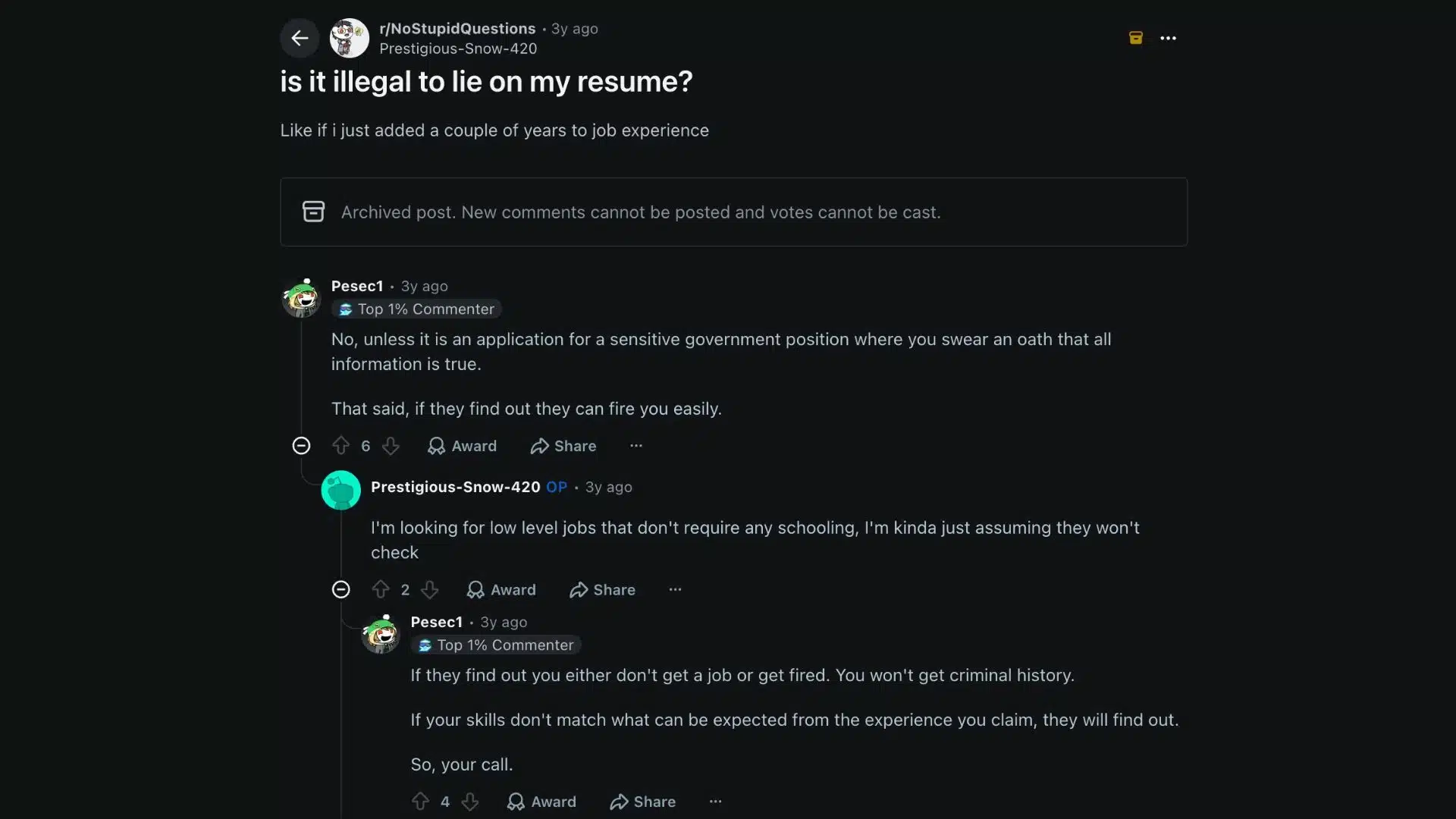
Many job seekers discuss resume honesty online because the topic creates uncertainty. These conversations often focus less on legal rules and more on personal experiences, hiring practices, and whether employers actually verify information.
In a Reddit discussion about adding extra years of experience, users often shared that resume lies may not always lead to criminal charges, but employers can still reject candidates or terminate employees if false claims are discovered.
Several commenters noted that false experience can become a long-term concern because the information may eventually be questioned through performance reviews, references, or background checks.
These discussions reflect personal opinions rather than legal advice, but they show a common workplace concern: even when something is not a crime, dishonesty can still affect trust and career stability.
What are the Legal Risks of Lying on a Resume?
Not every false statement on a resume creates criminal liability. The legal risk usually depends on the type of claim, the purpose behind it, and whether an employer relied on the false information.
- False professional credentials: Claiming fake medical, legal, engineering, or licensed qualifications is one of the clearest paths toward legal trouble, since licensing boards can investigate and pursue criminal charges.
- Government and military applications: These applications often require a signed certification confirming accuracy. False statements here carry heavier consequences than on a private-sector resume, since applicants formally affirm the truth.
- Fraud causing financial harm: When false resume information results in direct financial loss to an employer, the situation can shift from a workplace dispute to a fraud-related legal matter.
- Forged or fabricated documents: Creating fake diplomas, transcripts, certificates, or reference letters moves well beyond exaggeration into document fabrication, which regulators and courts treat far more seriously.
- Certified job applications: Most applications include a statement confirming that the information is true and correct. Submitting one with false details turns an exaggeration into a signed, accountable representation.
The legal line depends on the type of claim and circumstances involved, not simply the fact that a resume contains inaccurate information. Workplace experiences also show why lying on a resume remains risky.
Common Lies Employers Catch and How They Verify Them
Employers use various methods to verify resume information, especially when hiring for roles that require specific experience or qualifications.
Some claims are easier to verify than others during background checks and reference reviews.
| Common Lies | How Employers Verify Them |
| Fake job titles | Contact previous employers or review employment records |
| Inflated work experience | Check employment dates and listed responsibilities |
| False education details | Verify degrees directly through educational institutions |
| Fake certifications | Confirm credentials through the issuing organization |
| Misrepresented skills | Assess through interviews, tests, or early job performance |
Many employers use background screening companies to confirm employment history and education details. Applicants should also remember that inconsistencies may appear during reference checks or interviews.
The Federal Trade Commission provides consumer information about background checks and employment screening practices, including how employment reports are used.
How to Fix Your Resume Instead of Lying

Many people exaggerate their qualifications on their resumes to appear more qualified. A better approach is to improve the presentation of existing experience without adding false information anywhere on the page.
- Highlight transferable skills: Skills from previous jobs often apply directly to new roles. Customer service experience, for example, can demonstrate communication, problem-solving, and teamwork abilities that employers actively look for.
- Use accurate achievement statements: Instead of adding responsibilities that never happened, focus on real results such as increased customer satisfaction, improved workflow efficiency, or projects completed on schedule to strengthen credibility.
- Address employment gaps honestly: Gaps do not automatically rule someone out of consideration. Candidates can explain them through training, freelance work, personal projects, or a genuine career change without resorting to false claims.
- Improve missing qualifications: If a role requires skills you do not yet have, build them through online courses, certifications, volunteer projects, or practice assignments instead of listing a credential you have not earned.
A truthful resume that shows real growth tends to create stronger, longer-lasting opportunities than one built on information that could later be questioned or disproven during a background check.
Why Do Job Seekers Lie on Resumes?
Job seekers lie on resumes mainly out of fear of rejection, pressure to match inflated job requirements, and the belief that employers rarely verify every detail.
Many worry an honest resume will not clear automated filters, so they inflate experience or skills to feel more competitive.
Employment gaps from layoffs or caregiving can feel hard to explain, pushing some to invent roles instead. Job postings often list qualifications beyond what a role truly needs, pressuring candidates to stretch their credentials.
This false sense of low risk explains why the question of whether it is illegal to lie on a resume keeps coming up so often.
Final Takeaway
The answer to is it illegal to lie on a resume depends on what information was changed and why it was provided. Many resume lies are handled as workplace issues, but false credentials, government statements, fake documents, and fraud-related situations can create legal risks.
Even when a lie does not lead to legal action, it can still affect job opportunities, workplace trust, and professional reputation. Employers often verify important details, and inaccurate information can appear later during background checks or performance reviews.
A strong resume does not require false claims. Clear achievements, honest skills, and accurate experience can create a better foundation for long-term career growth.
Have you ever seen a resume mistake or exaggeration cause problems during the hiring process? Share your experience or thoughts in the comments.
Frequently Asked Questions
Can An Employer Sue Someone For Lying On A Resume?
An employer may have legal options in certain situations, especially when false information causes financial harm or involves fraud. However, most resume lies are handled through hiring decisions, termination, or internal employment actions rather than lawsuits.
Do Background Checks Find Every Resume Lie?
Background checks can verify many details, including employment dates, education, and credentials, but they may not catch every exaggeration. Employers may also discover inconsistencies through interviews, references, or job performance after hiring.
Can A Resume Mistake Get Someone Fired?
A genuine mistake and intentional false information are treated differently. If an employer believes inaccurate information was knowingly provided and it affected hiring decisions, termination may occur depending on workplace policies and circumstances.