


Hiring decisions carry financial implications far beyond the agreed salary.
Many organizations underestimate the true cost of bringing a new employee on board, overlooking taxes, benefits, operational overhead, and onboarding expenses.
A comprehensive employee cost calculator allows businesses to see the complete financial picture, enabling precise budgeting and strategic planning.
By quantifying both visible and hidden costs, companies can make smarter hiring choices, optimize resources, and maintain sustainable workforce growth.
Understanding these numbers ensures that each hire aligns with organizational goals without creating unexpected financial strain.
Understanding the True Cost of Hiring
The employee cost calculator helps organizations estimate the full financial impact, including taxes, benefits, overhead, and hidden costs.
Relying only on wages can lead to underestimated budgets and affect workforce planning. By capturing the complete picture, businesses make informed decisions about hiring, resource allocation, and compensation.
On average, total employee costs range from 1.25 to 1.4 times the base salary, depending on benefits, location, and organizational overhead.
Using a calculator ensures this multiplier is accurately assessed for each hire.
Why Is Salary Alone Misleading?
Many businesses make the mistake of considering only an employee’s base salary when planning budgets.
This approach overlooks the broader financial obligations associated with hiring, which can substantially increase overall costs.
Key factors that add to the total cost:
- Payroll taxes and statutory contributions: Mandatory taxes and social security obligations can significantly raise employer expenses.
- Employee benefits: Health insurance, retirement contributions, and paid leave are part of the total financial commitment.
- Operational overhead: Office space, technology, software, and equipment needed for the employee.
- Recruitment and onboarding: Costs for hiring, training, and initial productivity gaps.
Ignoring these elements can distort budgeting and impact long-term financial planning.
It may reduce profitability, affect pricing strategies, and lead to unforeseen strain on resources.
A complete view of employment costs ensures better decision-making, realistic financial forecasts, and informed workforce planning.
Core Cost Components in an Employee Cost Calculator
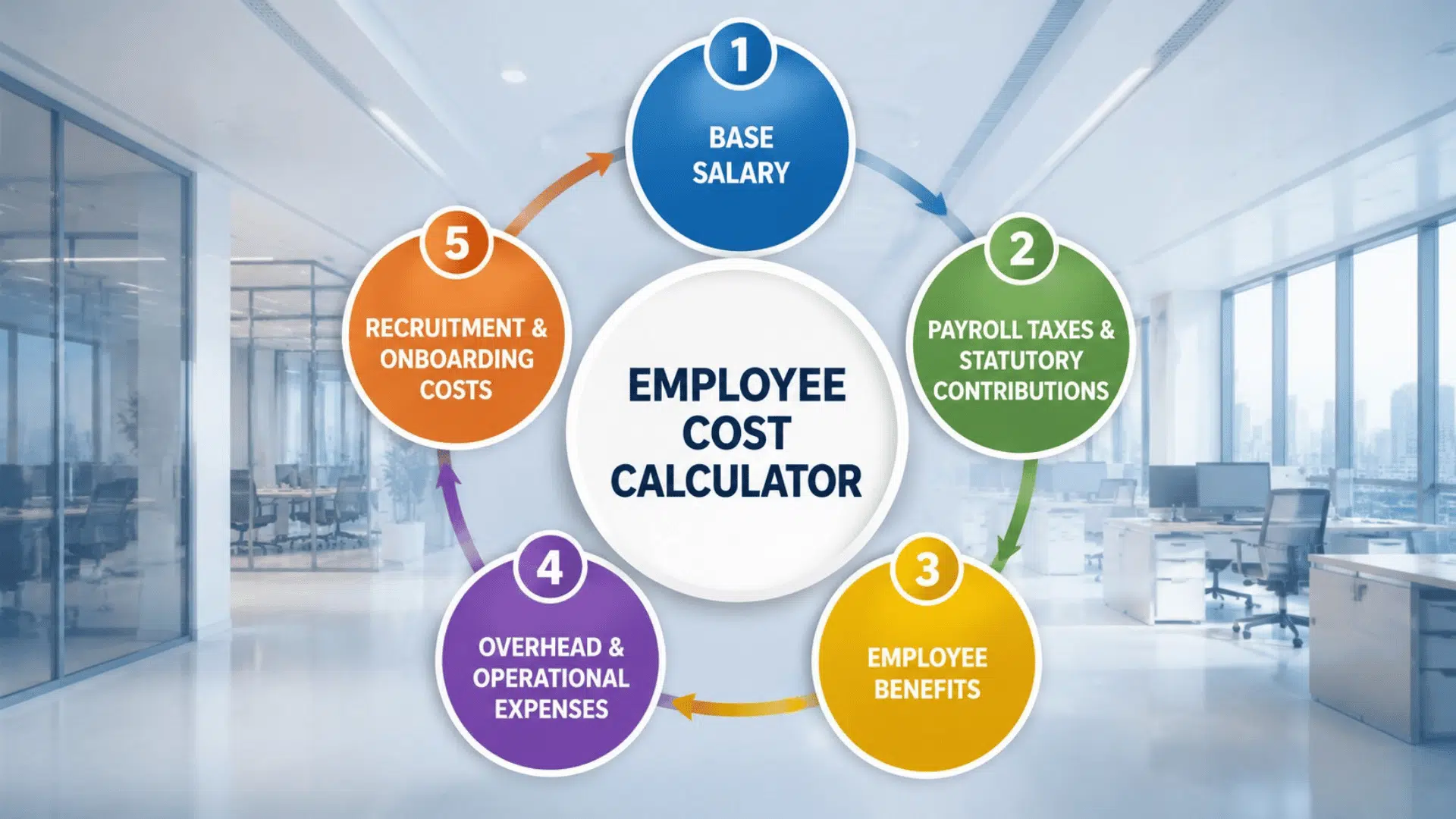
Calculating the total cost of an employee goes beyond their base pay. Several components combine to create the real financial commitment for a business.
Breaking these down helps employers budget accurately and make informed hiring decisions.
1. Base Salary
The base salary forms the foundation of an employee’s cost. It includes the agreed gross pay before deductions.
This not only covers regular wages but also overtime, performance bonuses, and any commission payments.
While it may seem straightforward, base salary directly influences additional costs like taxes and benefits.
2. Payroll Taxes and Statutory Contributions
Employers must account for mandatory contributions that increase the cost of each employee:
- Social Security: A fixed percentage of wages paid by the employer.
- Medicare: Employer portion of the Medicare tax.
- Federal and State Unemployment Taxes (FUTA & SUTA): Costs to fund unemployment benefits.
- Other Local Taxes: Depending on city or state regulations, additional payroll obligations may apply.
These contributions can add a significant percentage to the base salary, making them a key component of total employee cost.
3. Employee Benefits
Benefits are a major part of the cost that is often underestimated. They include:
- Health insurance, wellness programs, and medical coverage.
- Retirement plans, pensions, or provident fund contributions.
- Paid leave, holidays, and sick days are essentially salary paid when employees are not actively working.
The extent and quality of benefits can vary based on role, location, and seniority, affecting overall expenditure.
4. Overhead and Operational Expenses
Beyond direct compensation, businesses incur costs to support employees in their work:
- Office space allocation, utilities, and essential office services.
- Equipment, software subscriptions, and technology tools.
- Training, onboarding, and HR administration.
These indirect expenses ensure employees can perform effectively, though they often go unnoticed in simple budget calculations.
5. Recruitment and Onboarding Costs
Hiring itself adds both visible and hidden costs. Consider:
- Recruitment fees, job postings, and interview-related expenses.
- Time spent by HR and management on hiring and onboarding.
- Temporary productivity dip as new employees ramp up to full efficiency.
Planning and optimizing these processes can significantly reduce unnecessary expenses while maintaining talent quality.
How Does an Employee Cost Calculator Work?
Using an employee cost calculator involves a structured approach to capture the complete financial impact of hiring.
|
Input Base Salary/Hourly |
↓
|
Add Taxes & Statutory Contributions |
↓
|
Include Benefits & Overhead |
↓
|
Add Recruitment & Training |
↓
|
Calculate Total Cost |
↓
|
Cost Multiplier Concept |
By calculating all direct and indirect costs, businesses can make informed hiring decisions and avoid unexpected payroll expenses.
Example:
- Base salary: $50,000/year
- Taxes & statutory contributions: $7,500/year
- Benefits & overhead: $10,000/year
- Recruitment & training: $2,500/year
Total Employee Cost = $50,000 + $7,500 + $10,000 + $2,500 = $70,000/year
Cost Multiplier = $70,000 ÷ $50,000 = 1.4×
|
Quick Formula: Total Employee Cost = Base Salary + Taxes & Statutory Contributions + Benefits & Overhead + Recruitment & Training |
Free Employee Cost Calculators
Calculating the full cost of hiring requires more than just knowing the salary. These free tools help you estimate taxes, benefits, overhead, and onboarding expenses for accurate budgeting.
| Calculator | Key Features |
| TimeClick Employee Cost Calculator | Breaks down wages, payroll taxes, benefits, and onboarding costs. |
| Zogby Employee Cost Calculator | Interactive sliders to calculate total employer cost including taxes and benefits. |
| EmployeeCostCalculator.com | Provides state-specific cost estimates, including benefits and taxes. |
| SensibleCalc Payroll Cost per Employee Calculator | Flexible estimator covering payroll taxes, benefits, and overhead. |
| AI Biz Hub Employee Cost Calculator | Shows annual and hourly total cost with detailed breakdowns. |
Use these calculators to get a complete view of your employee expenses and make smarter hiring decisions without unexpected financial surprises.
Why This Employee Cost Calculator Matters for Businesses?

An employee cost calculator delivers insight beyond mere salaries, supporting informed decision-making:
- Budget Accuracy: It ensures all obligations, direct and indirect, are considered, preventing unexpected payroll overspend.
- Profit and Pricing Decisions: Knowing the true cost of labor enables businesses to price products and services appropriately, maintaining margins.
- Hiring Strategy Evaluation: Comparing the total cost of full-time employees versus contractors helps identify the most cost-efficient staffing model for specific roles.
- Headcount Planning and Financial Forecasts: Accurate employee cost data informs workforce scaling, budget allocation, and long-term financial projections, reducing the risk of underestimating expenses.
Strategic Tips to Reduce Employee Costs
Reducing employee costs doesn’t mean cutting value; it’s about working smarter and improving efficiency across your workforce.
- Streamline Recruitment: Use structured hiring and digital tools to save time and reduce agency fees.
- Simplify Onboarding: Standardize documentation and training to lower administrative effort.
- Optimize Benefits: Offer flexible, high-value plans aligned with actual employee needs.
- Automate HR Tasks: Use software for payroll, attendance, and reporting to cut manual work.
- Cross-Train Staff: Build versatile teams to reduce dependence on extra hires.
- Control Overtime: Monitor workloads and schedules to avoid unnecessary overtime costs.
- Review Vendor Contracts: Negotiate software, equipment, and service costs regularly.
- Encourage Remote Work Options: Reduce office space and related overhead without affecting productivity.
- Track Productivity Metrics: Identify gaps and reallocate resources efficiently.
Applying these strategies helps maintain a lean, effective workforce while keeping overall costs manageable.
Conclusion
Understanding the full financial impact of hiring is essential for sustainable business management.
Accurate calculation of employee costs enables organizations to align workforce decisions with strategic goals while avoiding unforeseen financial pressures.
Leveraging structured tools to quantify taxes, benefits, operational overhead, and onboarding expenses ensures every hiring choice is informed and deliberate.
This clarity supports efficient resource allocation, cost control, and long-term planning, creating a solid foundation for growth.
Have you used an employee cost calculator in your organization? What insights or surprises did you uncover when assessing total employee costs? Share your experiences and thoughts in the comments below.
Frequently Asked Questions (FAQs)
Is Employee Cost Capex or Op Ex?
Employee wages, benefits, and payroll taxes fall under OpEx, as they are essential for running daily operations and maintaining workforce productivity.
What Is a Good Staff Cost Ratio?
A good staff cost ratio, typically measured as total payroll and benefits divided by gross revenue, generally ranges between 15% and 30%.
What Is the 70 30 Rule in Hiring?
The 70/30 rule states that you should hire candidates who meet roughly 70% of the job’s core requirements. The remaining 30% of skills or knowledge gaps are expected to be learned on the job through onboarding, shadowing, and targeted training.