

Managing employee performance can feel challenging when goals are unclear, feedback is inconsistent, and teams lose motivation. Poor performance management can affect productivity, employee satisfaction, and business growth.
Learning how to manage employee performance the right way helps businesses track progress, improve communication, support employee growth, and build stronger teams. It also helps employees stay motivated, engaged, and aligned with company goals.
In this blog, you’ll learn what employee performance management is, why it matters, its key benefits, and practical strategies to improve workplace performance.
What Is Employee Performance Management?
Performance management is the process organizations use to measure, improve, and support employee performance.
It helps align employee goals with company objectives by providing feedback, development plans, and opportunities for career growth.
Managers and employees work together to set clear goals, track progress, define responsibilities, and improve skills through continuous learning.
The system may include manager feedback, 360-degree surveys, performance improvement plans (PIPs), and SMART goals to effectively measure employee progress.
Rewards and recognition are also important in performance management. Bonuses, appreciation, extra time off, and thank-you gifts can help employees feel valued and motivated.
Importance of Employee Performance Management
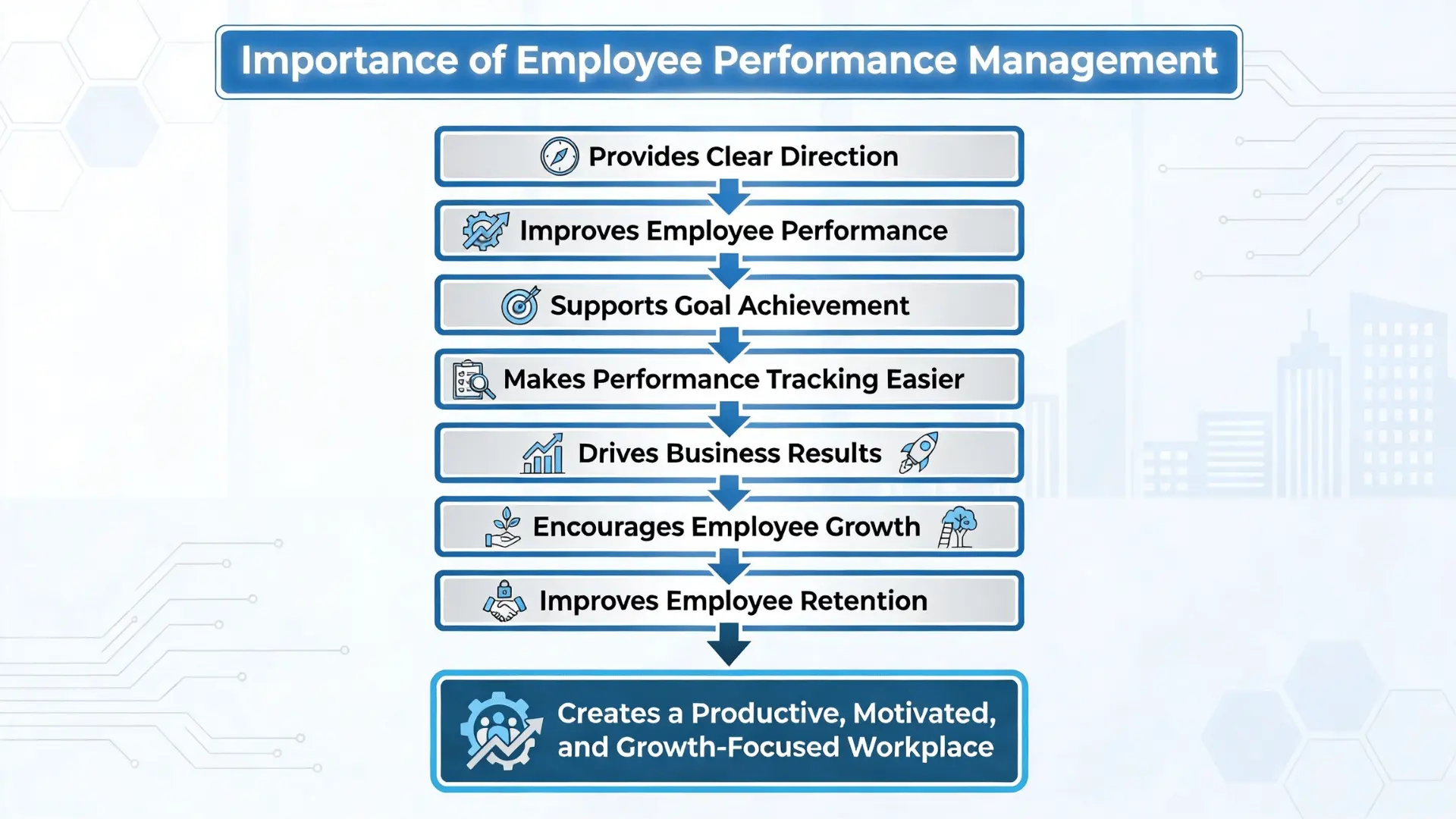
Performance management helps employees improve performance, stay motivated, and achieve company goals. It also supports business growth through better productivity and retention.
- Provides Clear Direction: Helps employees clearly understand their roles and goals.
- Improves Employee Performance: Regular feedback and coaching support better results.
- Supports Goal Achievement: Clear goals and action plans keep employees motivated.
- Makes Performance Tracking Easier: Managers can easily track progress and provide feedback.
- Drives Business Results: Aligns employee efforts with the company’s overall objectives.
- Encourages Employee Growth: Learning opportunities help employees develop valuable new skills.
- Improves Employee Retention: Career growth opportunities encourage employees to stay longer.
A strong performance management system benefits both employees and businesses. It creates a productive, motivated, and growth-focused workplace.
How to Manage Employee Performance?
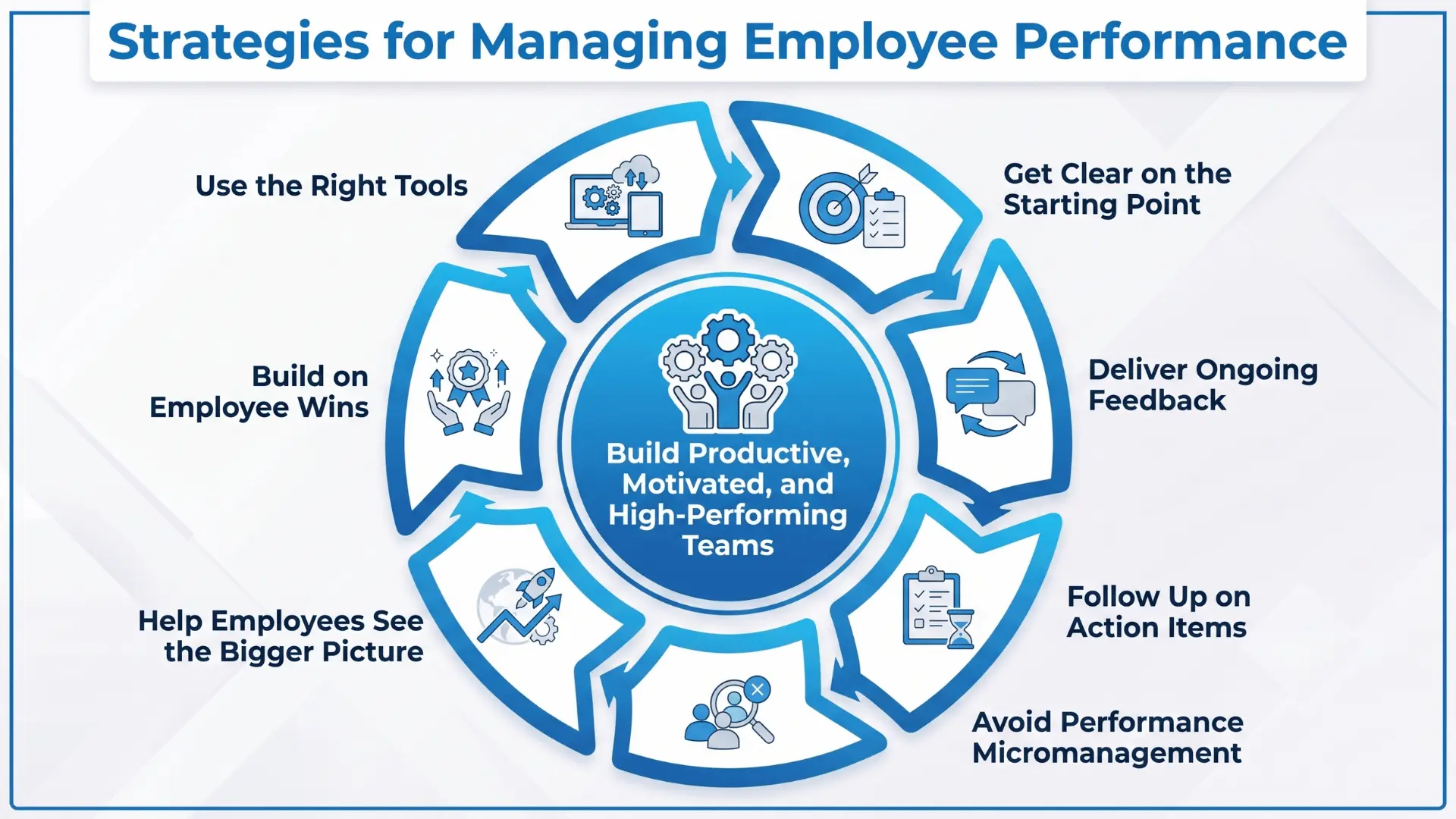
Strategies for effectively managing employee performance are important for building productive, successful teams.
Here are tips for creating a strong performance management strategy:
1. Get Clear on the Starting Point
Start by understanding your employee’s current performance level. This helps managers measure progress, track improvement, and compare future results effectively. Performance can be assessed through observations, feedback, or 360-degree surveys.
Having a clear baseline makes the performance management process more effective. It also helps identify strengths, weaknesses, and areas that need development. A strong starting point makes goal setting and performance tracking easier.
2. Deliver Ongoing Feedback
Performance management should be a continuous process, not just a yearly review. Regular feedback helps employees understand what they are doing well and where they need improvement.
Consistent feedback also reduces surprises during performance reviews. Ongoing feedback encourages better communication between managers and employees. It also helps employees stay motivated and focused on their goals.
3. Follow Up on Action Items With SMART Goals
Feedback works best when it is followed by clear action plans and measurable goals. Managers should track progress and hold employees accountable for improvement. Measuring performance helps employees stay focused on development.
Using SMART goals helps employees set specific, measurable, achievable, relevant, and time-bound targets. This makes performance tracking easier and helps employees clearly understand expectations and progress.
It also ensures that feedback leads to real results and growth. Regular follow-ups help employees clearly understand their progress. Action plans also provide structure and direction for improvement.
4. Avoid Performance Micromanagement
Managers should support employees without controlling every small task. Employees perform better when they have both guidance and independence. Providing trust and flexibility encourages confidence and creativity.
A balanced approach helps employees stay motivated and productive. Micromanagement can reduce employee confidence and job satisfaction. Giving employees freedom helps them take ownership of their work.
5. Help Employees See the Bigger Picture
Employees are more motivated when they understand the purpose behind their work. Connecting daily tasks to company goals creates a stronger sense of value. This helps employees stay engaged and committed to improvement.
It also builds teamwork and a stronger workplace culture. Employees feel more responsible when they understand company objectives. A clear purpose can increase motivation and overall job satisfaction.
6. Build on Employee Wins
Recognizing achievements encourages employees to keep improving. Managers should celebrate milestones and use them to motivate future goals. Success in one area can help employees grow in other responsibilities.
Positive recognition also boosts confidence and job satisfaction. Celebrating wins helps employees feel appreciated for their efforts. Recognition can improve motivation and encourage consistent performance.
7. Use the Right Tools
Performance management tools make it easier to track goals and provide feedback. They help managers organize employee data and monitor progress effectively. The right software also improves communication and performance reviews.
It provides useful insights to improve employee development and team success. Digital tools save time and make performance processes more organized. They also help businesses track employee growth more accurately.
Performance Management Strategies for Different Work Scenarios
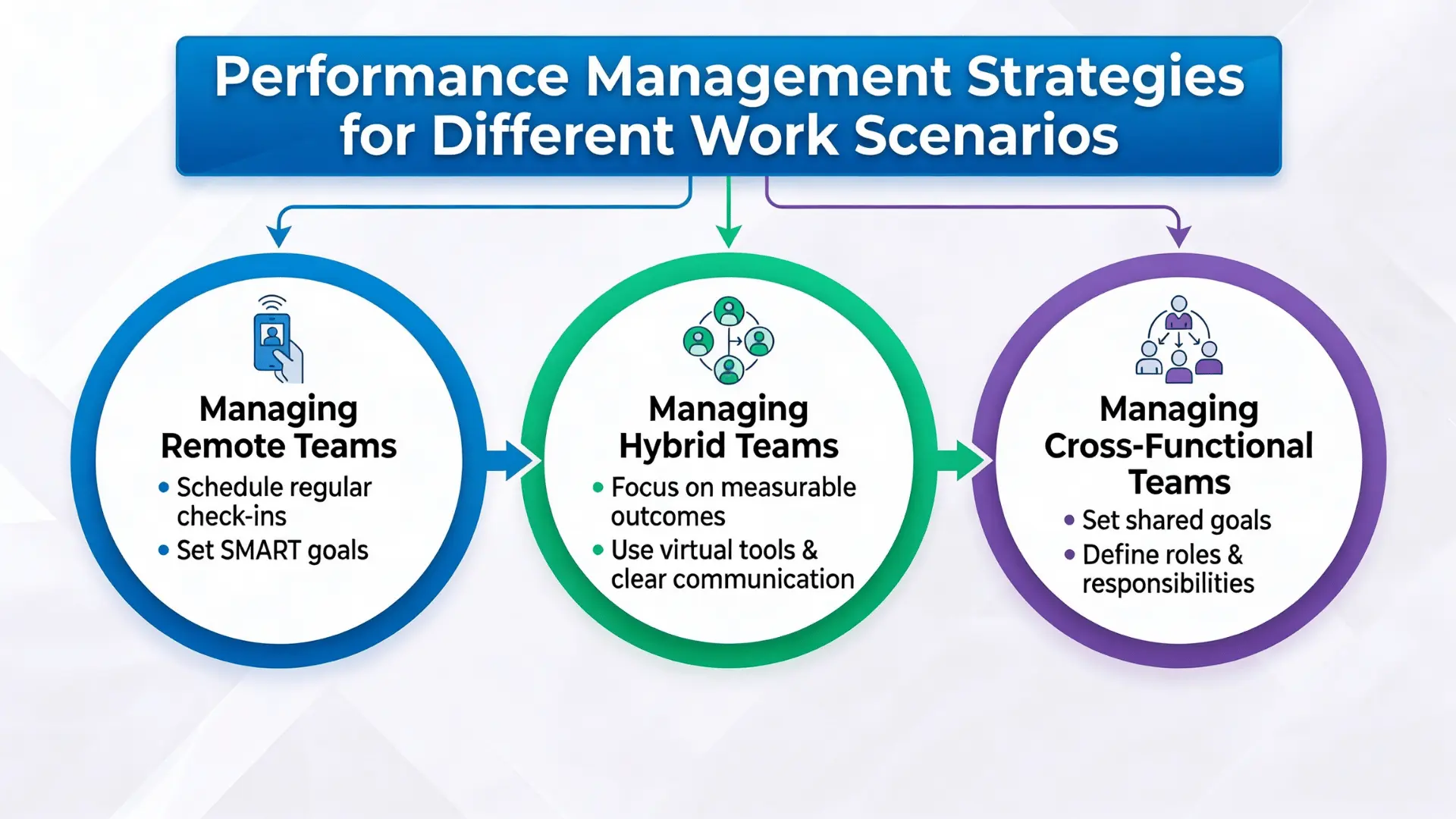
Performance management helps managers handle workplace challenges, improve collaboration, and build stronger teams.
8. Managing Remote Teams
Remote employees may feel isolated or unclear about expectations due to limited interaction.
Managers should schedule regular check-ins, set SMART goals, encourage team activities, and recognize achievements publicly to keep employees engaged and connected.
Regular communication helps employees feel supported and aligned with company goals. Providing timely feedback and coaching can also improve productivity and motivation.
9. Managing Hybrid Teams
Hybrid teams may face challenges with visibility, fair recognition, and team collaboration between remote and in-office employees. Remote employees may sometimes feel overlooked compared to in-office staff.
Companies should focus on measurable outcomes and regular performance reviews. Virtual collaboration tools, clear communication, and fair evaluations help create a more balanced work environment.
10. Managing Cross-Functional Teams
Cross-functional teams may struggle with communication gaps and conflicting goals between departments. Managers can improve coordination by setting shared goals, holding regular meetings, using a project platform, and clearly defining responsibilities.
Clear communication helps teams stay aligned and avoid project delays. Regular collaboration also improves teamwork, efficiency, and overall productivity.
Benefits of Good Performance Management
A strong performance management system helps employees perform better and stay motivated.
It also supports business growth and creates a positive work environment.
- Achieving Organizational Goals: Helps employees improve performance through feedback, training, and goal setting.
- Improving Employee Satisfaction: Gives employees a sense of purpose by connecting their work to company goals.
- Keeping Employees Motivated: Clear goals and recognition encourage employees to perform better.
- Building a Positive Work Culture: Regular check-ins and coaching improve communication and support.
- Ensuring Fair Rewards and Promotions: Creates a clear and objective system for rewards and career growth.
- Holding on to Top Talent: Employees are more likely to stay when they feel valued and supported.
Good performance management benefits both employees and the organization. It improves productivity, motivation, and long-term success.
Factors That Influence Employee Performance
Employee performance is shaped by a combination of workplace conditions, management practices, and personal motivation.
While some factors are within an employee’s control, others depend on the support and environment the organization provides.
Key factors that influence employee performance include:
- Workplace culture and environment
- Work-life balance and employee wellbeing
- Recognition and appreciation programs
- Career growth and development opportunities
- Manager-employee communication and trust
- Access to the right analytical tools and resources
- Team collaboration and interpersonal relationships
When organizations consistently address these factors, employees are more likely to stay engaged, perform at a higher level, and contribute meaningfully to business goals.
Conclusion
Employee performance management helps businesses improve productivity, employee engagement, and long-term growth.
Learning how to manage employee performance effectively allows companies to set clear expectations, improve communication, and build a more motivated, skilled, and productive workforce through regular feedback, fair evaluations, clear goals, and growth opportunities.
Businesses that focus on better performance management often see stronger teamwork, higher retention, and improved workplace efficiency.
Want better team performance and stronger business results?
Start today by learning how to manage employee performance with the right strategies and practical steps.
Frequently Asked Questions
How Often Should Employee Performance Reviews Be Conducted?
Employee performance reviews should happen regularly through continuous feedback and quarterly check-ins. This helps employees improve and stay aligned with goals.
What Are the Biggest Challenges in Employee Performance Management?
Common challenges include unclear goals, inconsistent feedback, and poor communication. Clear expectations and regular reviews help solve these issues.
Which Tools Help Manage Employee Performance?
Tools like BambooHR, Workday, 15Five, Lattice, and Leapsome help track goals, manage feedback, and simplify employee performance reviews.