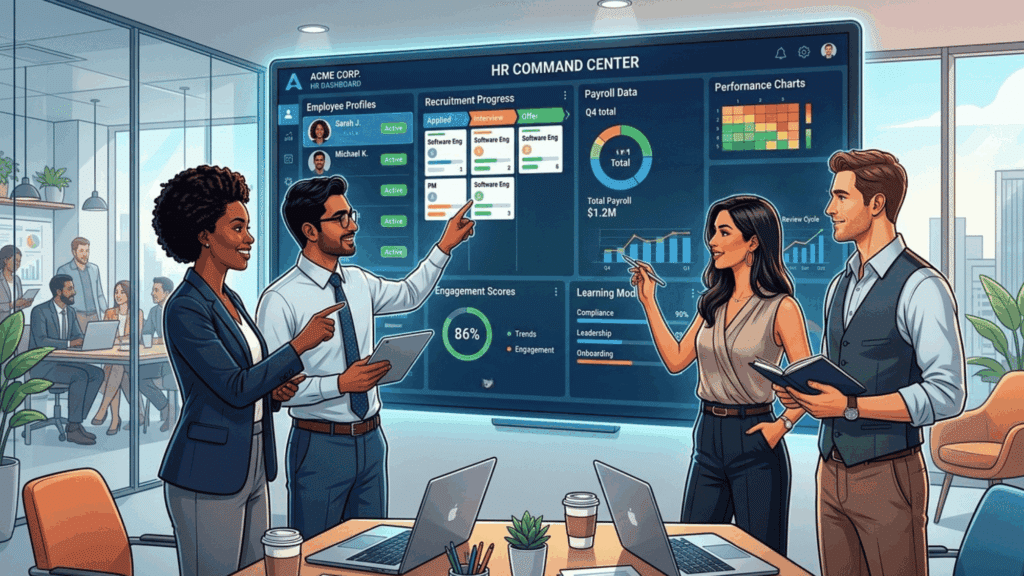

Every high-performing organization shares one common foundation: the right people, in the right roles, supported by the right systems.
Human Resources Technology has redefined what it means to manage a workforce.
It has replaced intuition-based decisions with data-driven insights, streamlined complex processes into seamless workflows, and elevated the HR function from administrative support to a core driver of business performance.
The role of HR is no longer confined to processes and paperwork. It is now seated at the decision-making table, backed by data, powered by technology, and focused entirely on people.
What is Human Resources Technology?
HR technology refers to the software, platforms, and digital tools used to manage human resources functions.
These tools help organizations handle employee-related processes such as recruitment, onboarding, payroll, benefits, attendance, performance reviews, learning, and workforce analytics.
In simple terms, HR technology makes HR work easier, faster, and more organized.
Spreadsheets and email chains work until they don’t.
A centralized HR system stores employee data, automates workflows, and gives managers the visibility they need without a weekly status update
Many modern HR systems combine several of these features into one integrated platform, making it easier for HR teams, managers, and employees to access the information they need.
The Evolution of HR Technology
HR technology has evolved from manual paperwork and basic recordkeeping into advanced digital systems that help organizations manage people, data, and workplace processes more efficiently.
| Stage | How HR Technology Evolved |
|---|---|
| Manual HR Processes | HR teams relied on paper files, printed forms, spreadsheets, and manual recordkeeping to manage employee information. |
| Basic Digital Systems | Companies started using computers and simple software for payroll, attendance tracking, and employee records. |
| Cloud-Based HR Platforms | HR information became accessible online, allowing teams to manage data, approvals, and workflows from anywhere. |
| Automation in HR | Repetitive tasks like onboarding, leave approvals, payroll updates, and reminders became faster and more accurate. |
| AI and Analytics Tools | Modern HR systems now use AI, data analytics, chatbots, and dashboards to improve hiring, engagement, retention, and workforce planning. |
Benefits of Human Resources Technology
HR technology offers several benefits that help organizations simplify HR processes, improve employee experience, and make smarter workforce decisions.
- Saves Time: Automates routine tasks like payroll, attendance, leave approvals, and onboarding.
- Reduces Errors: Minimizes manual mistakes in employee data, salary calculations, and reports.
- Improves Employee Experience: Gives employees quick access to HR services through self-service tools.
- Supports Better Hiring: Helps recruiters efficiently manage applications, interviews, and candidate communication.
- Strengthens Compliance: Keeps employee records, policies, and documents organized for audits and legal needs.
- Improves Decision-Making: Provides workforce insights on performance, engagement, turnover, and attendance.
- Boosts HR Productivity: Allows HR teams to focus more on strategy, culture, and employee development.
Common Examples of Human Resources Technology
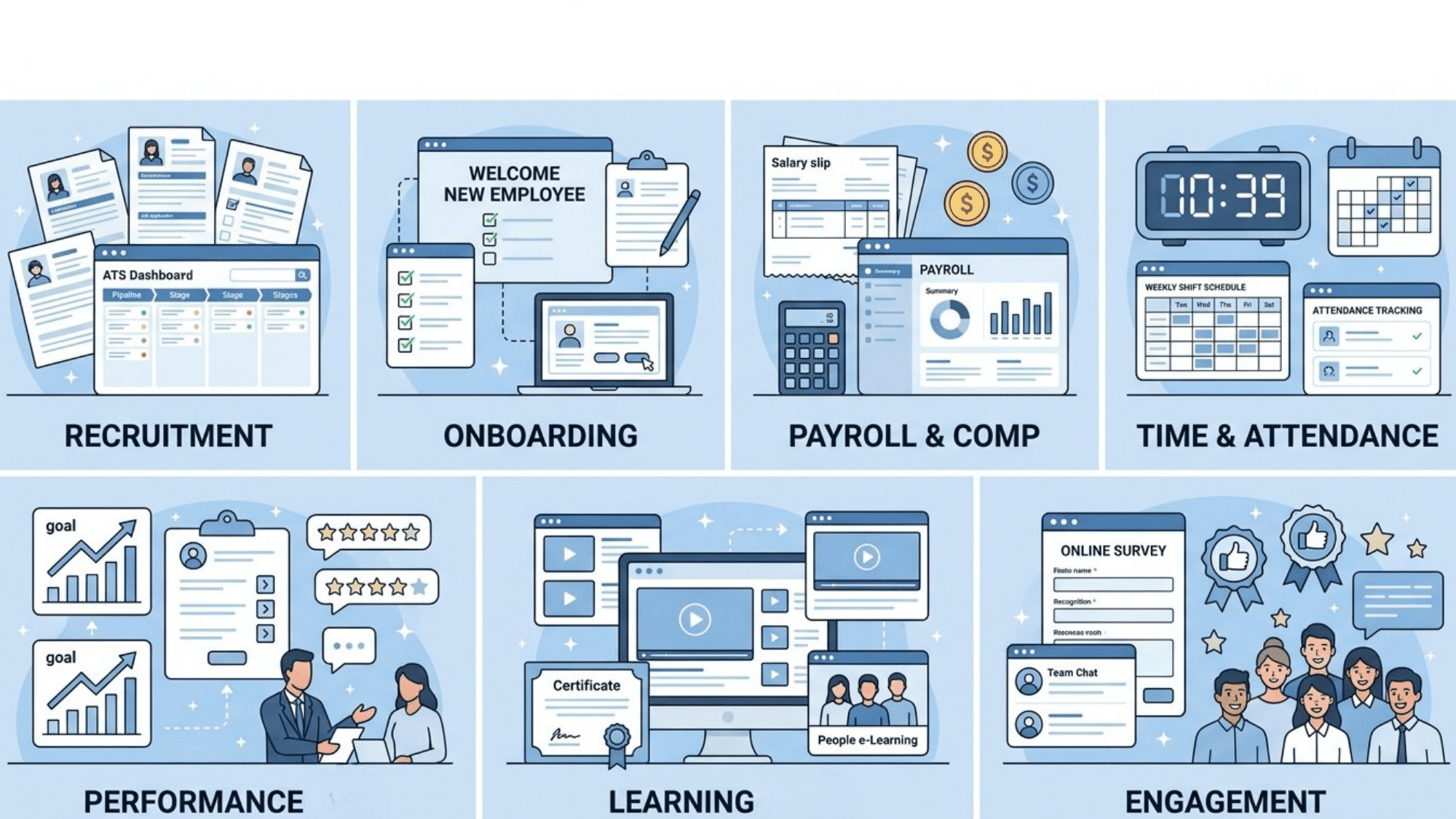
There are many types of HR technology used across different areas of the employee lifecycle. Some common examples include:
1. Recruitment Technology
Recruitment technology helps companies attract, manage, and hire candidates more efficiently.
It includes tools such as applicant tracking systems, job posting platforms, resume screening software, and interview scheduling tools that streamline the hiring process and improve organization.
2. Onboarding Technology
Onboarding technology supports new employees as they join the organization.
It handles the paperwork, digital forms, policy documents, and training checklist, so new hires spend their first week learning the job rather than chasing down HR for documents.
3. Payroll and Compensation Technology
Payroll and compensation technology helps businesses manage employee salaries, tax deductions, bonuses, reimbursements, and pay records.
These tools reduce manual errors and ensure employees are paid accurately and on time.
4. Time and Attendance Technology
Time and attendance technology tracks employee work hours, shifts, overtime, leave, and absences.
It helps managers monitor schedules, improve workforce planning, and maintain accurate attendance records.
5. Performance Management Technology
Performance management technology helps organizations set goals, track progress, collect feedback, and manage employee reviews.
It gives managers and employees a clear view of performance expectations and areas for development.
6. Learning and Development Technology
Learning and development technology supports employee training, skill-building, and career growth.
It includes learning management systems, online courses, compliance training platforms, and tools that recommend learning paths based on employee roles.
7. Employee Engagement Technology
Employee engagement technology helps companies understand and improve employee satisfaction.
These tools include surveys, feedback platforms, recognition systems, and communication tools that help HR teams measure morale and build a stronger workplace culture.
Trends Shaping the Future of HR
Technology, employee expectations, and changing workplace models are shaping how HR teams manage talent, improve experiences, and support long-term business growth.
- AI in HR: AI tools are helping with resume screening, employee support, analytics, and faster HR decision-making.
- People Analytics: HR teams are using data to understand turnover, engagement, performance, and workforce planning needs.
- Skills-Based Hiring: Companies are focusing more on employees’ skills and potential rather than solely on degrees or job titles.
- Employee Self-Service: Digital portals allow employees to easily access payslips, policies, leave balances, and HR support.
- Remote and Hybrid Work Tools: HR technology is supporting flexible work through digital communication, scheduling, and performance tools.
- Personalized Employee Experience: HR platforms are helping create customized learning, benefits, and career development paths.
- Responsible AI and Data Privacy: Organizations are focusing on fair, transparent, and secure use of employee data.
Common Challenges and How to Overcome Them
Adopting new systems often requires changes in daily workflows, employee habits, data management practices, and overall HR processes.
1. Resistance to Change
- Challenge: Employees may hesitate to use new HR systems because they are comfortable with existing processes.
- Solution: Provide proper training, explain the benefits clearly, and show how the system makes daily tasks easier.
2. Data Privacy Concerns
- Challenge: HR technology stores sensitive employee information, which can create concerns about data security.
- Solution: Choose secure platforms, limit access to authorized users, and follow strong data protection policies.
3. High Implementation Costs
- Challenge: Setting up HR technology can involve software costs, training expenses, and system integration fees.
- Solution: Start with essential features, compare vendors carefully, and choose a scalable solution that fits the budget.
4. Poor System Integration
- Challenge: New HR tools may not connect smoothly with existing payroll, finance, or communication systems.
- Solution: Select software that supports integration and test compatibility before full implementation.
5. Lack of Technical Skills
- Challenge: HR teams and employees may struggle to use new digital tools effectively.
- Solution: Offer step-by-step guidance, user manuals, and ongoing support to build confidence and improve adoption.
The Bottom Line
Human Resources Technology has fundamentally changed what it means to manage people well.
The organizations winning the talent game today are not the ones with the biggest budgets; they are the ones using the right tools to hire smarter, develop faster, and retain longer.
The future of HR is not automated. It is empowered.
Which HR technology tool has had the biggest impact on your team? Drop your thoughts in the comments; your insight might help someone else make the right decision.
Frequently Asked Questions
Is AI Replacing HR Professionals?
AI is not replacing HR professionals; it is helping them work faster by automating tasks like screening, reporting, and support.
How Can Small Businesses Use HR Technology Effectively?
Small businesses can start with essential tools for payroll, hiring, and employee records, then expand features as their workforce and needs grow.
How Does HR Technology Support Remote and Hybrid Teams?
HR technology supports remote and hybrid teams by making communication, attendance tracking, onboarding, performance reviews, employee records, learning, and HR support accessible online from anywhere.