
Health insurance terms can get confusing, especially when the deductible and out-of-pocket maximum appear side by side, and you may know both affect what you pay, but they do very different jobs.
Understanding the deductible vs. Out-of-Pocket maximum can help you see when your insurance starts helping more and when your yearly costs hit a limit.
In this blog, you’ll learn what each term means, how they work together, and why both matter when choosing or using a health plan.
What Do Deductible and Out-of-Pocket Maximum Mean?
An out-of-pocket maximum and a deductible are two important cost-sharing features in health insurance plans.
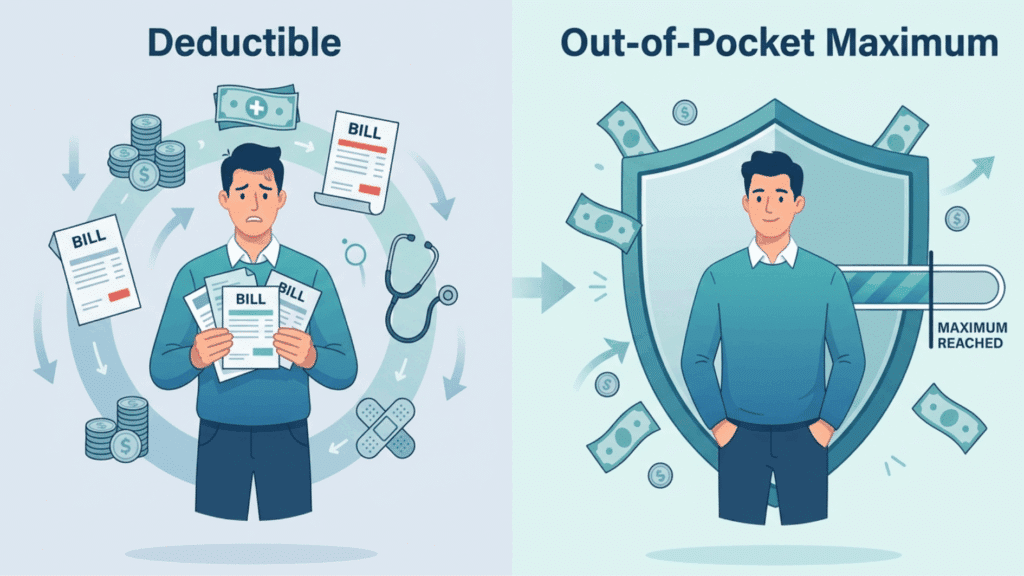
The deductible is the amount a policyholder must pay for covered healthcare services before the insurer begins contributing to eligible costs. Once it is met, the insured typically shares expenses through copayments.
The out-of-pocket maximum is the highest amount an individual pays for covered in-network services during a plan year.
After reaching this limit, the insurance provider generally covers 100% of eligible healthcare expenses for the remainder of the coverage period.
How Do Both Impact Healthcare Costs?

Selecting a health plan involves more than comparing premiums, as understanding how deductibles and out-of-pocket maximums affect costs can help estimate potential healthcare expenses and financial protection.
1. Budget Planning: Helps estimate how much you may personally spend before and during coverage.
- Deductible: The amount you pay before your insurance begins sharing covered costs.
- Out-of-Pocket Maximum: Shows the highest yearly amount you may pay for covered in-network care.
2. Risk Protection: Helps measure the level of financial protection a plan provides for medical needs.
- Deductible: Provides limited protection until the required amount is paid.
- Out-of-Pocket Maximum: Limits total eligible spending once the annual cap is reached.
3. Low Healthcare Usage: Useful for people who rarely need medical care during the year.
- Deductible: A higher deductible may come with lower monthly premiums.
- Out-of-Pocket Maximum: May not be reached if healthcare use remains low.
4. Frequent Healthcare Usage: Important for people who expect regular visits, prescriptions, or treatments.
- Deductible: A lower deductible can reduce early medical expenses.
- Out-of-Pocket Maximum: A lower maximum can help control total annual costs.
5. Cost Predictability: Supports clearer planning for both routine and unexpected healthcare expenses.
- Deductible: Helps estimate initial cost responsibility.
- Out-of-Pocket Maximum: Helps identify the worst-case annual spending limit.
How Do Deductibles and Out-of-Pocket Maximums Work?
A deductible is the amount a policyholder must pay toward covered medical services before the insurance plan begins sharing costs; after meeting the deductible, copays or coinsurance may apply.
Example: With a $2,000 deductible, you pay the first $2,000 of covered healthcare services yourself, and after the deductible is met, copays or coinsurance may apply.- HealthCare.gov
These expenses accumulate toward the out-of-pocket maximum, and once that limit is reached, the insurer typically covers all eligible in-network healthcare costs for the remainder of the policy year.
Example: With a $6,000 out-of-pocket maximum, deductibles, copayments, and coinsurance generally count toward this limit, and once reached, the insurer typically pays eligible covered in-network costs for the rest of the year.- HealthCare.gov
Deductible Vs Out-of-Pocket Maximum

Medical bills can pile up fast, and two numbers on your health plan determine exactly how much comes out of your pocket.
| Feature | Deductible | Out-of-Pocket Maximum |
|---|---|---|
|
Primary Purpose |
Determines when cost-sharing starts. | Protects against excessive healthcare expenses. |
|
When It Applies |
Early stage of healthcare spending. | After cumulative eligible costs reach the plan limit. |
| Includes | Covered medical expenses subject to the deductible. | Deductible, copays, and coinsurance. |
| Insurance Contribution | Limited until the deductible is met. | Generally covers 100% of covered in-network costs after reaching the limit. |
|
Financial Impact |
Affects upfront healthcare expenses. | Caps total annual out-of-pocket spending. |
|
Consumer Focus |
Helps estimate initial medical costs. | Helps estimate worst-case healthcare expenses. |
Factors Affecting Deductibles and Out-of-Pocket Maximum
Healthcare costs vary by plan design and personal circumstances. Several factors influence how quickly you meet your deductible and out-of-pocket maximum each year.
Factors Affecting Deductibles
- Plan Type: Different insurance plans set varying deductible amounts based on coverage levels and benefits.
- Monthly Premiums: Lower premiums often correspond with higher deductibles, increasing initial healthcare spending responsibilities.
- Healthcare Utilization: Frequent doctor visits and treatments accelerate progress toward meeting deductible requirements.
- Family vs. Individual Coverage: Family plans generally have higher deductibles because they provide broader coverage for members. It’s also worth understanding how embedded vs. non-embedded deductibles work in family plans.
- Network Selection: Using in-network providers typically results in lower costs applied toward deductibles.
Factors Affecting Out-of-Pocket Maximums
- Coinsurance Requirements: Higher coinsurance rates increase spending, helping policyholders reach annual limits faster.
- Medical Service Frequency: Ongoing treatments and specialist care contribute significantly toward maximum spending thresholds.
- Prescription Drug Costs: Covered medications can accumulate expenses that count toward annual spending limits.
- Emergency Healthcare Needs: Unexpected hospitalizations often accelerate progress toward the out-of-pocket maximum.
- In-Network Coverage Usage: Eligible in-network expenses usually count toward maximum limits, unlike many out-of-network costs.
The Bottom Line
Knowing about deductible vs Out-of-Pocket maximum can make health plan decisions more practical and less confusing.
Both numbers matter because they shape your upfront costs, long-term spending, and financial protection in the event of unexpected care.
Before choosing a plan, review premiums, network rules, covered services, and annual limits together, as this helps you compare options more clearly and select coverage that fits both your healthcare needs and budget.
Frequently Asked Questions
Do Monthly Premiums Count Toward the Out-Of-Pocket Maximum?
No, Premiums are separate payments for keeping your plan active and usually do not count toward your deductible or out-of-pocket maximum.
Do Out-Of-Network Costs Count Toward the Out-of-Pocket Maximum?
Usually, fewer plans cover only in-network care, so out-of-network services may lead to higher personal costs.
Does the Deductible Reset Every Year?
Yes, Most deductibles reset at the start of a new plan year, so you begin paying toward it again.
Are Copays Included in The Deductible?
It depends on your plan, as some copays count toward the out-of-pocket maximum but may not apply to the deductible.