
Running a business means managing expenses you can plan for and protecting yourself from ones you can’t.
From property damage to legal claims, unexpected events can create serious financial strain without the right coverage.
Yet many business owners delay getting insured simply because they don’t know what it will cost or where to start.
This guide breaks down what drives premiums, what different policies typically run, and how to make coverage decisions that actually fit your budget and risk level.
How Much Does Business Insurance Cost?
Business insurance costs vary depending on coverage type, industry risk, business size, claims history, and policy limits; the following averages provide a general benchmark for U.S. businesses.
| Insurance Type | Average Cost | Key Coverage |
|---|---|---|
| General Liability Insurance | $40–$80/month | Covers third-party bodily injury, property damage, and advertising-related claims. |
| Professional Liability Insurance | $50–$150/month | Protects against claims arising from professional errors, omissions, or negligence. |
| Workers’ Compensation Insurance | $45–$200/month | Covers employee medical expenses and lost wages for work-related injuries or illnesses. |
| Commercial Property Insurance | $60–$170/month | Protects business buildings, equipment, inventory, and other physical assets. |
| Cyber Liability Insurance | $120–$300/month | Helps cover costs related to data breaches, cyberattacks, and recovery efforts. |
Small businesses typically spend between $500 and $3,000 annually on business insurance, depending on the policies selected.
Now, What Exactly is Business Insurance and Why is it Important?

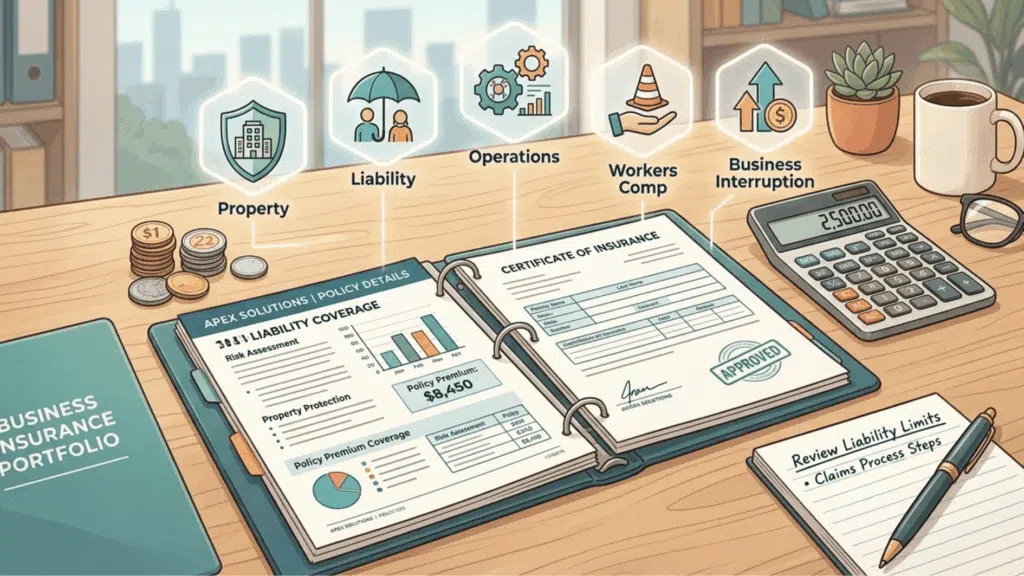
Business insurance is a form of financial protection that helps companies manage risks and minimize losses from unexpected events, such can property damage, legal claims, cyber incidents, and business interruptions.
The primary purpose of business insurance is to safeguard a company’s financial stability and ensure operational continuity by transferring potential risks to an insurer, so businesses can focus on growth and daily operations.
According to the U.S. Small Business Administration, businesses with employees are federally required to carry certain types of coverage, and additional state-level requirements may also apply.
Since coverage needs vary across industries, policies can be customized to meet specific operational, legal, and regulatory requirements, making them an essential risk management tool.
Key Factors That Affect Business Insurance Costs
Business insurance premiums are not fixed and can vary widely among companies, as insurers evaluate several business-specific factors to determine the level of risk and the amount of coverage required.
1. Industry and Business Type
Business insurance costs vary by industry because coverage needs differ across sectors, as some businesses require specialized protection, while others need more basic coverage.
As a result, insurance premiums can vary significantly based on the nature of a company’s operations and associated risks.
2. Business Size and Revenue
Larger businesses typically require more extensive coverage due to their broader operational scope.
Companies with higher revenue, larger workforces, or multiple locations often pay more for insurance than smaller businesses with limited operations.
3. Location
Business location plays an important role in determining insurance premiums.
Insurers consider regional risks, local legal requirements, and market conditions when assessing coverage costs for businesses operating in different states or geographic areas.
4. Claims History
A company’s previous insurance claims can affect future premiums, as businesses with frequent or costly claims may be viewed as higher-risk clients.
While those with a strong claims record may qualify for more favorable insurance rates.
5. Coverage Limits and Deductibles
The amount of coverage selected directly impacts insurance costs.
Policies with higher coverage limits generally have higher premiums, whereas choosing a higher deductible can help reduce monthly or annual insurance expenses.
Average Business Insurance Costs by Industry

Business insurance costs vary by industry, with premiums generally reflecting the types of coverage and protection businesses commonly require.
| Industry | Annual Cost Range | Insurance Cost Trend |
|---|---|---|
| Retail Businesses | $2,000–$10,000/year | Moderate costs; liability and property coverage are common. |
| Construction Companies | $5,000–$25,000+/year | High costs due to operational and workplace risks. |
| Professional Services Firms | $1,000–$5,000/year | Lower costs; professional liability is often essential. |
| Restaurants & Hospitality | $3,000–$15,000/year | Moderate-to-high costs and multiple coverage needs. |
| Technology & IT Companies | $2,000–$8,000/year | Costs often driven by cyber and liability coverage. |
| Healthcare Businesses | $5,000–$25,000+/year | Higher costs due to malpractice-related exposures. |
| Manufacturing Businesses | $5,000–$20,000+/year | Higher costs because of equipment and product risks. |
Note: Ranges reflect overall business insurance costs across varying business sizes, coverage types, and risk levels. Actual premiums will differ based on revenue, employee count, location, and claims history.
Understanding a Business Owner’s Policy (BOP)
A Business Owner’s Policy (BOP) is a bundled insurance package designed for small and mid-sized businesses.
It combines essential coverages, typically including general liability insurance, commercial property insurance, and business interruption coverage, into a single policy.
By bundling multiple protections, a BOP is often more cost-effective than purchasing separate policies.
It helps businesses safeguard their physical assets, manage liability risks, and recover from covered disruptions, making it a popular choice for comprehensive business protection.
Businesses that also rely on contingent workers or contractors should verify whether their BOP extends to those arrangements or requires separate coverage.
Tips to Lower Your Business Insurance Costs
Businesses can reduce insurance expenses by improving risk management practices, reviewing coverage regularly, and making informed policy decisions.
- Compare Multiple Quotes: Obtain quotes from different insurers to identify competitive rates and suitable coverage options.
- Bundle Insurance Policies: Combine multiple policies with a single insurer to qualify for discounts and simplify coverage management.
- Increase Deductibles: Choosing higher deductibles can lower premiums, though it increases out-of-pocket costs when filing claims.
- Implement Risk Management Practices: Strengthen workplace safety and security measures to reduce risks and potentially lower insurance costs.
- Review Coverage Annually: Evaluate policies regularly to ensure coverage remains appropriate and eliminate unnecessary insurance expenses. Running through an HR compliance checklist during annual reviews can also help flag any coverage gaps tied to changing legal obligations.
The Bottom Line
Understanding business insurance costs is essential for making informed coverage decisions and protecting your company from unexpected financial setbacks.
While premiums vary based on the type of business, coverage selected, and overall risk profile, having the right policy can provide valuable financial security and operational stability.
Ultimately, investing in appropriate business insurance is not just about meeting requirements; it’s about safeguarding your business’s future and long-term success.