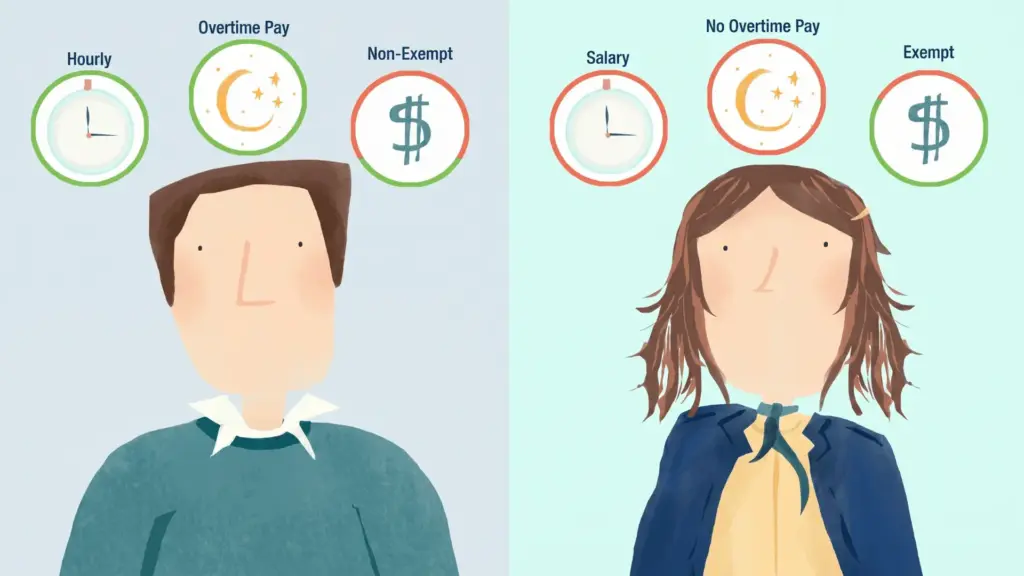


Political beliefs can affect workplace relationships, hiring decisions, and even job security. But political affiliation does not receive the same legal treatment as race, religion, sex, or national origin.
The rules change depending on the employer and location. Private employees, federal workers, and other public employees may have very different protections.
This blog explains whether political affiliation is a protected class, how federal law treats political affiliation, where limited protections apply, and what employees can do if politics affects their employment
Is Political Affiliation a Protected Class Under Federal Law?
No, Political affiliation is not a protected class under federal employment law. Title VII bars discrimination based on race, color, religion, sex, or national origin.
The EEOC has no authority to investigate a complaint based purely on someone’s political party or ideology.
It has also drawn a specific line around religion: political, social, or economic philosophies don’t count as religious beliefs, even when they function like one for the person holding them.
So a private employer can generally fire, refuse to hire, or discipline someone over political opinions without violating federal anti-discrimination law as long as no other protected trait is involved.
What is Political Discrimination?
Political discrimination means treating someone unfairly because of their political affiliation, candidate support, associations, or political views.
In the workplace, it may affect hiring, promotions, assignments, discipline, or termination. For example, a manager might deny an employee a promotion after learning about their political beliefs.
Another worker may receive different treatment because of political groups they associate with. Political discrimination is not always illegal under federal employment law.
Protection depends on the employer, the type of political activity involved, and the specific federal, state, or constitutional rules that apply.
Protection for Federal Employees Against Discrimination
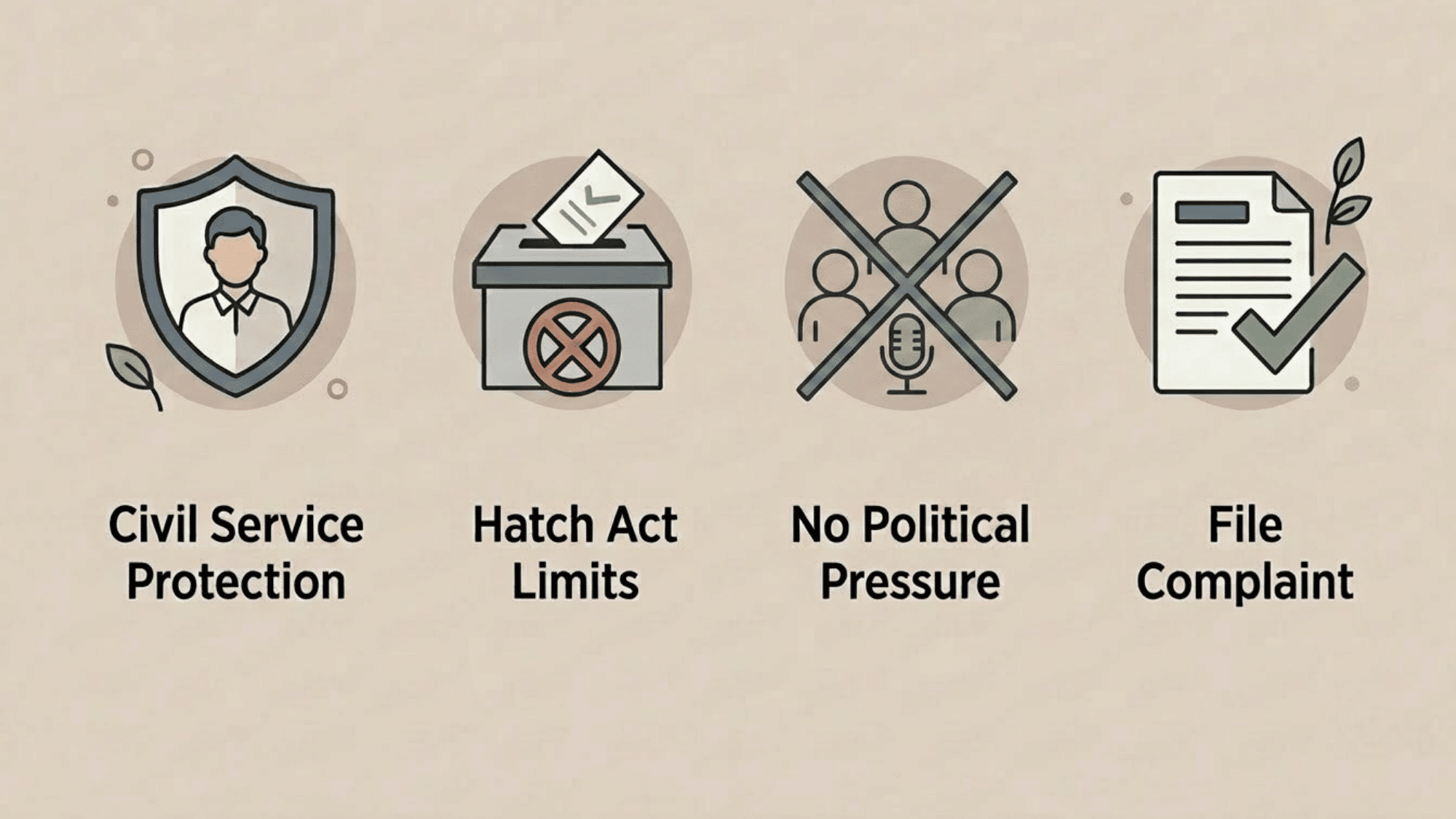
Federal civil servants receive more political protection than private-sector workers, mainly through two federal laws.
- Civil Service Reform Act: Protects covered federal employees from personnel decisions based on political affiliation. Violations can qualify as prohibited personnel practices.
- Hatch Act: Limits partisan political activity by federal employees, including campaigning while on duty, partisan fundraising, and using official authority to influence an election.
- Protection from political coercion: Federal employees generally cannot be pressured to support a political candidate, make political contributions, or participate in partisan activity as a condition of employment.
- Complaint and enforcement options: Employees who believe a prohibited personnel practice occurred may file a complaint with the Office of Special Counsel.
Federal Protections for Political Affiliation in Public Employment
Federal law does not treat political affiliation as a general protected class, but certain public-sector workers receive limited protection.
Federal Civil-Service Employees
For many covered federal employees and applicants, 5 U.S.C. § 2302 makes discrimination based on political affiliation a prohibited personnel practice.
The U.S. Office of Special Counsel can investigate prohibited personnel practices within its authority. This is a real federal protection, but its wording is narrower than “political ideology.”
An OSC political-affiliation states that the provision concerns affiliation with a political party or candidate, not simply a position on a political issue.
That means support for a party or candidate and a view about a policy question are not automatically treated as the same legal category.
Public Employees and The First Amendment
Government employment also brings constitutional limits that private employment usually does not.
Congress’s Constitution Annotated discussion of public employment summarizes Supreme Court decisions restricting government employers from basing certain employment decisions on political support.
The rule has limits. Under the Court’s patronage cases, party affiliation may be considered when it is an appropriate requirement for effective performance of the public office.
This is First Amendment doctrine, not a new protected class added to Title VII.
Which States Protect Political Affiliation?
Political protections vary by state, with some laws covering affiliation and others focusing on off-duty political activity.
|
State/Jurisdiction |
Protection |
Statute/Source |
|---|---|---|
|
California |
Protects employees from employer control over political activity or affiliation |
|
|
New York |
Protects certain lawful political activity outside work |
|
|
Washington, D.C. |
Prohibits employment discrimination based on political affiliation |
Limitations on Federal Protection for Political Ideology
Federal civil-service law uses the term “political affiliation,” while OSC draws a line between party or candidate ties and positions on political issues.
That makes a broad ideology claim harder to place inside the statute. Title VII’s religion protection does not automatically fill the gap.
Federal guidance on religious beliefs in employment states that social, political, and economic philosophies are not religious beliefs simply because a person holds them strongly.
A political position rooted in an actual sincerely held religious belief may raise a religion issue, but the political label alone does not convert it into Title VII religion.
Private vs. Public Employment Protection
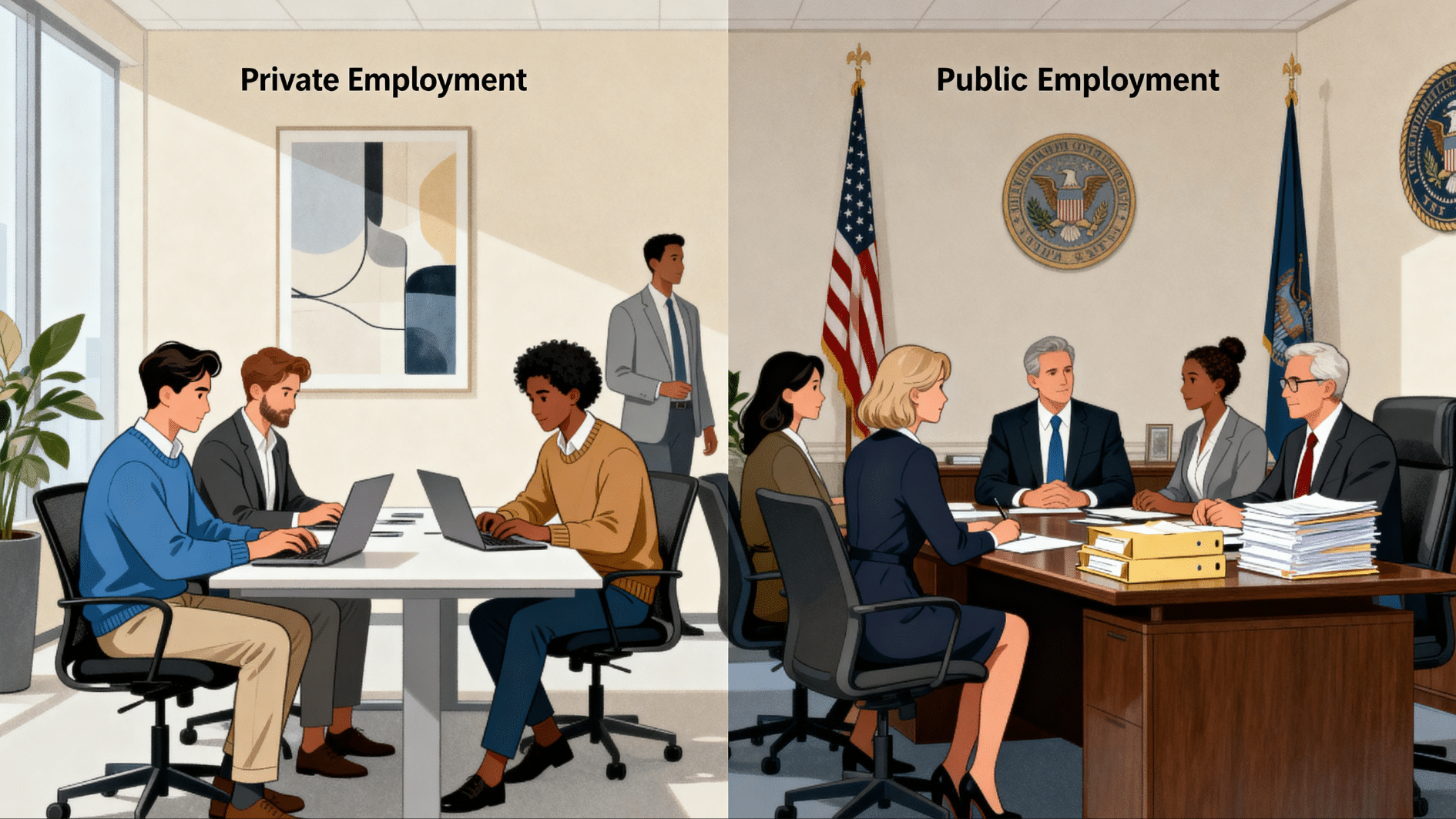
A worker’s legal protection can change depending on whether the employer is private or public. This table shows the main differences at a glance.
|
Protection Area |
Private Employment |
Public Employment |
|---|---|---|
|
Political affiliation |
Generally not protected under Title VII |
May receive federal or constitutional protection |
|
Political speech |
Employer may restrict it in many situations |
First Amendment protection may apply |
|
Political activity |
Protection depends on state law and context |
Some activities may be protected, though specific restrictions can also apply |
|
Legal protection source |
Mainly state or local law |
Federal civil-service law and the First Amendment |
|
Risk of termination |
Employees may have fewer federal protections for political views |
Termination based on political affiliation may be restricted in certain roles |
What Should You Do if You Face Political Discrimination at Work?
Taking the right steps can help protect your position and create a clear record of what happened at work if political discrimination affects your workplace.
- Check state and local laws: Some jurisdictions, including California, New York, and Washington, D.C., provide specific protections for political activity or affiliation.
- Look for protected-class overlap: Consider whether the treatment also involved religion, race, sex, national origin, or another federally protected characteristic.
- Document what happened: Record dates, comments, witnesses, employment decisions, and how employees with different political views were treated.
- Review workplace policies: Check employee handbooks, political-activity rules, anti-retaliation policies, and disciplinary procedures.
- Keep relevant evidence: Save emails, messages, performance reviews, schedules, and other records related to the treatment.
Final Thoughts
The answer to is political affiliation a protected class depends heavily on the legal setting surrounding the employment relationship.
Political affiliation is not a general protected class under Title VII, but that does not mean employees have no legal protection.
If political beliefs or affiliations affect your job, reviewing the applicable federal, state, and local rules can help clarify your options.
Frequently Asked Questions
Can an Employer Ban Political Discussions at Work?
Yes. Private employers can usually limit political discussions during work, especially when they disrupt operations. Some work-related group discussions may still receive NLRA protection.
Can Political Posts on Social Media Affect Your Job?
Yes. Private employers may take action over political posts in some cases. Protection may apply when posts involve coworkers and workplace concerns.
Can Federal Employees Support Political Candidates Outside Work?
Usually, yes. Many federal employees can participate in political activity while off duty, though Hatch Act restrictions still apply.