
A salary offer can feel like the financial version of a movie trailer.
Big numbers flash across the screen, expectations shoot up, and everything looks promising until the actual paycheck enters the scene.
That gap between “salary on paper” and “money in the account” often starts with one term: gross salary.
It sits at the center of job offers, salary slips, tax calculations, and workplace confusion. Yet many employees still mix it up with net salary, base pay, or CTC.
Understanding how gross salary works makes salary discussions far less confusing and a lot more useful in real life.
What Is Gross Salary?
Gross salary is the full amount earned before taxes, PF, insurance, and other deductions start taking their share.
It’s the big number that grabs attention in offer letters and salary slips. The package looks solid on paper because gross salary combines several parts into one figure.
This usually includes basic salary, allowances, bonuses, overtime pay, incentives or commissions.
Think of it as the “before reality hits” version of a paycheck.
Simple Definition
| Gross Salary = Total Earnings Before Deductions |
Gross Salary Explained With a Simple Example
That salary number in the job offer can feel exciting at first glance. Then, payday arrives, and the deposited amount looks noticeably smaller.
That difference comes down to gross salary and deductions.
Here’s a simple breakdown:
| Salary Component | Amount |
| Basic Salary | $4,000 |
| Housing Allowance | $1,500 |
| Travel Allowance | $300 |
| Bonus | $200 |
| Gross Salary | $6,000 |
After that, deductions begin to reduce the final payout.
| Deductions | Amount |
| Retirement Contribution | $250 |
| State/Local Tax | $20 |
| Income Tax | $300 |
| Net Salary | $5,430 |
So even though the gross salary is $6,000, the actual take-home pay becomes $5,430 after deductions.
That gap catches many employees off guard during the first salary cycle.
A higher salary package on paper does not always translate into the same amount hitting the bank account.
What Is Included in Gross Salary?
Gross salary is the sum of different earnings before deductions. Some parts stay fixed each month, while others depend on performance, extra work hours, or company policies.
1. Basic Salary
This is the fixed core part of the salary structure. It acts as the base for calculations like PF, gratuity, and bonuses.
2. Allowances
Allowances are extra payments provided to cover work-related and living expenses.
Common examples include:
- House Rent Allowance (HRA)
- Travel Allowance
- Medical Allowance
- Internet or Work-From-Home Allowance
- Food Coupons
3. Bonuses
Bonuses are additional rewards linked to performance or company policies.
These may include:
- Annual bonus
- Performance bonus
- Festival bonus
- Retention bonus
A good bonus cycle can make a salary slip look far more impressive.
4. Overtime Pay
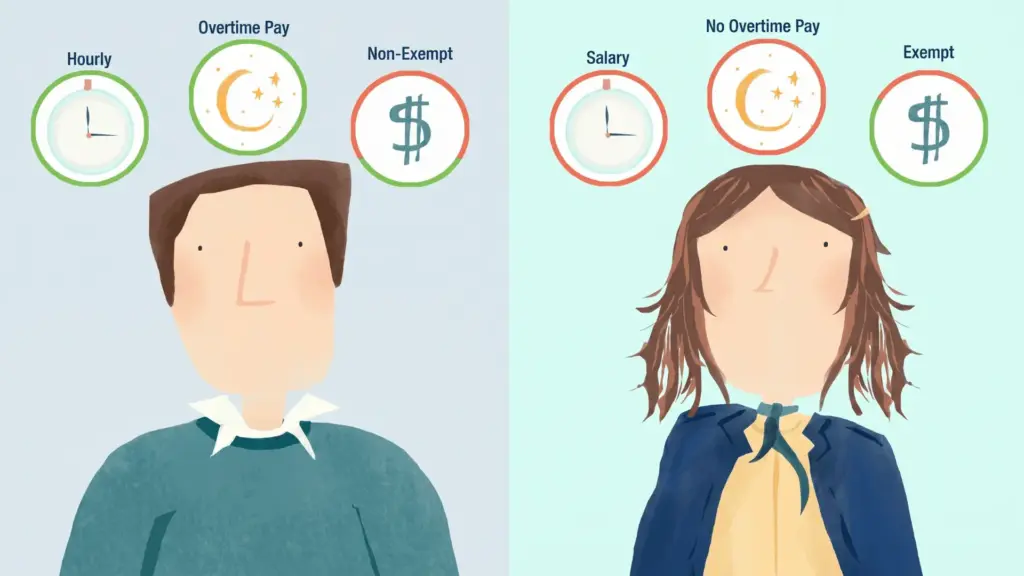
Employees working beyond regular hours may receive overtime pay. Whether that overtime is guaranteed depends on how a role is classified.
Understanding the difference between exempt and non-exempt employees helps clarify who qualifies.
5. Commission
Commission is common in sales jobs. Employees earn extra income based on sales targets or performance.
What Is Not Included in Gross Salary?
Some components are often confused with gross salary but usually stay outside it.
These commonly include:
- Employer PF contribution
- Gratuity
- Employer-paid insurance
- Stock options
- Reimbursements
- Separate joining bonuses
This is where gross salary and CTC start looking very different on paper.
How to Calculate Gross Salary?
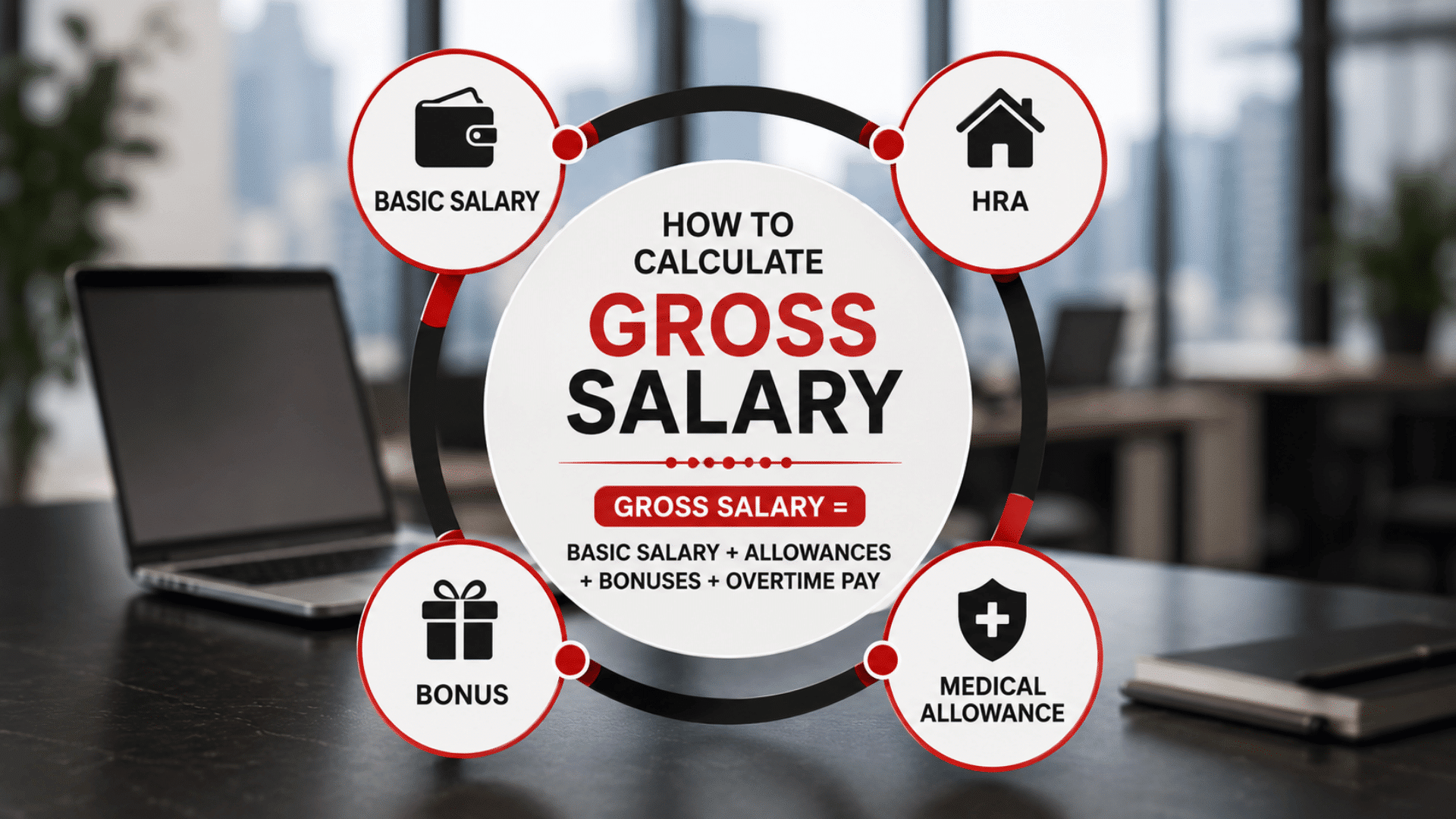
Gross salary is built by combining all earnings before deductions.
Basic Formula
| Gross Salary = Basic Salary + Allowances + Bonuses + Overtime Pay |
Simple Example
| Component | Amount |
| Basic Salary | $5,000 |
| HRA | $1,500 |
| Medical Allowance | $400 |
| Bonus | $600 |
| Gross Salary | $7,500 |
The calculation looks simple.
The tricky part usually hides inside variable pay, deductions, and employer contributions.
That’s why reading the salary structure line by line matters more than staring at the final number.
Gross Salary vs Net Salary
Salary conversations usually sound exciting until deductions enter the chat. That’s where gross salary and net salary start pulling in different directions.
One looks strong on paper. The other decides how comfortably the month survives.
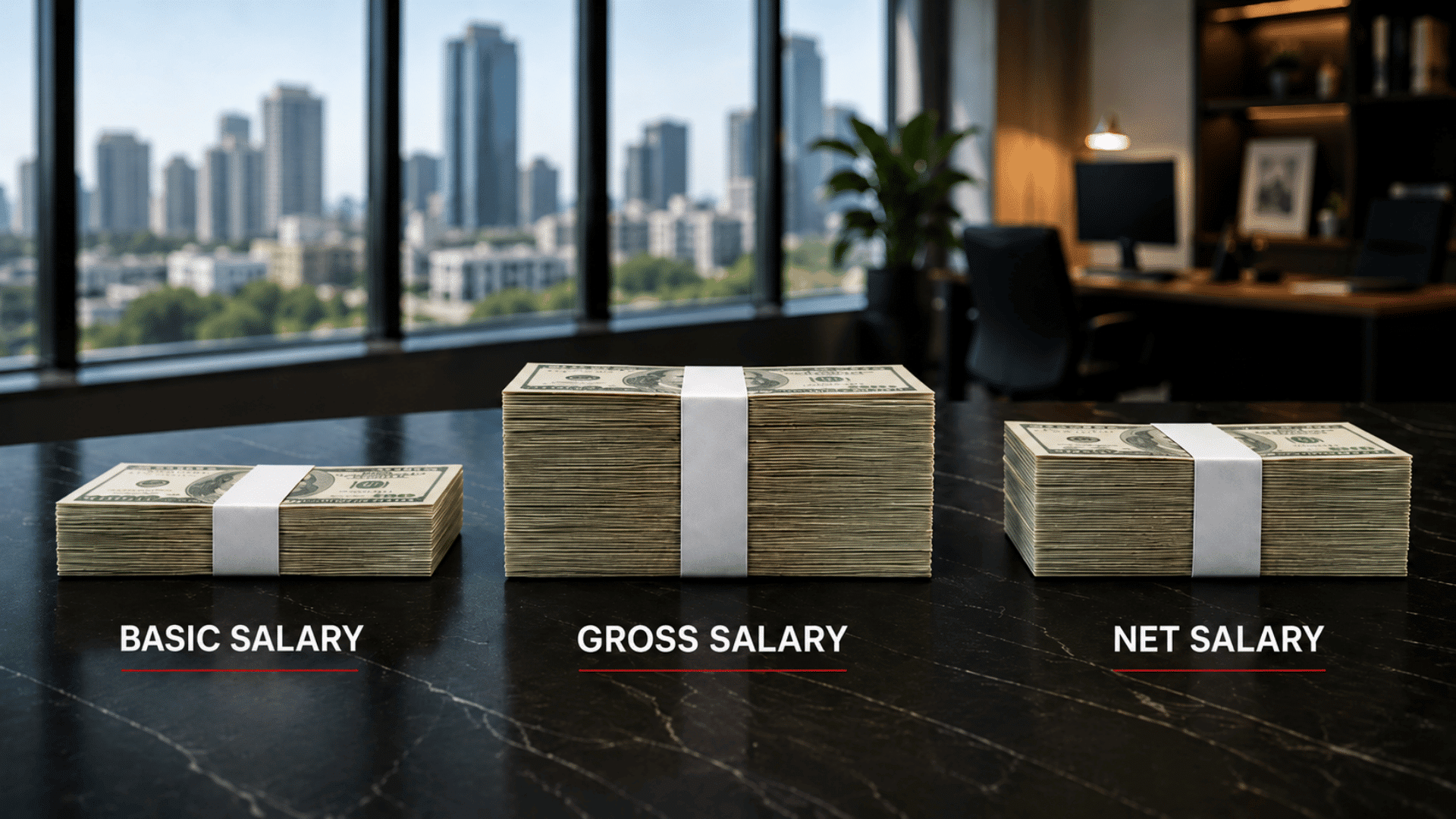
| Gross Salary | Net Salary |
| Total earnings before deductions | Final amount received after deductions |
| Includes allowances and bonuses | Excludes taxes and mandatory cuts |
| Commonly shown in offer letters | Lands in the bank account |
| Appears larger | Feels more real |
Why This Difference Matters?
Gross salary helps during:
- Job comparisons
- Loan applications
- Tax estimation
- Salary negotiations
Net salary matters where life actually happens:
- Rent payments
- Grocery bills
- Savings goals
- EMIs
- Weekend plans that somehow become expensive
A salary package may sound impressive at first glance. The take-home figure usually tells the real story.
Gross Salary vs Base Salary
Base salary is the steady backbone of the paycheck. Gross salary is the full setup with all the extras added in.
Think of base salary as the plain pizza. Gross salary is the version with toppings, sides, and the extra cheese nobody planned to order.
| Base Salary | Gross Salary |
| Fixed core income | Total earnings before deductions |
| Does not include extra payouts | Includes bonuses and allowances |
| Usually smaller | Usually higher |
| Used for benefit calculations | Used for total earning estimates |
Why Base Salary Still Matters? A flashy gross salary can sometimes hide a modest base pay.
That gap can affect:
- Provident Fund contributions
- Bonus structures
- Gratuity calculations
- Retirement benefits
- Long-term financial planning
Two offers with similar gross salaries may still feel completely different after a closer look.
Gross Salary vs CTC
Gross salary and CTC often look similar on paper. But one shows employee earnings, while the other shows company spending.
That gap explains why offer letters sometimes feel far more exciting than the actual monthly credit alert.
What Is CTC?
CTC stands for Cost to Company.
It is the total amount a company spends on an employee in a year. This includes direct salary plus extra benefits and contributions paid by the employer.
Think of CTC as the complete package value attached to the role.
Key Difference Between Gross Salary and CTC
| Gross Salary | CTC |
| Total earnings before deductions | Total yearly company expense |
| Includes salary components paid to employee | Includes employer-side costs too |
| Shown in salary slips | Commonly shown in offer letters |
| Closer to take-home pay | Usually higher than actual earnings |
What CTC May Include?
Several components can quietly increase the CTC figure:
- Employer PF contribution
- Gratuity
- Health insurance premium
- Retention bonus
- Variable pay
- Joining bonus
- Stock benefits in some roles
This is why two offers with the same CTC can lead to very different monthly salaries.
Why Gross Salary Matters?
Gross salary influences more than just the monthly paycheck. It affects loans, taxes, savings, and even future financial goals.
Loan Eligibility
Banks often look at gross income before approving loans. A higher gross salary can improve approval chances and borrowing limits.
This matters for home loans, car loans, credit cards, etc.
Income Tax Planning
Tax calculations usually begin with annual gross income. Salary structure can affect how much tax gets deducted throughout the year.
Salary Negotiation
Most job offers highlight the gross salary first. A bigger number may look attractive, but the actual value depends on deductions and variable pay.
Financial Planning
Gross salary helps estimate long-term financial capacity and gives a clearer picture while planning investments and savings. For HR teams, pairing salary data with the right HR analytics tools helps track compensation trends across the workforce more effectively.
Common Misunderstandings About Gross Salary
Salary numbers can look exciting at first glance.
The confusion usually starts once deductions, bonuses, and offer details enter the picture.
- Gross Salary = In-Hand Salary: Taxes, PF, and deductions reduce the final amount received every month.
- CTC = Gross Salary: CTC may include employer-side costs that never reach the employee directly.
- Variable Pay = Guaranteed Pay: Bonuses and incentives often depend on performance or company targets.
- Higher Package = Higher Monthly Pay: Large salary figures can still result in lower take-home income due to deductions and variable components.
- Salary Structure Does Not Matter: Allowances, deductions, and tax setup can change actual earnings significantly.
Questions To Ask Before Accepting a Salary Offer
A salary package can look impressive at first glance.
A few smart questions help reveal what the offer actually means in day-to-day life.
- What is the fixed salary amount?
- How much of the package is variable pay?
- What will the monthly in-hand salary be?
- Which deductions apply every month?
- Are bonuses guaranteed or performance-based?
- Is PF included within the CTC?
- Are there any bond agreements or hidden conditions?
The Bottom Line
Salary numbers can look polished, confident, and strangely convincing during hiring talks.
The real personality of a paycheck usually appears later in the salary slip.
Understanding how different salary terms work makes job offers easier to compare and far less dramatic after payday. A strong package is not always about the loudest number. The structure behind it often matters more than the headline figure itself.
One allowance can change tax savings. One deduction can shrink monthly plans faster than expected.
That’s why reading the fine print deserves almost as much attention as the salary itself.
Got a salary term that still feels confusing? Drop it in the comments. The next paycheck mystery might deserve its own breakdown.
Frequently Asked Questions
Is $70,000 a Year Considered Middle Class?
Nationally, it is found that the income necessary to be considered middle class varies from less than $40,000 to nearly $70,000.
What Is a Good Gross Pay?
According to the Bureau of Labor Statistics (BLS), the national average salary in 2024 was $67,920. Although wages above the average could be seen as a good salary, there are no hard and fast rules regarding how to determine a good salary.
Will I Get a Tax Refund if I Made Less than $30,000?
The Department of Community Services and Development encourages Californians earning under $31,950 a year to file their taxes to claim the California Earned Income Tax Credit (CalEITC), a cash-back tax credit, and receive a larger tax refund.