

Saying no is never easy, especially in professional settings.
Yet knowing how to write a rejection email is an essential skill that every manager, recruiter, or business owner eventually needs.
Whether you are declining a job application, turning down a proposal, or passing on a partnership opportunity, the way you communicate that decision matters.
A poorly written rejection can strain relationships and harm your reputation. A clear and respectful message, however, protects your credibility and keeps communication professional.
This article explains how to write a rejection email step by step and includes practical templates you can customize for different situations.
What Is a Rejection Email?
A rejection email is a professional message sent to inform someone that their application, proposal, request, or offer has not been accepted.
It is commonly used in hiring processes, business proposals, vendor selections, sales outreach, and internal promotions.
The goal is simple: communicate the decision clearly while remaining respectful. A strong rejection email avoids confusion, sets boundaries, and maintains professionalism.
Why Writing a Professional Rejection Email Is Important?
A rejection email is not just a formality. It reflects your communication standards and your brand. Here is why it matters:
- It protects your professional reputation.
- It shows respect for someone’s time and effort.
- It reduces unnecessary follow-up emails.
- It helps preserve future opportunities.
People may forget the outcome, but they often remember how they were treated.
How to Write a Rejection Email Step by Step?
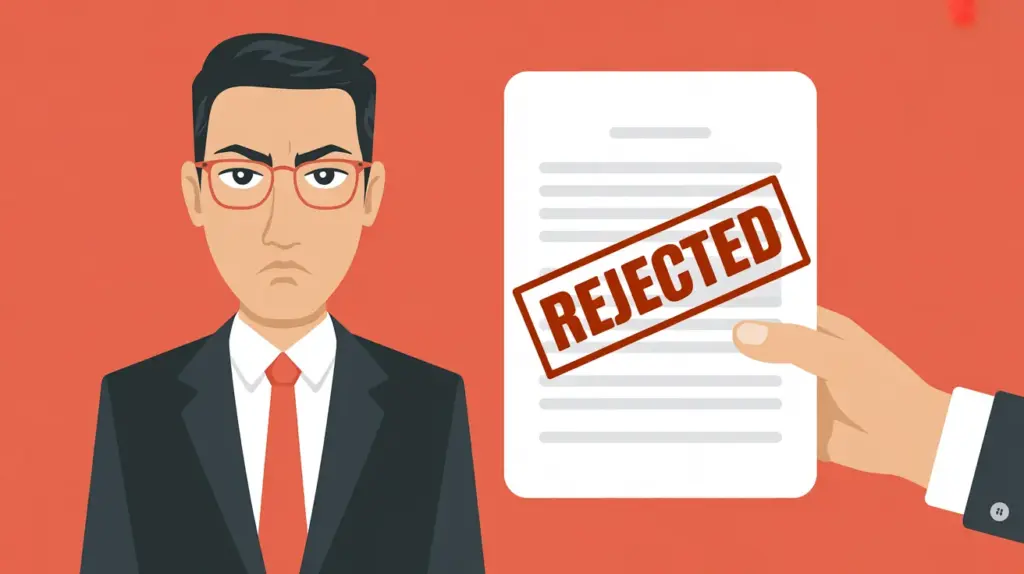
Writing a rejection email becomes easier when you follow a clear structure. The goal is simple: communicate the decision respectfully, clearly, and professionally without overcomplicating the message.
1. Write a Clear Subject Line
Keep the subject line neutral and specific. It should clearly reflect the purpose of the email without sounding abrupt or vague. Avoid phrases like “Quick Update” that create uncertainty.
Examples include:
Application Update
Interview Outcome
Proposal Decision
This prepares the recipient and sets expectations immediately.
2. Start With Appreciation
Begin by thanking the recipient for their time, effort, or interest. A short acknowledgment shows professionalism and respect.
For example:
Thank you for taking the time to apply and meet with our team.
We appreciate the detailed proposal you submitted.
This creates a considerate tone before sharing the decision.
3. State the Decision Clearly
Be direct but polite. Avoid vague wording that leaves room for confusion. The purpose of the email is to communicate the outcome clearly.
For example:
After careful consideration, we have decided to move forward with another candidate.
Clarity prevents unnecessary follow-ups.
4. Provide Brief Context (If Appropriate)
In some cases, offering a short, professional context can be helpful. This works well in hiring or proposal scenarios where a simple explanation can provide closure.
For example:
We selected a candidate whose experience more closely aligns with our current needs.
Avoid detailed criticism or overly specific feedback.
5. Keep the Door Open (Optional)
If appropriate, leave room for future interaction. This is especially useful when you want to maintain professional relationships or build long-term connections.
However, this step should only be included if it reflects a genuine possibility. Empty reassurance can harm credibility.
For example:
We encourage you to apply for future openings.
We would be happy to stay connected for potential opportunities.
This helps preserve goodwill.
6. End With a Professional Closing
Close politely and confidently. The ending of your rejection email reinforces your overall tone. Even if the message delivers disappointing news, the final lines should feel composed and respectful.
Examples:
We wish you success in your continued search.
Thank you again for your interest.
Use a professional sign-off such as Best regards, Sincerely, or Kind regards.
Rejection Email Templates for Different Situations
Below are practical rejection email templates you can adapt based on the situation.
Each example follows a clear structure so you can maintain professionalism, deliver the decision confidently, and keep the message concise and respectful.
Job Application Rejection (No Interview)
Subject: Application Update
Dear [Name],
Thank you for your interest in the [Position Title] role. We appreciate the time you invested in your application.
After reviewing all submissions, we have decided to move forward with other candidates whose experience more closely matches our current needs.
We wish you success in your job search and appreciate your interest in our company.
Best regards,
[Your Name]
Post-Interview Rejection Email
Subject: Interview Outcome
Dear [Name],
Thank you for taking the time to meet with our team. We enjoyed learning more about your experience.
After careful consideration, we have decided to proceed with another candidate for this role. This was a competitive process, and we truly appreciate your effort.
We wish you continued success in your career.
Kind regards,
[Your Name]
Internal Candidate Rejection
Subject: Update on Internal Application
Dear [Name],
Thank you for applying for the [Position Title] opportunity. We appreciate your interest in growing within the organization.
After review, we have selected another candidate whose background more closely fits the current role requirements.
We value your contributions and encourage you to continue pursuing development opportunities within the company.
Sincerely,
[Your Name]
Business Proposal Rejection
Subject: Proposal Review Outcome
Dear [Name],
Thank you for submitting your proposal and for the time invested in preparing it.
After evaluation, we have decided to move forward with another option that better aligns with our current objectives.
We appreciate your effort and hope there may be opportunities to collaborate in the future.
Best regards,
[Your Name]
Sales Pitch Rejection
Subject: Thank You for Reaching Out
Dear [Name],
Thank you for introducing your services. We appreciate the overview you provided.
At this time, we are not looking to move forward. We will keep your information on file should our needs change.
Thank you again for your outreach.
Kind regards,
[Your Name]
Vendor or Partnership Rejection
Subject: Partnership Inquiry Update
Dear [Name],
Thank you for your interest in partnering with us. We appreciate the opportunity to review your proposal.
At this time, we have decided not to proceed. We truly value the effort you put into your submission.
We wish you continued success and appreciate your interest in our organization.
Sincerely,
[Your Name]
Common Mistakes to Avoid When Writing a Rejection Email
When learning how to write a rejection email, small wording choices can make a big difference. Avoid these common mistakes:
-
Being too vague about the decision: Avoid unclear phrases like “we will keep you in mind” that don’t directly state the outcome. Clarity should always come first.
-
Overexplaining the reason: Providing too much detail can create confusion or unnecessary risk. A brief and neutral explanation is enough.
-
Using cold or impersonal language: Skipping appreciation or sounding robotic can make the message feel harsh. Professional does not mean unfriendly.
-
Delaying the response: Waiting too long leaves the recipient uncertain. Prompt communication shows respect.
-
Overpromising future opportunities: Do not suggest future roles or partnerships unless you genuinely intend to follow through.
Conclusion
Learning how to write a rejection email is about finding the right balance. The message should be clear without sounding harsh and professional without feeling cold or robotic.
Even when you deliver disappointing news, the way you communicate it reflects your standards and your organization’s values.
A well-written rejection email protects your reputation, shows respect for the recipient’s time and effort, and keeps communication direct and uncomplicated.
By following a simple structure, expressing genuine appreciation, and stating the decision clearly, you can manage even uncomfortable situations with confidence.
Use the templates provided as a foundation, adjust them to fit your situation, and always prioritize clarity, professionalism, and respect in every message.