


Every team has its rhythm, but sometimes situations can arise where things need to get better for the sake of smooth functioning of the company and its employees.
Employee engagement surveys give teams a structured way to do exactly that.
They give employees a way to share insights, define what works for them, and what does not.
With the right questions, companies can understand their teams better, fix real issues faster, and build a workplace people actually want to stay in.
Why Employee Engagement Surveys Matter?
Employees rarely quit out of nowhere. The early signs often show up in quiet meetings, low energy, missed ideas, or careful answers.
Employee engagement surveys help companies catch these signs early.
They give employees a safer way to share what is working, what feels stuck, and what needs attention.
Here’s why they matter:
- They spot small issues before they grow.
- They improve communication in the team
- They help employees feel heard and valued.
- They support retention by showing what people need.
- They give managers clear feedback to act on.
- They make honest input easier for quieter employees.
The goal is not to collect pretty charts. The goal is to make work better.
How to Write Good Employee Engagement Survey Questions?
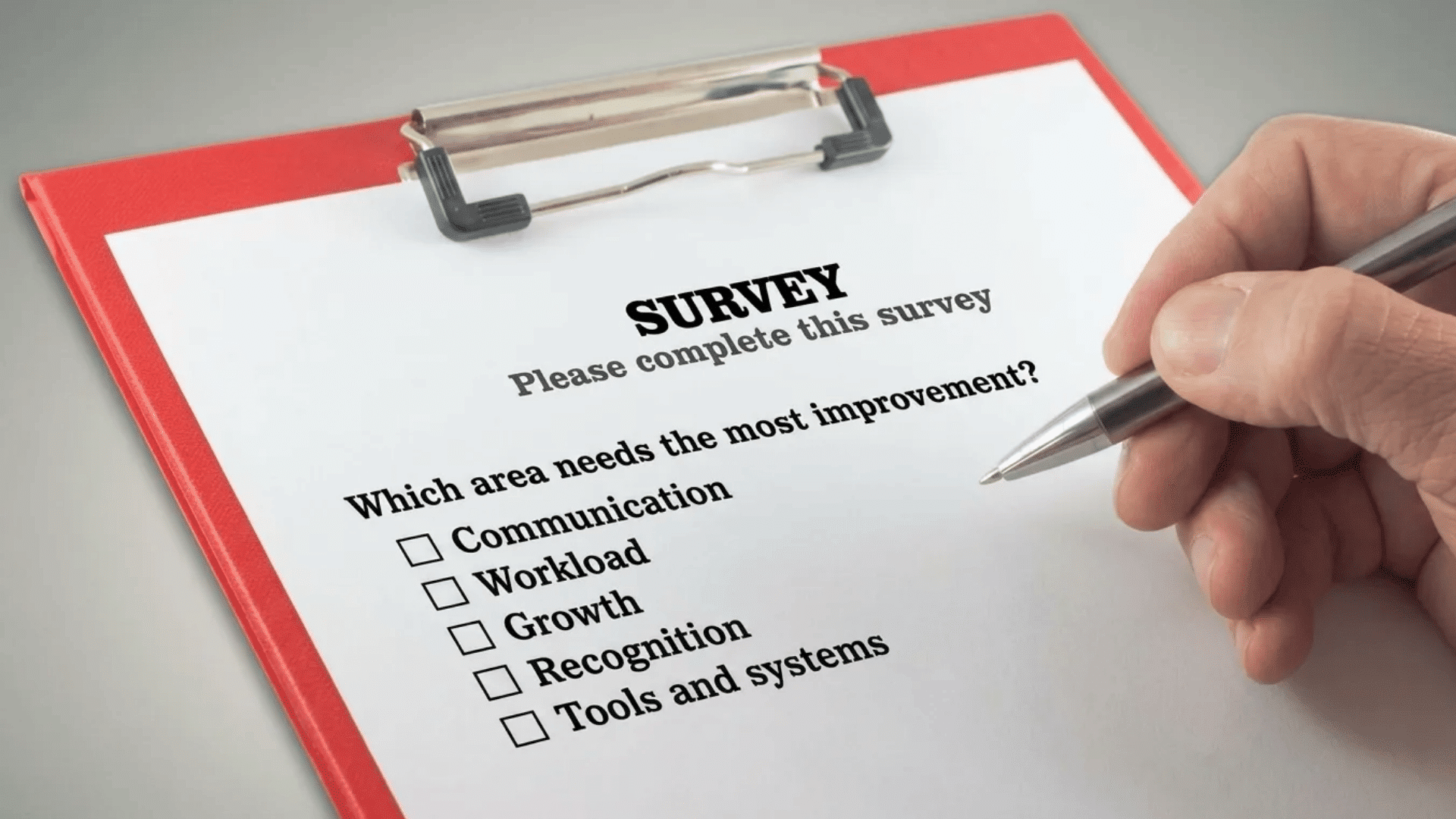
Good employee engagement survey questions should be clear, simple, and useful. Employees should not have to decode the question before answering it.
And yes, no one wants a 72-question office obstacle course. Follow these simple rules:
- Keep each question clear and direct: Use plain language.
- Ask one thing at a time: Do not mix support, pay, workload, or growth in one question.
- Use rating-scale and open-ended questions: Scores show patterns, while written answers explain the reason.
- Avoid leading wording: Ask, “How would you rate the company culture?” instead of praising it in the question.
- Group questions by topic: Keep areas like manager support, workload, recognition, and growth separate.
- Make answers anonymous when possible: People give better feedback when they feel safe.
- Ask only what you are ready to act on: Feedback without action can hurt trust.
A strong survey does not need fancy wording. It needs clear questions, honest answers, and action employees can see.
Best Employee Engagement Questions by Category
Download the full list of employee engagement survey questions as a PDF and keep it handy for your next team survey.
A strong employee engagement survey should ask clear questions people can answer without second-guessing.
Below are simple employee engagement survey questions grouped by topic:
Role Clarity and Job Purpose Questions
Understand if employees know what they need to do and why their work matters with the following.
| Question |
|---|
| Q1. Do you clearly understand what is expected of you in your role? |
| Q2. Do you feel your work makes good use of your skills? |
| Q3. Do you understand how your work supports company goals? |
| Q4. Do your daily tasks feel important to you? |
| Q5. Which part of your work feels most meaningful to you? |
Manager Support Questions
These questions show whether employees feel guided, respected, and supported by their manager.
| Question |
|---|
| Q6. Does your manager give you helpful feedback? |
| Q7. Do you feel supported in reaching your work goals? |
| Q8. Can you raise concerns with your manager comfortably? |
| Q9. Does your manager treat team members fairly? |
| Q10. What could your manager do to help you succeed? |
Teamwork and Workplace Culture Questions
The given questions help you understand how people work together and how safe they feel sharing ideas.
| Question |
|---|
| Q11. Does your team work well together? |
| Q12. Do people at work treat each other with respect? |
| Q13. Do you feel included by your team? |
| Q14. Do you feel safe sharing ideas with your team? |
| Q15. What could make teamwork better here? |
Recognition and Appreciation Questions
If employees feel noticed and valued for their work or not, these questions can help figure that out.
| Question |
|---|
| Q16. Do you receive recognition when you do good work? |
| Q17. Do you feel your team values your contributions? |
| Q18. Does recognition feel fair across the company? |
| Q19. Do you know what good performance looks like in your role? |
| Q20. What kind of recognition means the most to you? |
Growth and Career Development Questions
Find out if employees see room to learn and grow at the company by using the following questions.
| Question |
|---|
| Q21. Do you have chances to learn new skills at work? |
| Q22. Do you see a clear path to grow your career here? |
| Q23. Do you get support for your career goals? |
| Q24. Can you access learning resources when you need them? |
| Q25. Which skill would you like to build next? |
Leadership and Company Direction Questions
These questions show whether employees trust leaders and understand where the company is headed.
| Question |
|---|
| Q26. Do leaders share company updates clearly? |
| Q27. Do you trust the decisions made by senior leaders? |
| Q28. Do you understand the company’s main goals? |
| Q29. Do leaders respond to employee feedback? |
| Q30. What should leaders explain more clearly? |
Workload and Well-Being Questions
These questions help you see if employees can do good work without feeling overloaded.
| Question |
|---|
| Q31. Does your workload feel realistic? |
| Q32. Do you have the tools you need to do your job well? |
| Q33. Can you keep a healthy work-life balance? |
| Q34. Do you feel supported when work becomes stressful? |
| Q35. What would make your workload easier to manage? |
Compensation and Benefits Questions
These questions help you understand if employees feel pay, benefits, and rewards are fair.
| Question |
|---|
| Q36. Does your pay feel fair for your role? |
| Q37. Do the benefits meet your needs? |
| Q38. Do you understand how pay decisions are made? |
| Q39. Do rewards feel fair and consistent? |
| Q40. Which benefit or reward would matter most to you? |
Employee Loyalty and eNPS Questions
These questions help measure whether employees want to stay and whether they would recommend the company to others.
| Question |
|---|
| Q41. How likely are you to recommend this company as a great place to work? |
| Q42. Do you see yourself staying with this company for the next year? |
| Q43. Do you feel proud to work here? |
| Q44. Would you speak positively about this company to others? |
| Q45. What is the main reason you would stay or leave? |
Open-Ended Employee Engagement Survey Questions
Open-ended questions let employees share insights rating scales cannot capture.
Q46. What is the best part of working here?
Q47. What is one thing we should start doing?
Q48. What is one thing we should stop doing?
Q49. What is one thing we should continue doing?
Q50. What makes your work harder than it needs to be?
Q51. What change would improve your daily work experience?
Q52. What do you wish leadership understood better?
Q53. What would help you feel more connected to the company?
Q54. What is one thing your team does really well?
Q55. What is one thing that would make this a better place to work?
Company Survey Questions for Different Workplace Goals
Different workplace goals require different focus areas. These company survey questions help target specific objectives like retention, manager effectiveness, culture, communication, growth, and workload management.
| Questions to Ask | Goal |
|---|---|
| Q56. Do you see yourself working here next year? | Improve retention |
| Q57. Does your manager support your success? | Improve manager quality |
| Q58. Do you feel respected and included at work? | Improve culture |
| Q59. Do leaders share updates clearly? | Improve communication |
| Q60. Do you have opportunities to learn and advance? | Improve growth |
| Q61. Is your workload manageable? | Improve workload |
Employee Engagement Survey Question Format Examples
Employee engagement survey questions work best when the format matches the answer you need.
Some questions help you track numbers. Others give employees room to say what is really going on.
Rating Scale Questions
Rating scale questions are best for tracking trends over time. They help you see whether things are improving, slipping, or quietly staying stuck.
Example:
Q62. I feel valued at work.
Answer scale:
|
Response Option ☐ Strongly disagree |
Use this format for role clarity, recognition, manager support, workload, and leadership trust.
0 to 10 Scale Questions
A 0 to 10 scale works well for eNPS and recommendation questions.
Example:
Q63. How likely are you to recommend this company as a great place to work?
| Score Range | What It Usually Means |
|---|---|
| 0 to 6 | Low recommendation level |
| 7 to 8 | Mixed feeling |
| 9 to 10 | Strong recommendation level |
Pair this with a follow-up question like, “What is the main reason for your score?”
That keeps you from guessing the story behind the number.
Multiple Choice Questions
Multiple-choice questions are useful when you want employees to choose from clear options.
Example:
Q64. Which area needs the most improvement?
|
Options ☐ Communication |
This format helps leaders spot the biggest pressure points fast.
Open-Ended Questions
Open-ended questions are best for deeper feedback. They let employees share ideas, examples, and concerns that may not fit into a scale.
Example:
Q65. What is one change that would make your workday better?
Use them with care. Too many open-ended questions can make the survey feel like homework with a company logo. A good survey uses a mix of formats so you get both clear data and honest context.
Wrapping Up
Employee engagement survey questions are not just HR paperwork with a nicer font.
They help teams say the things that often stay under the surface.
The real value comes from asking clear questions, reading the answers with care, and making changes people can actually notice.
A survey should not feel like a yearly ritual that disappears into a folder.
It should help leaders understand the daily reality of work, from workload and growth to trust, support, and recognition.
So, which question would you add to this list? Drop it in the comments and share the one question every company should ask its employees.
Frequently Asked Questions
What Are the 4 Pillars of Employee Engagement?
The four pillars of employee engagement are Connection, Communication, Appreciation, and Voice. When organizations cultivate these areas, they typically see higher retention, increased morale, and better overall productivity.
What Is a Fun Survey Question?
A fun survey question breaks the ice and boosts engagement. The best option depends on your goal, such as a “would you rather” debate or a creative prompt.
What Are Good Employee Survey Questions?
Good employee survey questions are clear, actionable, and tied to specific engagement drivers. The most effective questions provide a mix of measurable metrics and candid feedback.