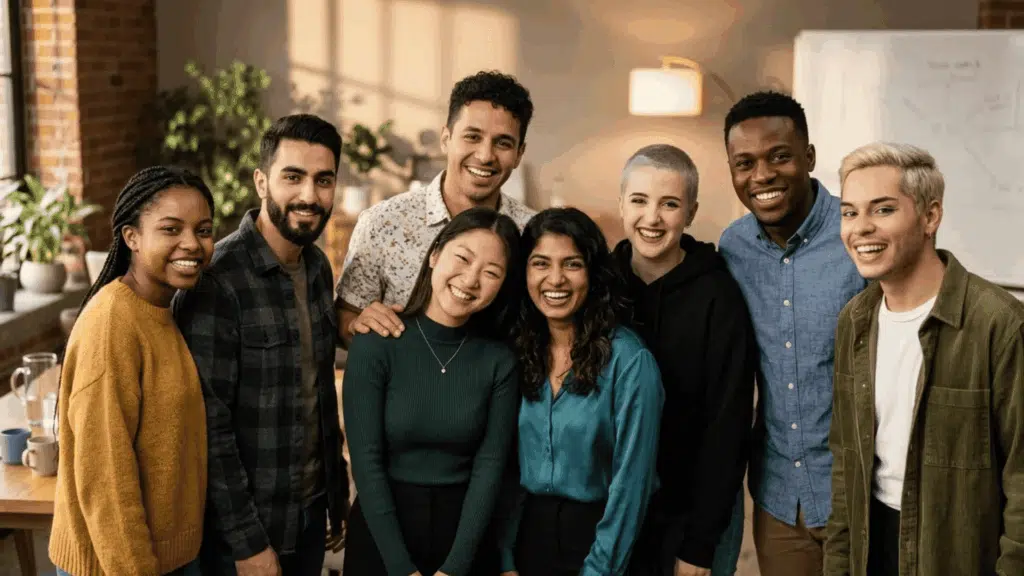

A workplace becomes stronger when different perspectives come together to solve problems, share ideas, and challenge routine thinking.
Teams with varied experiences often communicate with wider audiences more effectively, respond faster to change, and bring fresh thinking into everyday decisions.
But mixed perspectives can also create communication gaps, bias, and workplace tension when companies fail to build an inclusive culture.
The real challenge is not bringing different people into the same room. It is creating an environment where everyone can contribute, collaborate, and grow equally.
What Does Diversity in The Workplace Mean?
Diversity in the workplace goes far beyond having employees from different backgrounds.
It shapes how people think, communicate, collaborate, and respond to challenges every day.
A diverse team brings together individuals with different experiences, viewpoints, and working styles. That mix can influence everything from brainstorming sessions to leadership decisions and customer interactions.
Modern workplaces are no longer built around one fixed way of thinking. Companies now rely on diverse perspectives to enhance creativity, strengthen teamwork, and meet fast-changing market demands.
When diversity is properly supported, teams often become more adaptable, more aware, and better at seeing opportunities others miss.
Types of Diversity in the Workplace
Workplace diversity exists in many forms. Some differences are immediately visible, while others influence how employees think, communicate, and approach work behind the scenes.
| Type of Diversity | What It Includes | Why It Matters |
| Visible Diversity | Race, ethnicity, gender, age, physical ability | Brings broader representation and different lived experiences into the workplace |
| Invisible Diversity | Religion, education, socioeconomic background, personality, mental health, thinking styles | Shapes perspectives, communication habits, and workplace interactions in less obvious ways |
| Experiential Diversity | Career paths, life experiences, global exposure, industry background | Adds practical insight, adaptability, and different approaches to problem-solving |
| Cognitive Diversity | Different problem-solving approaches, communication styles, and decision-making methods | Encourages stronger discussions, balanced decisions, and creative thinking |
The strongest teams usually combine several forms of diversity instead of focusing on just one. That wider mix of perspectives often leads to better collaboration, smarter ideas, and stronger workplace performance.
Why Diversity Has Become a Business Priority?

Diversity has become a serious business focus because workplaces and customer groups are more varied than ever.
Companies now view diversity as part of growth, hiring, and long-term stability rather than a separate HR effort.
Younger professionals expect inclusive work environments and often research company culture before applying. Global hiring has also increased multicultural collaboration across teams, markets, and time zones.
Businesses with diverse teams are often better at understanding different customer needs and market expectations.
| Business Area | Impact of Diversity |
| Product Design | Better understanding of customer needs |
| Marketing | More relatable campaigns |
| Hiring | Wider talent pool |
| Customer Support | Better communication across audiences |
Company culture also affects public image faster today. Employee reviews and online discussions can influence hiring, customer trust, and brand perception within days.
Benefits of Diversity in the Workplace
Diverse teams often make stronger decisions because people bring different perspectives into discussions.
This helps reduce blind spots and encourages more balanced thinking during problem-solving.
Workplace diversity also supports creativity. Employees with different backgrounds and experiences can approach challenges in ways that lead to fresh ideas and better solutions.
Inclusive workplaces tend to create healthier team environments too.
- Lower burnout
- Higher participation
- Stronger collaboration
Many studies also connect diversity with stronger business performance and adaptability during market changes.
| Diversity Factor | Possible Business Outcome |
| Gender Diversity | Improved leadership balance |
| Cultural Diversity | Better global reach |
| Cognitive Diversity | Faster innovation |
Diversity can also improve a company’s reputation. Businesses known for fair and inclusive workplaces often attract stronger talent, customer trust, and positive public attention.
Challenges of Diversity in Companies
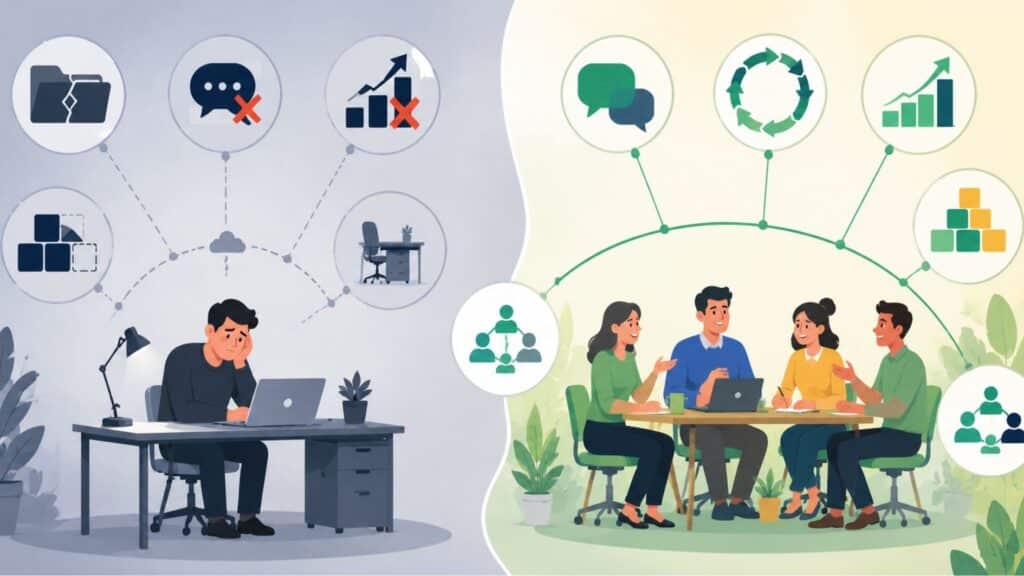
Diversity can strengthen teams. But without the right culture, it can also create tension.
- Communication barriers: Different work styles and communication habits can easily cause misunderstandings.
- Resistance to change: Some employees may resist inclusion efforts because of discomfort or fear of losing influence.
- Conflict from different perspectives: Different opinions can improve decisions, but poor leadership can turn debates into tension.
- Inclusion gaps: Diversity brings people in. Inclusion decides whether they feel heard, valued, and comfortable speaking up.
- Unconscious bias: Bias can quietly affect hiring, promotions, meetings, and evaluations. When that bias becomes a pattern, it can cross into disparate treatment or disparate impact both of which carry serious legal consequences for employers.
“Bias is not always loud. Sometimes it appears in who gets interrupted less.”
What Makes Diversity Efforts Fail?
Not every diversity effort fails loudly. Some slowly lose employee trust until people stop believing the company means what it says.
Common Mistakes Companies Make
Diversity efforts often fail when companies focus more on appearance than everyday employee experience.
Small gaps between policy and reality can quietly damage trust over time:
- Treating diversity like PR: Strong campaigns cannot hide weak workplace culture for long.
- Hiring without support systems: Diverse hiring means little without mentorship, growth opportunities, and inclusion.
- Ignoring leadership accountability: Programs fail when managers are never responsible for team culture or bias.
- Using one-time training only: A single workshop cannot change long-term habits or workplace behavior.
- Focusing on optics instead of experience: Good numbers on paper do not always mean employees feel respected or heard.
- Overlooking daily behaviors: Interruptions, favoritism, and exclusion during meetings slowly damage trust.
Employees notice performative efforts quickly. People watch who gets promoted, whose opinions matter, and how problems are handled during difficult moments.
Diversity, Inclusion, and How Companies Can Better

Diversity and inclusion are often treated as the same thing. But they solve different workplace problems.
| Diversity | Inclusion |
| Who is in the room | Who gets heard |
| Representation | Participation |
| Hiring different people | Creating belonging |
| Workforce numbers | Employee experience |
A company can hire diverse employees and still create a culture where only a few voices matter.
Inclusion is what turns representation into real participation.
Still, many workplace diversity efforts fail because the focus stays on appearance instead of culture.
Employees usually notice performative efforts quickly. Especially when company messaging sounds inclusive, but daily workplace behavior feels different.
How Companies Can Build More Inclusive Workplaces?
Strong workplaces focus on consistency, fairness, and everyday behavior.
Improve Hiring Practices
- Use skill-based hiring
- Expand recruitment channels
- Reduce bias in job descriptions
Train Managers Properly
Managers should know how to:
- Communicate fairly
- Handle conflict respectfully
- Encourage equal participation
Create Safe Communication Spaces
Helpful approaches include:
- Employee resource groups
- Anonymous feedback systems
- Open team discussions
Build Equal Growth Opportunities
- Mentorship programs
- Transparent promotions
- Leadership access for all employees
Companies that focus on both diversity and inclusion often create stronger collaboration and healthier workplace culture.
A solid foundation in employee relations helps ensure that everyday workplace interactions support those goals consistently.
Final Thoughts
Workplace diversity is no longer just a hiring conversation. It shapes how companies think, adapt, communicate, and grow under pressure.
The strongest teams are usually built from different perspectives working toward the same goals with fairness, respect, and equal opportunity.
But diversity alone is not enough. Real progress happens when employees feel heard, supported, and trusted in everyday work culture.
Companies that treat inclusion as part of daily behavior instead of a public image effort often build healthier teams and stronger long-term results.
What changes have been noticed around diversity and inclusion at work lately? Share thoughts, experiences, or workplace observations in the comments below.
Frequently Asked Questions
What Will Happen without DEI?
Without diversity, equity, and inclusion (DEI), fewer companies will invest in the training and cultural shifts necessary for Fair Chance Employment. This could lead to fewer job opportunities for people reentering society, exacerbating cycles of poverty and recidivism.
What Is an Example of Diversity in The United States?
Immigrants from all over the world have come to the United States since the 17th century. There are people of all different ethnicities, with a variety of cultures and languages. Mexican, Chinese, Indian, and Filipino people are among the largest groups.
Why Do Some People Hate Diversity?
People often oppose DEI initiatives not necessarily out of malice, but out of perceived threats to their own stability. Opposition typically stems from the fear of losing resources, a desire to preserve familiar cultural norms, and the belief that diversity measures undermine merit-based competition.