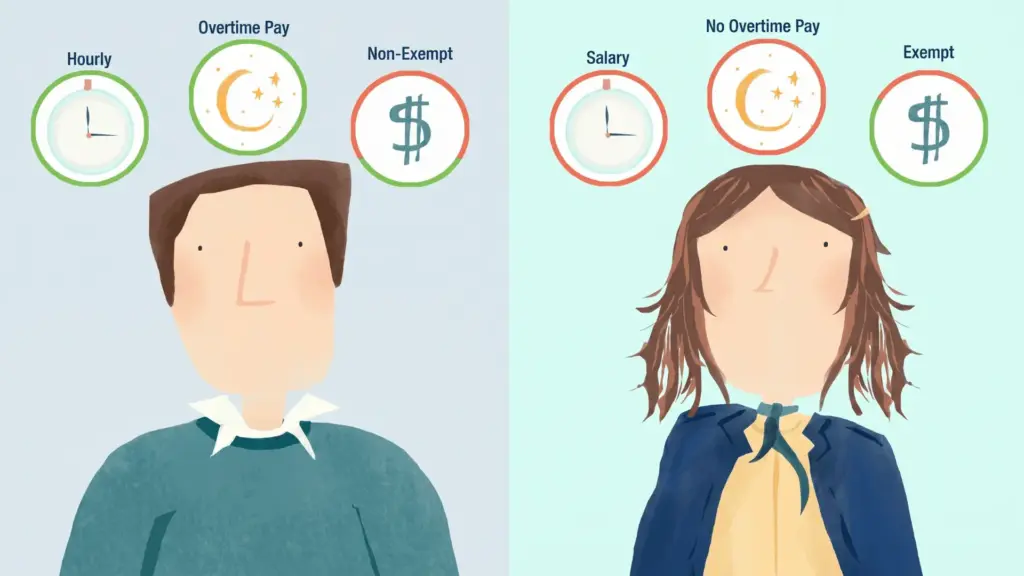


Poor communication, lack of recognition, and workplace conflicts can quickly turn employees unhappy and disengaged.
A disgruntled employee can lower team morale, reduce productivity, and create a negative work environment if the issue is ignored.
Organizations that address employee dissatisfaction early can improve communication, increase engagement, and build a healthier workplace culture.
In this blog, you’ll learn the common causes of disgruntled employees, warning signs to watch for, and practical ways to prevent workplace dissatisfaction.
What is a Disgruntled Employee?
A disgruntled employee is someone who feels unhappy or dissatisfied at work due to issues like poor communication, low pay, lack of recognition, workplace conflicts, or unfair treatment.
These employees may show negative behavior, reduced productivity, or openly express frustration. In serious cases, they may even harm the company through sabotage or other damaging actions.
If these concerns are ignored, it can lead to higher employee turnover, legal problems, and damage to the company’s reputation.
While there is no single solution for every situation, companies can reduce employee dissatisfaction by promoting open communication, providing regular feedback, and supporting employee growth.
Reasons Employees Become Disgruntled
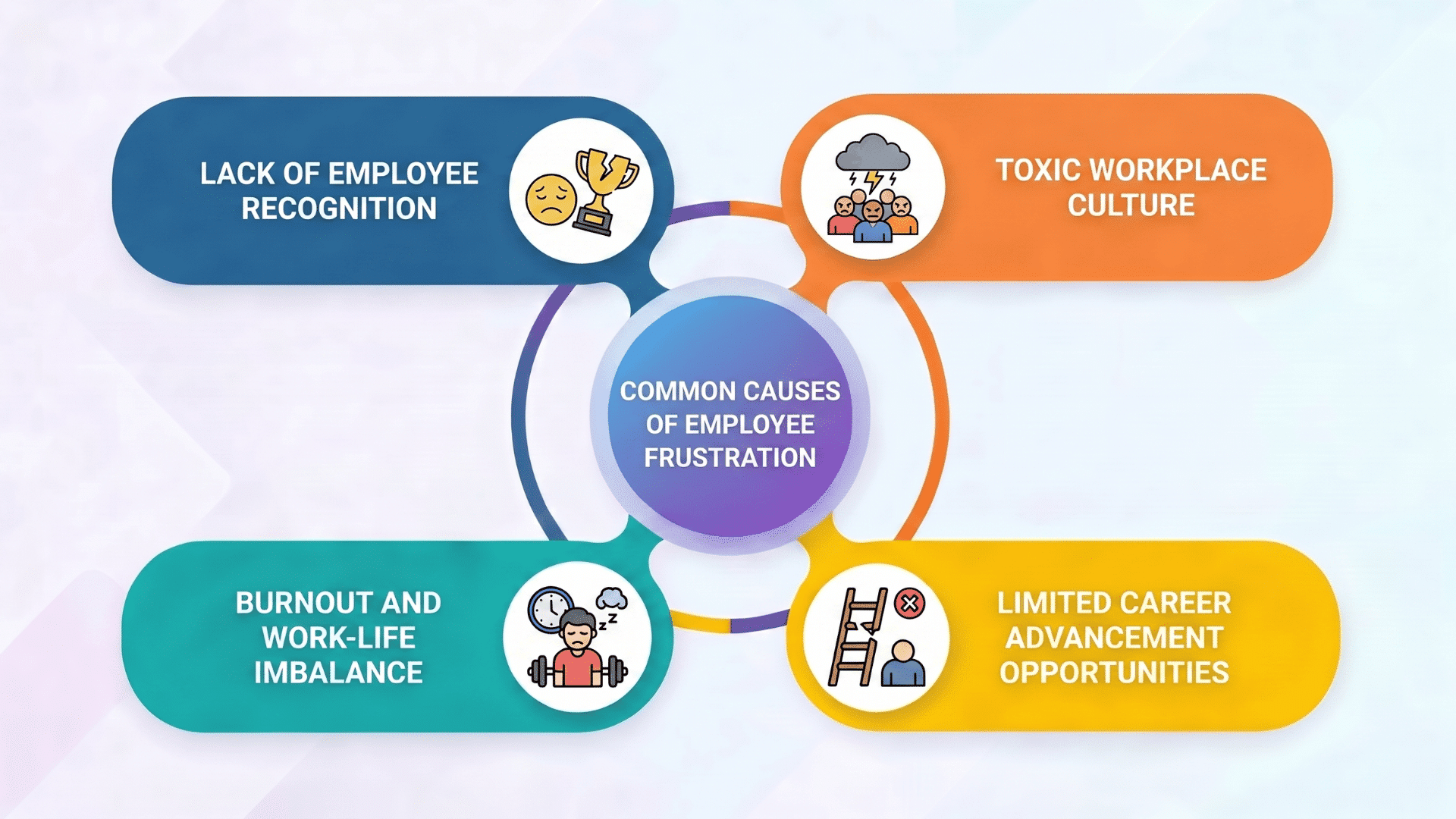
Several workplace issues can lead to employee dissatisfaction and frustration. Here are some common causes of disgruntled employees:
- Poor communication at work can make employees feel unheard and confused about expectations.
- Lack of recognition can leave employees feeling undervalued and unappreciated.
- Toxic management or workplace culture can create stress, favoritism, and unfair treatment.
- Burnout and poor work-life balance can lead to exhaustion, stress, and reduced motivation.
- Limited career growth can leave employees feeling stuck, without learning or promotion opportunities.
Addressing these issues early can improve employee satisfaction, workplace morale, and overall productivity.
How to Recognize a Disgruntled Employee?
Identify disgruntled employees early to prevent greater workplace disruption. Here are certain ways leaders can identify dissatisfaction in their team:
- Employee Surveys: Anonymous surveys help employees share honest feedback about management, workplace conditions, and team dynamics.
- Pulse Polls: Short, targeted polls can quickly gauge employee satisfaction and identify workplace concerns.
- Changes in Work Quality: Employees may show lower productivity or reduced focus at work.
- Improper Interactions: They may argue with coworkers, make negative comments, or ignore workplace rules.
- Absenteeism and Lateness: Frequent absences or repeated lateness can signal workplace dissatisfaction.
- Decreased Teamwork: Employees may avoid collaboration or limit communication with teammates.
Recognizing these behaviors early allows employers to address concerns, improve communication, and maintain a healthier work environment.
Best Practices to Prevent Disgruntled Employees from Becoming Dissatisfied
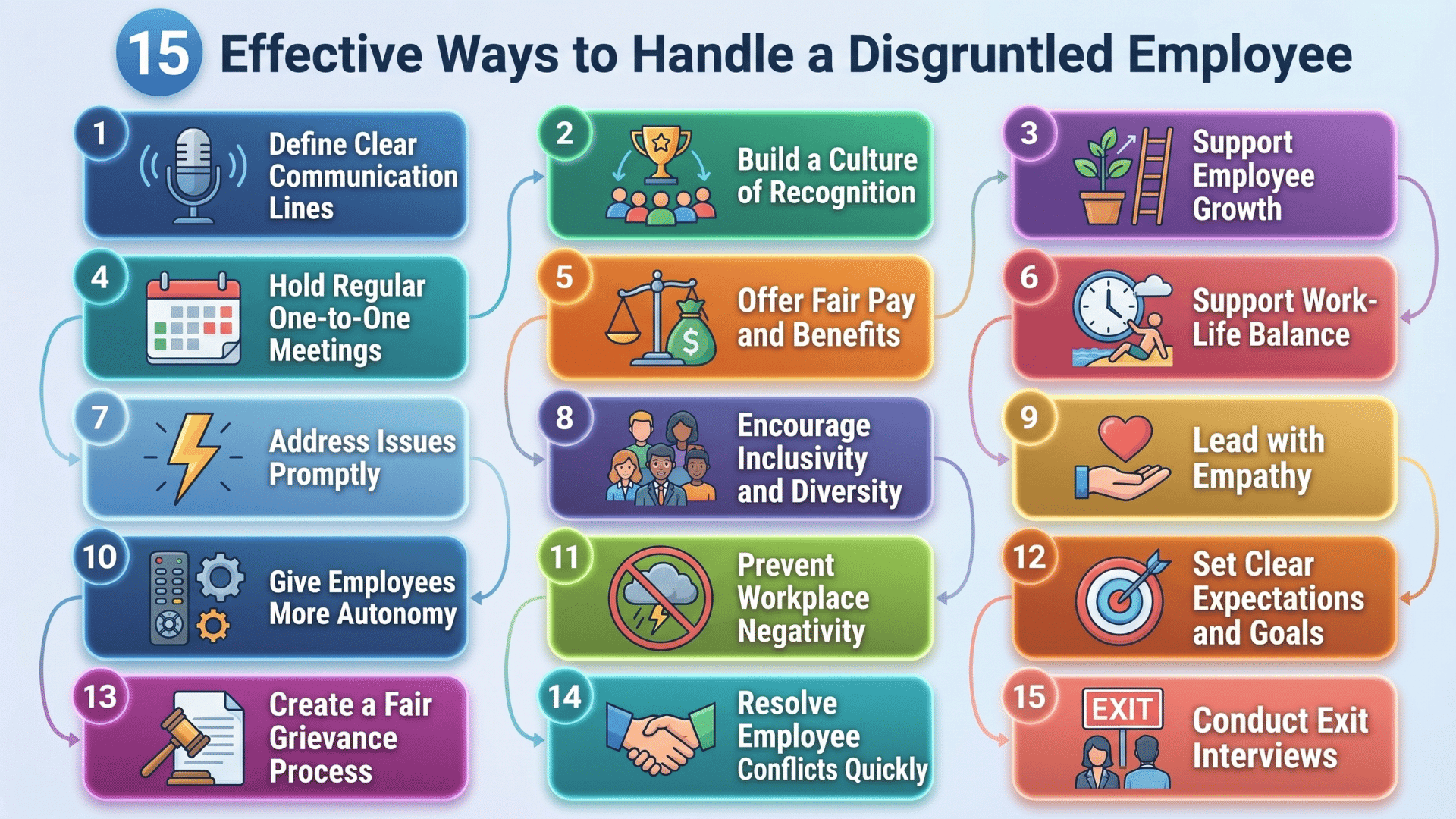
Here are some effective practices that can help address issues and prevent employees from becoming disgruntled.
1. Define Clear Communication Lines
Clear communication helps employees feel heard and valued in the workplace. Open and honest discussions can reduce misunderstandings and prevent dissatisfaction.
- Establish communication channels such as open-door policies, team meetings, and anonymous feedback systems.
- Encourage employees to share concerns and suggestions without fear.
- Maintain transparency to build trust and improve workplace relationships.
2. Build a Culture of Recognition
Recognition and appreciation help employees feel valued and motivated at work. Employees are more likely to stay engaged when their efforts are acknowledged regularly.
- Recognize employee efforts through appreciation, rewards, or bonuses.
- Celebrate individual and team achievements to improve morale.
- Provide regular positive feedback to encourage motivation and job satisfaction.
3. Support Employee Growth
Employees are more likely to stay motivated when they see clear opportunities for career growth and skill development. A supportive work environment helps employees feel confident about their future in the company.
- Provide training programs, mentorship, and skill development opportunities.
- Create clear, fair promotion criteria to avoid concerns of favoritism.
- Give employees access to the right tools, technology, and work resources.
4. Hold Regular One-to-One Meetings
One-to-one meetings give employees a private space to share concerns, feedback, and career goals. These conversations help managers identify issues early and improve employee satisfaction.
- Encourage employees to openly discuss concerns, ideas, and career aspirations.
- Use meetings to identify early signs of dissatisfaction and provide feedback.
- Build stronger employee-manager relationships through regular communication.
5. Offer Fair Pay and Benefits
Competitive pay and strong benefits help employees feel valued and financially secure. Fair compensation can improve job satisfaction, motivation, and employee engagement.
- Review and update pay scales regularly to stay competitive with market standards.
- Offer benefits like health insurance, retirement plans, and wellness programs.
- Provide compensation and rewards that reflect employee skills, efforts, and contributions.
6. Support Work-Life Balance
Work-life balance helps reduce stress, burnout, and employee dissatisfaction. Flexible work arrangements can improve employee well-being and overall job satisfaction.
- Offer flexible schedules and remote work options when possible.
- Encourage employees to take breaks, vacations, and time off when needed.
- Create policies that help employees better manage their work and personal responsibilities.
7. Address Issues Promptly
Addressing employee concerns promptly can prevent frustration from escalating and harming workplace morale. Timely action shows employees that their concerns are taken seriously.
- Respond promptly to employee complaints and concerns.
- Communicate openly and honestly while resolving workplace issues.
- Show employees that the organization values their well-being and feedback.
8. Encourage Inclusivity and Diversity
An inclusive and diverse workplace helps employees feel respected, valued, and supported. A positive work culture can improve teamwork, creativity, and employee satisfaction.
- Promote diversity and equal opportunities across the workplace.
- Provide cultural awareness and inclusivity training for employees.
- Encourage respect for different perspectives, backgrounds, and ideas.
9. Lead with Empathy
Empathetic leadership helps employees feel understood, respected, and supported at work. Employees are more likely to stay satisfied when leaders listen and respond with care.
- Listen to employee concerns with patience and understanding.
- Recognize employee challenges and provide support when needed.
- Build trust and stronger workplace relationships through compassionate leadership.
10. Give Employees More Autonomy
Giving employees more control over their work can improve confidence, creativity, and job satisfaction. Employees feel more motivated when they are trusted to make decisions and manage responsibilities.
- Allow employees to take ownership of their tasks and responsibilities.
- Avoid excessive micromanagement that can reduce motivation and creativity.
- Encourage independent decision-making to build trust and confidence.
11. Prevent Workplace Negativity
A positive workplace environment helps employees feel safe, respected, and supported. Reducing toxic behavior can improve teamwork, morale, and employee satisfaction.
- Enforce a zero-tolerance policy for bullying, gossip, discrimination, and toxic behavior.
- Promote a culture of respect, professionalism, and positive communication.
- Create a safe and supportive environment where employees feel valued.
12. Set Clear Expectations and Goals
Clear expectations help employees understand their responsibilities and reduce confusion in the workplace. Well-defined goals can improve focus, performance, and job satisfaction.
- Clearly explain job responsibilities, performance standards, and deadlines.
- Set SMART goals that are specific, measurable, achievable, relevant, and time-bound.
- Review and update goals regularly to align with company objectives and employee progress.
13. Create a Fair Grievance Process
A fair grievance process helps employees feel safe sharing workplace concerns and complaints. Employees are more likely to trust the organization when issues are handled fairly and confidentially.
- Create a clear and confidential process for employees to report concerns or grievances.
- Protect employees from retaliation when they speak up about workplace issues.
- Train managers to handle complaints fairly, professionally, and respectfully.
14. Resolve Employee Conflicts Quickly
Handling workplace conflicts early can prevent misunderstandings, tension, and behavioral issues. Fair conflict resolution helps maintain a positive and cooperative work environment.
- Train managers in conflict resolution and effective communication techniques.
- Use neutral, fair mediation processes to resolve employee disputes.
- Document agreed solutions and monitor progress to ensure issues are resolved properly.
15. Conduct Exit Interviews
Exit interviews can help organizations understand why employees leave and identify workplace issues that need improvement. Honest feedback from departing employees can support better retention strategies.
- Use a consistent and confidential exit interview process to collect honest feedback.
- Ask employees about management, workplace culture, and career growth opportunities.
- Analyze feedback trends to identify recurring problems and improve employee retention.
How to Handle a Disgruntled Employee?
Dealing with disgruntled employees requires a calm, step-by-step approach. The goal is to listen, understand the issue, and fix what can be fixed before the problem grows.
- Stay Calm and Listen First: Let the employee explain their concerns without interrupting or reacting too quickly.
- Identify the Real Issue: Find out if the problem is workload, communication, pay, or unclear expectations.
- Acknowledge Their Concerns: Show that you understand the issue and are taking it seriously.
- Keep the Conversation Private: Speak in a private setting to encourage honest discussion.
- Set Clear Next Steps: Explain possible solutions and give a timeline for follow-up.
- Follow Up and Track Progress: Check in regularly to see if the situation has improved.
Addressing issues early helps reduce workplace tension and confusion. Regular communication makes dealing with disgruntled employees easier.
Reddit Discussions About Managing a Disgruntled Employee
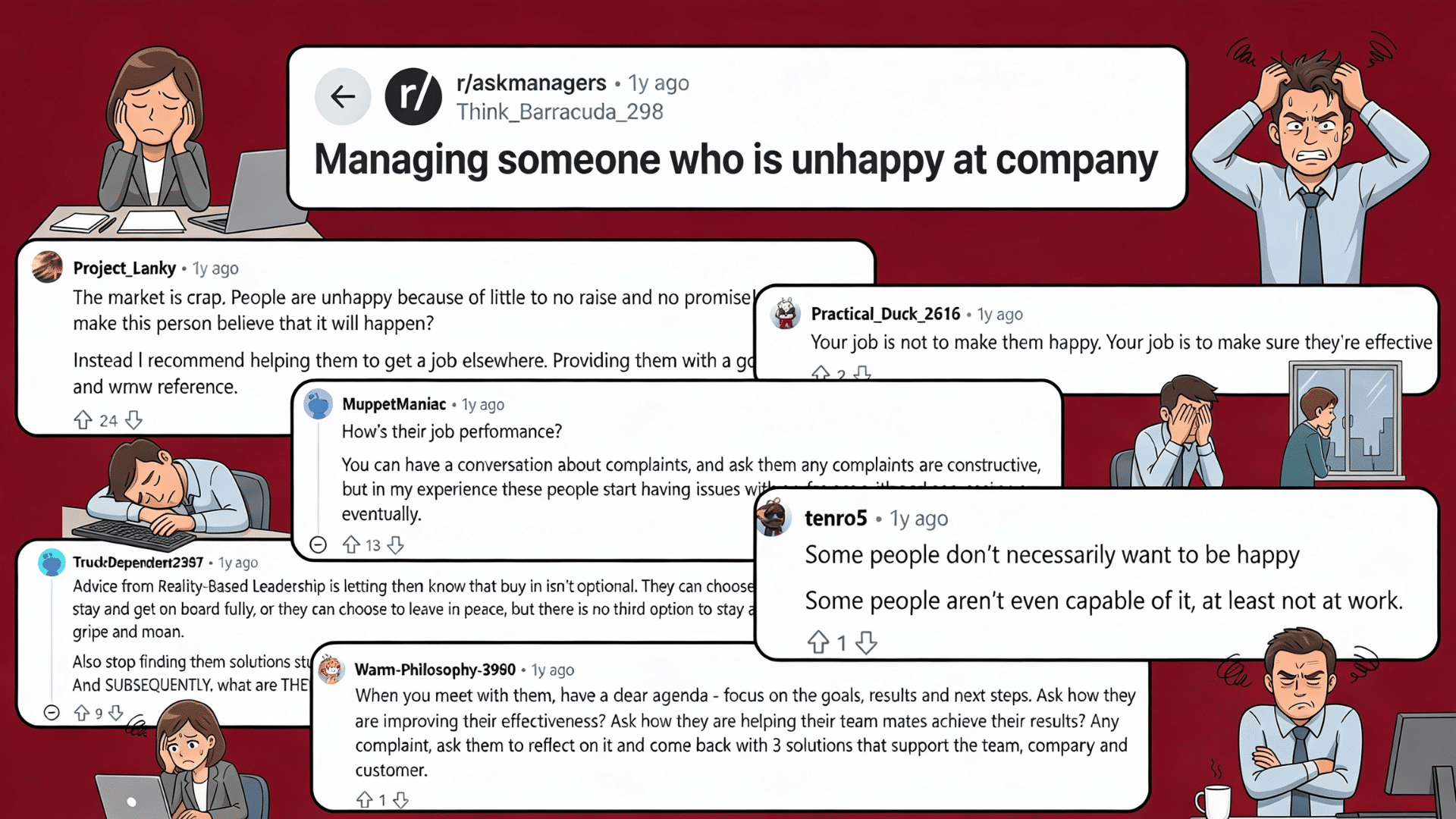
A Reddit discussion about disgruntled employees showed that managers handle workplace frustration in very different ways.
Some commenters focused on setting firm expectations and keeping conversations focused on performance, goals, and accountability rather than emotions alone.
Others believed disgruntled employees may need a different role or work environment instead of forcing themselves to stay in a job they dislike.
A recurring point throughout the thread was that managers cannot “fix” employee happiness, but they can foster clear communication and set fair expectations.
Several users also stressed the importance of preventing disgruntled employees from undermining the morale of the rest of the team.
The overall tone of the discussion was practical and direct, with most people agreeing that honest conversations and boundaries matter more than trying to please everyone.
Conclusion
Handling a disgruntled employee the right way can improve workplace morale, strengthen communication, and reduce employee turnover.
When organizations address concerns early, employees feel more valued, supported, and motivated to perform better at work.
Creating a positive work environment through recognition, fair policies, and open communication can help prevent long-term workplace issues.
Small improvements in leadership and employee support can make a major difference in overall team satisfaction.
Start identifying workplace concerns early and build a healthier, more productive work culture today.
Have you conducted a pay equity analysis in your organization? Share your thoughts in the comments.
Frequently Asked Questions
Can Remote Employees Become Disgruntled?
Yes, remote employees can also experience dissatisfaction due to isolation, poor communication, lack of support, or unclear expectations.
How Do You Get Rid of a Difficult Employee?
Managers should follow proper HR procedures, document issues, provide clear feedback, and take disciplinary action or termination if necessary.
Should Managers Document Employee Grievances?
Yes, documenting employee concerns and workplace incidents can help organizations handle issues fairly and maintain proper records.
Frequently Asked Questions
Can Remote Employees Become Disgruntled?
Yes, remote employees can also experience dissatisfaction due to isolation, poor communication, lack of support, or unclear expectations.
How Do You Get Rid of a Difficult Employee?
Managers should follow proper HR procedures, document issues, provide clear feedback, and take disciplinary action or termination if necessary.
Should Managers Document Employee Grievances?
Yes, documenting employee concerns and workplace incidents can help organizations handle issues fairly and maintain proper records.