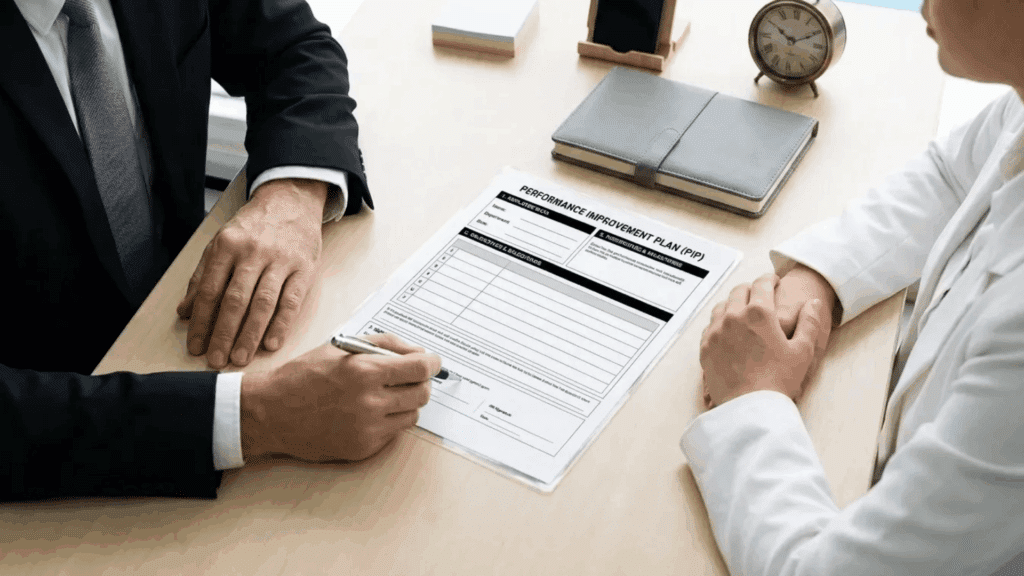

Performance struggles don’t always scream; they whisper through missed deadlines, half-finished projects, and quiet confusion.
Ignoring them only lets small cracks turn into bigger problems.
A well-crafted performance improvement plan template doesn’t just call out issues, it maps a way forward, turning uncertainty into clear steps and measurable outcomes.
It makes the difference between frustration and focus, confusion and clarity, aimless effort and structured improvement.
With the right framework, even the trickiest performance gaps can turn into actionable growth without the drama.
What Is a Performance Improvement Plan (PIP)?
A Performance Improvement Plan (PIP) is a formal document used to address ongoing workplace performance issues.
It explains what needs improvement, sets clear goals, and outlines how progress will be measured within a specific timeline.
Usually managed by HR and direct supervisors, a PIP replaces vague feedback with structured expectations and measurable targets.
Most plans include:
- Performance concerns
- Improvement goals
- Timelines
- Support resources
- Review meetings
- Final outcomes
| Element | Purpose |
| Performance Issue | Explains the concern |
| Goals | Defines expected improvement |
| Timeline | Sets review period |
| Support Plan | Lists training/resources |
| Review Meetings | Tracks progress |
| Final Outcome | Determines next steps |
When Should a Performance Improvement Plan Be Used?

A Performance Improvement Plan works best when performance problems are repeated, measurable, and already discussed informally.
It adds structure when regular feedback is no longer working.
Situations Where a PIP Makes Sense
A PIP may be appropriate for issues like:
- Consistent missed deadlines
- Declining work quality
- Attendance problems
- Communication gaps
- Failure to meet KPIs
- Repeated policy violations
- Poor collaboration
- Lack of accountability
The focus should be on patterns, not isolated mistakes.
Situations Where a PIP May Not Be Appropriate
Not every problem needs a formal plan. Sometimes the issue comes from the workplace itself.
A PIP may not be suitable when problems are caused by:
- Poor onboarding
- Lack of training
- Unrealistic workloads
- Toxic leadership
- Burnout
- Personal emergencies needing support
Strong managers look at the full situation before moving into formal action.
Step-by-Step Process for Writing an Effective Performance Improvement Plan
A good PIP only works when the process behind it is clear, structured, and built on facts, not assumptions or frustration.
Step 1: Identify the Real Problem
Performance issues may come from:
- Skill gaps
- Motivation problems
- Resource limitations
- Poor management direction
Fixing the wrong issue wastes time for everyone involved.
Step 2: Gather Documentation
Use evidence instead of assumptions.
Helpful records include:
- Attendance logs
- KPI reports
- Client complaints
- Missed deadlines
- Performance reviews
Documentation keeps discussions objective and professional.
Step 3: Set SMART Goals
Goals should be:
- Specific
- Measurable
- Achievable
- Relevant
- Time-bound
| Weak Goal | SMART Goal |
| “Improve communication” | “Respond to internal messages within 4 business hours for 60 days” |
Clear goals make progress easier to evaluate fairly.
Step 4: Offer Support and Resources
Improvement works better when employees receive ongoing support.
This may include:
- Coaching
- Skills training
- Updated tools
- Weekly guidance
Silence between review meetings rarely fixes performance issues.
Step 5: Schedule Follow-Up Reviews
Regular check-ins help track progress before problems grow larger.
Common review points include:
- Weekly meetings
- Midpoint evaluations
- Final assessments
Consistent follow-ups keep the plan active instead of forgotten in a folder.
How to Build a Performance Improvement Plan Template That Actually Helps
A Performance Improvement Plan (PIP) should create clarity, not panic. Strong PIPs focus on measurable progress, realistic expectations, and practical support instead of vague criticism.
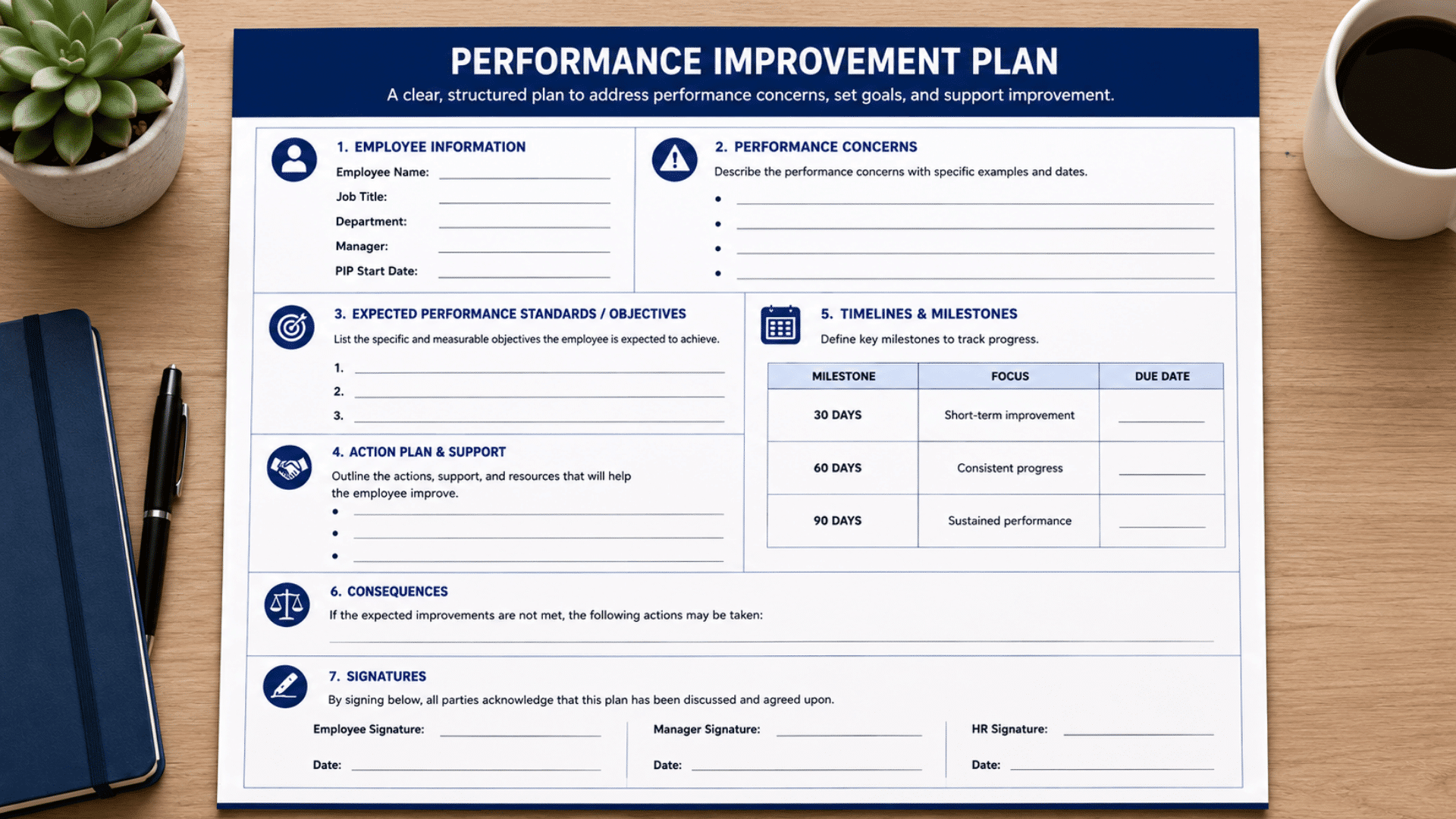
1. Employee Information
Keep the document organized with:
- Name, job title, department
- Manager, start date of the PIP
2. Performance Concerns
Focus on facts, not frustration:
- Specific incidents with dates
- Observable behavior
- Business impact
| Weak Statement | Better Statement |
| “Poor attitude” | “Missed 4 client meetings in March” |
| “Needs improvement” | “Project reports submitted 5 days late on 3 occasions” |
3. Expected Performance Standards
Set clear, measurable goals:
- Respond to emails within 24 hours
- Meet weekly targets
- Maintain attendance and submit reports on time
4. Action Plan and Support
Explain how improvement will happen:
- Training, coaching, mentorship
- Weekly check-ins, workflow adjustments
5. Timelines and Milestones
Break progress into stages, usually 30, 60, or 90 days:
| Timeline | Focus |
| 30 Days | Immediate improvements |
| 60 Days | Consistency |
| 90 Days | Sustained progress |
6. Consequences
Outline outcomes professionally: Reassignment, further review, or termination if necessary
7. Signatures
Document discussion and acknowledgment from Employee, manager, HR
PIP Template Examples
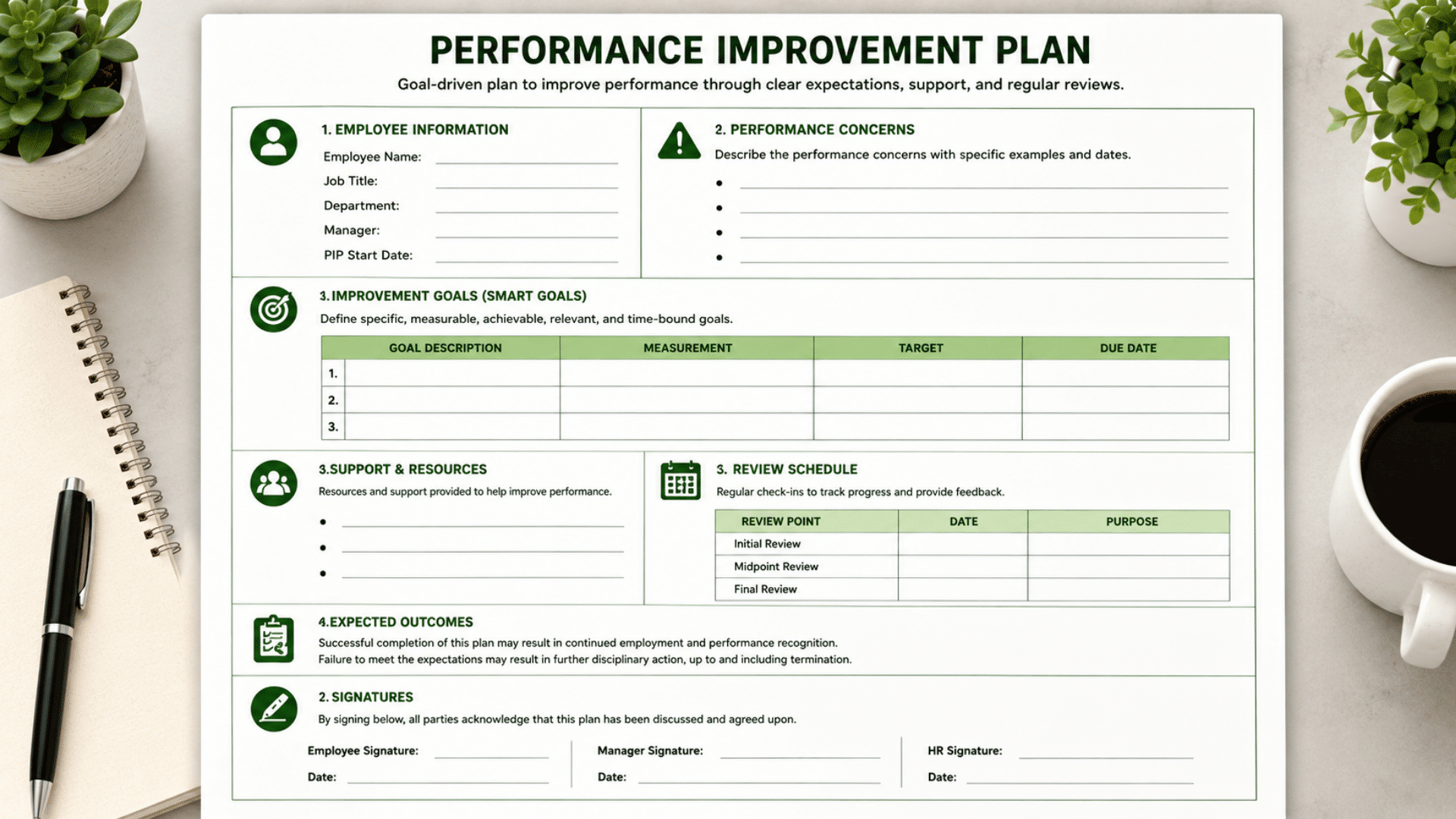
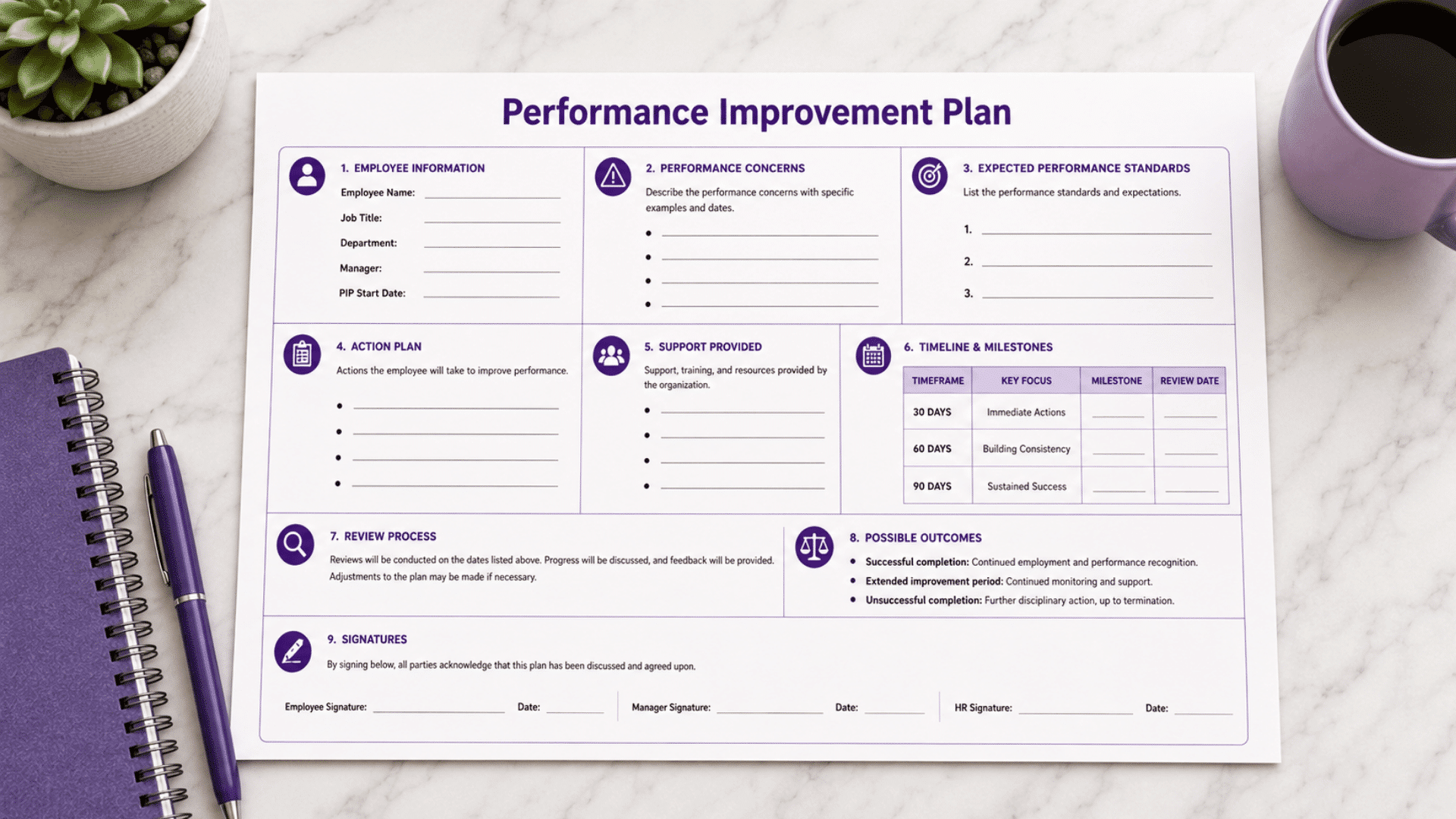
Download different PIP templates and pick the format that fits your needs. Use them to create clear plans, track progress, and document review steps.
1. Structured Performance Improvement Plan
2. Goal-Focused Performance Improvement Plan
3. Comprehensive Performance Improvement Plan
Are Performance Improvement Plans Effective?
A PIP can work surprisingly well when expectations are clear, managers stay involved, and employees receive real support instead of generic feedback.
The strongest plans focus on progress, not pressure.
Failed PIPs usually suffer from vague goals, unrealistic timelines, or poor communication. Some become paperwork exercises instead of actual improvement tools.
Leadership consistency matters just as much as employee effort. When both sides stay engaged, a PIP can reset performance before problems grow larger.
Best Tools for Creating and Managing PIPs
A performance improvement plan works better when the process stays organized from start to finish.
The right tools help managers track progress, schedule follow-ups, and keep expectations clear without turning everything into paperwork chaos.
| Tool | Best For | Why It Helps |
| Google Docs | Quick collaboration | Easy sharing, comments, and real-time edits |
| Microsoft Word Templates | Formal HR documentation | Simple formatting and printable records |
| Smartsheet | Progress tracking | Useful for timelines, milestones, and accountability |
| monday.com | Workflow management | Automates reminders and tracks improvement stages |
| HR Software | Large organizations | Centralizes employee records and performance data |
| Performance Management Platforms | Continuous feedback | Supports coaching, goals, and regular check-ins |
The best tool is not always the most advanced one. It’s the one that keeps communication clear, progress measurable, and follow-ups consistent.
If you want to go further, pairing your PIP process with HR analytics tools can help spot patterns early.
Conclusion
Performance improvement doesn’t have to feel like a corporate threat.
When done right, a PIP acts as a clear compass rather than a source of confusion. Measurable goals, structured support, and regular check-ins make progress tangible. Managers can guide without micromanaging, and employees gain clarity on expectations.
Consistency and follow-through are key. Even the best plans fail without proper tracking and engagement.
Curious how others handle tricky performance moments? Drop a comment below with your experiences, insights, or creative approaches.
It’s the small exchanges and real-world stories that often reveal what works best when theory meets the daily grind.
Frequently Asked Questions
What Does Quiet Firing Look Like?
Quiet firing is a passive-aggressive management tactic where an employer makes your work environment or conditions unbearable, so you quit voluntarily.
Do You Get Severance if Fired After PIP?
You are not legally guaranteed severance after failing a Performance Improvement Plan (PIP). Severance is generally at the discretion of the employer unless it is explicitly written into your employment contract or governed by a specific company policy.
Should I Quit if I Get a PIP?
Don’t quit immediately; start job hunting now. Quitting can mean losing unemployment benefits. View a PIP as a paid runway: get paid, update your resume, and let them lay you off if you can’t finish the plan.