

Losing a job can be stressful, especially when the situation feels unfair or unclear. You may be unsure about your rights, what actions are allowed, or if your employer followed proper rules.
In many cases, workplace decisions must align with laws set by government bodies to ensure fairness and employee protection.
This is where understanding a wrongful termination lawsuit becomes significant.
By learning about official policies, legal protections, and available resources, you can better assess your situation and take informed steps if needed.
What is Wrongful Termination?
Wrongful termination happens when your employer fires you in a way that breaks the law or violates your rights. Not every unfair dismissal qualifies, as the action must cross a legal boundary to be considered wrongful.
This can include being fired for illegal reasons, such as discrimination or retaliation, or violating a written or implied employment agreement.
Ignoring workplace protections under federal or state law, or terminating you for exercising a legally protected right.
If a termination meets these conditions, you may have grounds to file a wrongful termination lawsuit.
This type of legal action allows you to seek compensation for lost wages, emotional distress, or other damages caused by the unlawful firing.
Common Ground for Filing a Wrongful Termination Lawsuit
You can file a wrongful termination lawsuit when your dismissal violates federal or state laws protecting employee rights. The following are the most common legal grounds for a claim:
- Discrimination: If you were fired because of protected characteristics such as race, gender, religion, national origin, age, or disability, it may constitute unlawful discrimination.
- Retaliation: You may have a case if your employer terminated you for reporting workplace misconduct, discrimination, harassment, or safety violations. Whistleblower protections exist to prevent this.
- Violation of Labor Laws: Being fired for asserting your rights under wage laws, such as asking for unpaid wages or overtime, can be grounds for a claim.
- Termination for Taking Protected Leave: If you were dismissed for taking legally protected leave, such as medical or family leave under laws like the FMLA, it may constitute wrongful termination.
- Breach of Employment Contract: If your employer violated the terms of a written, verbal, or implied contract, including company policies that promise job security or specific procedures, you may have legal grounds.
In these situations, the key factor is whether your termination violated a legal right. If it did, you may be able to take legal action and seek compensation for your losses.
Legal Rights and Employment Laws
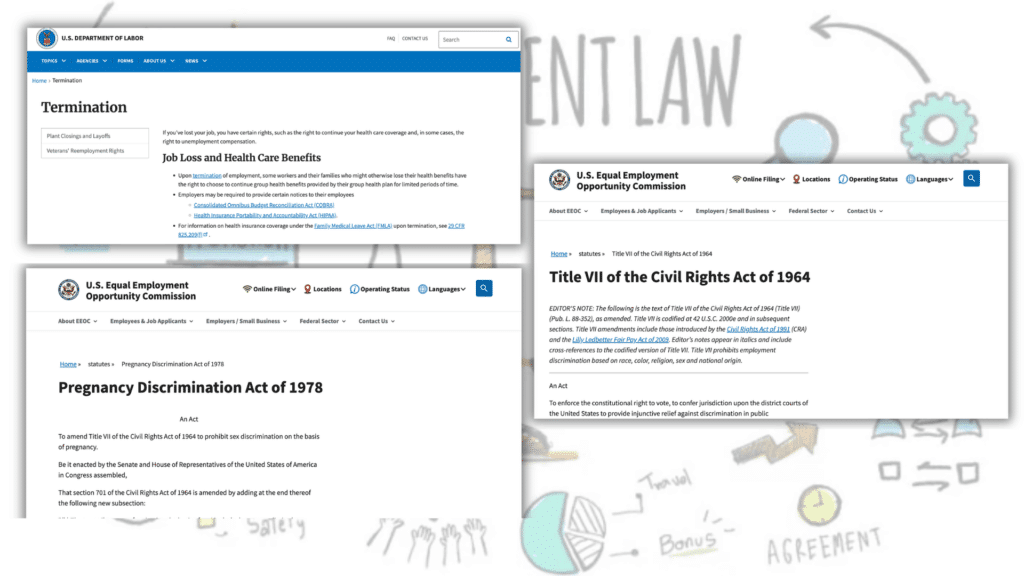
Knowing the legal framework behind wrongful termination helps you understand what protections you have as an employee and what obligations employers must meet. Here are the key laws that apply.
1. At-Will Employment Explained
Most jobs operate under at-will employment, meaning an employer can terminate an employee at any time and for almost any reason, and an employee can leave at any time as well.
However, this arrangement has clear legal limits. Employers cannot fire someone for illegal reasons, and exceptions apply whenever violations are involved.
You can find the full scope of at-will rules and exceptions through the U.S. DOL’s employment law resources.
2. Anti-Discrimination Laws
Federal law prohibits employers from firing employees based on legally protected personal characteristics. Title VII of the Civil Rights Act of 1964 covers termination based on race, color, religion, sex, or national origin.
The ADEA covers workers aged 40 and older; the PDA protects against termination related to pregnancy or childbirth; and the Equal Pay Act EPA extends protections against retaliatory firing for raising pay equity concerns.
3. Retaliation Protections
Employees who report workplace discrimination or harassment are protected from termination under EEOC anti-retaliation provisions.
Those who report safety violations are covered under OSHA’s Whistleblower Protection Programs, which span over 20 federal statutes.
Filing wage complaints or cooperating with DOL investigations is protected under the FLSA, and employees who report fraud against the federal government are protected under the False Claims Act.
4. Leave and Benefits Protections
The FMLA protects eligible employees from termination for taking up to 12 weeks of unpaid, job-protected leave, and prevents termination upon return from that leave.
The ERISA prohibits firing employees to prevent them from collecting earned pension or benefits. At the same time, the USERRA protects employees from termination based on military service or obligations.
Everything You Need to Document for Your Case
Proper documentation is one of the most important factors in building a strong wrongful termination claim. The table below outlines the key types of evidence you should gather.
| Evidence Type | What to Collect | Why It Matters |
|---|---|---|
| Employment Contracts and Offer Letters | Signed contracts and written employment agreements | Establishes employment terms and whether they were violated |
| Emails and Communication Records | Emails, texts, and written correspondence | Documents instructions, complaints, or discriminatory language |
| Performance Reviews and Reports | Evaluations, disciplinary records, and promotion history | Contradicts an employer’s stated reason for termination |
| Termination Documentation | Termination letter or written notice of dismissal | Establishes the official reason given for firing |
| Coworker Witness Statements | Statements from colleagues who witnessed relevant events | Independently corroborates discriminatory behavior or retaliation |
| Reports of Previous Complaints | Copies of complaints filed with HR or government agencies | Demonstrates a documented history of concerns before termination |
Wrongful Termination Lawsuit Process: Step-by-Step
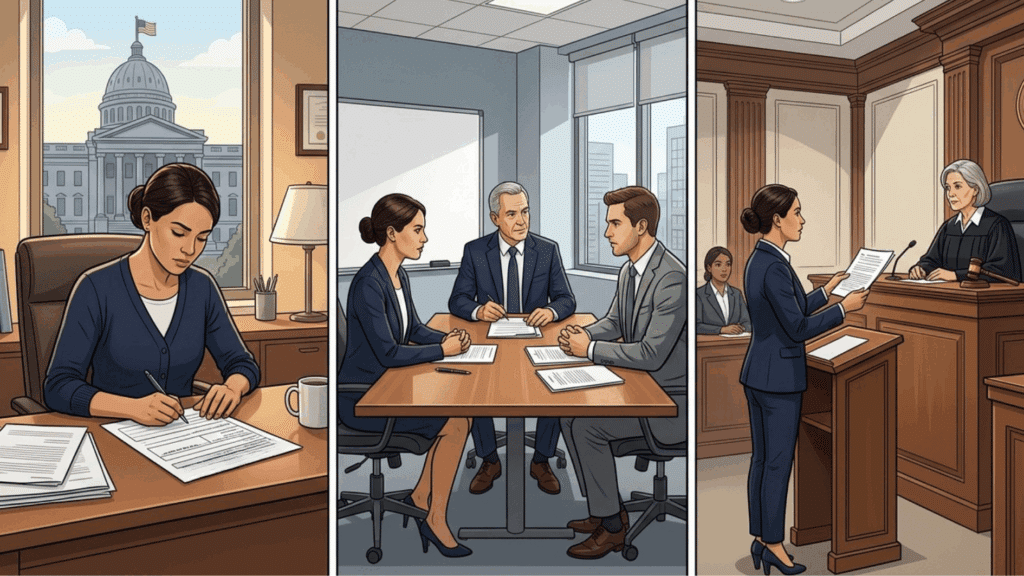
Understanding how the wrongful termination lawsuit process works helps you take the right steps in the right order.
Step 1. Filing a Complaint with Government Agencies
For discrimination or retaliation claims, this means filing a charge with the U.S. Equal Employment Opportunity Commission (EEOC).
You typically have 180 days from the date of termination to file, or 300 days if your state has its own anti-discrimination agency.
Missing this deadline can forfeit your right to sue. For wage-related claims, file directly with the U.S. DOL’s Wage and Hour Division. Start the EEOC process through the EEOC public portal.
Step 2. Investigation and Mediation
Once your complaint is filed, the EEOC may offer mediation, a voluntary, confidential process where both parties attempt to resolve the matter without a full investigation.
If mediation is declined or unsuccessful, the EEOC opens a formal investigation, collects evidence from both sides, and allows the employer to respond.
Step 3. Filing a Lawsuit in Court
If the investigation does not result in a resolution, you will receive a Notice of Right to Sue, legal authorization to file your own case in federal or state court.
You generally have 90 days from the date you receive this notice to file, so acting quickly is essential.
The case then enters litigation, both sides exchange evidence, depositions may be taken, and the matter may proceed to trial or settle beforehand.
Review the EEOC’s litigation guidance for further detail. Consulting a qualified employment attorney before filing is strongly recommended.
Lawsuit Compensation and Outcomes
The most common form of compensation is back pay, which covers the wages, salary, and benefits lost from the date of termination to the date of judgment or settlement.
If returning to your job is not practical, courts may also award front pay to cover future lost earnings.
In cases where the employer’s actions were intentional or severe, punitive damages may be awarded. In addition to financial compensation, courts may order reinstatement to your previous position with the same pay and benefits.
Employers may also be required to update workplace policies, improve training programs, or implement anti-discrimination measures.
In more serious cases, they may be placed under compliance monitoring or required to follow a legally binding agreement outlining corrective actions over time.
Wrongful Termination Lawsuit Case Studies
These are real cases resolved by the Equal Employment Opportunity Commission that illustrate how wrongful termination laws are applied in practice across different states and grounds.
1. EEOC v. The Whiting-Turner Contracting Company, Tennessee (2023)
The EEOC secured a $1.2 million settlement after Whiting-Turner wrongfully terminated two Black employees who reported racial harassment at a Tennessee construction site. The company failed to investigate complaints before firing the workers, violating Title VII of the Civil Rights Act.
Source:EEOC Newsroom: Whiting-Turner to Pay $1.2 Million
2. EEOC v. Maximum Security NYC, Inc., New York (2024)
Maximum Security NYC terminated an employee based on his age and disability, violating both the ADA and the ADEA. The EEOC secured $22,500 in emotional distress damages through a federal court consent decree in the Eastern District of New York.
Source:EEOC Newsroom: Maximum Security to Pay $22,500
3. EEOC v. J&M Industries, Louisiana (2024)
J&M Industries paid $105,000 in back pay and liquidated damages after wrongfully terminating an employee based on age in violation of the ADEA. The three-year consent decree also required policy revisions, mandatory training, and ongoing EEOC compliance reporting.
Source: EEOC Newsroom: J&M Industries to Pay $105,000
4. EEOC v. Didlake, Inc., Maryland (2024)
Didlake maintained a blanket policy of terminating employees who exhausted their leave without conducting individual accommodation assessments, thereby violating the ADA. The EEOC secured over $1 million in a five-year consent decree requiring comprehensive policy reforms.
Source: EEOC Newsroom: Didlake, Inc. Pays More Than $1 Million
What are Employer Responsibilities?
Employers who take proactive steps to build fair, compliant workplaces significantly reduce their exposure to wrongful termination claims. This is what employers are responsible for.
- Establish Equal Opportunity Policies: Maintain clear, written policies that comply with federal requirements.
- Implement Anti-Discrimination Rules: Enforce anti-discrimination and anti-harassment policies across all levels of the organization.
- Follow Proper Termination Procedures: Document performance issues, provide warnings where required, and ensure every termination decision is based on legitimate reasons.
- Provide Employee Rights Training: Train all employees on their rights in the workplace, including protections against discrimination, retaliation, and harassment under federal law.
- Train Managers on Compliance: Managers and supervisors need specific training on lawful termination practices and documentation requirements.
- Establish Safe Reporting Channels: Provide employees with accessible, confidential ways to report concerns without fear of retaliation.
Wrapping It Up
Wrongful termination lawsuits are serious legal matters that affect both employees and employers. Understanding your rights, the laws that protect them, and the steps involved in filing a claim puts you in a much stronger position.
The legal framework is clear, and the official resources from the government are a good foundation for learning your obligations and options.
If you believe you have a wrongful termination claim, do not wait; filing deadlines are strict, and acting early gives you the best chance of a successful outcome.
Consult a qualified employment attorney, gather your documentation, and use the resources in this blog to take the right steps forward.