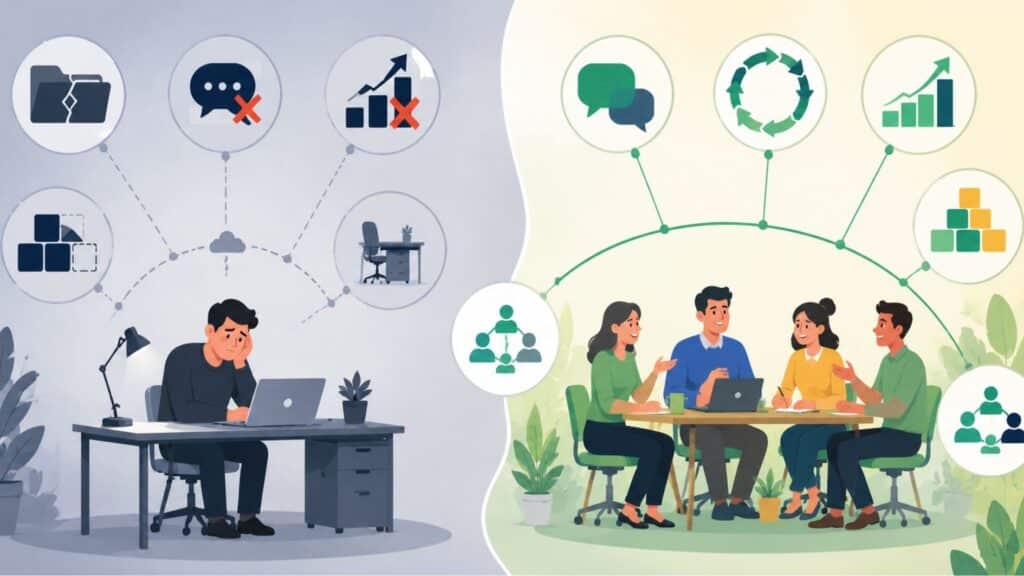


Whether launching a career or pushing for growth, mastering essential skills can make all the difference in today’s competitive job market.
Most people spend years chasing opportunities without realizing the real gap isn’t experience.
It’s a missing set of core professional abilities that quietly separate those who advance from those who stay stuck.
These skills can be developed over time, no matter where you’re starting from.
This blog on the essential skills provides you with a clear guide with examples and breaks each one down clearly, showing you how to build them and put them to work for long-term success.
What are Essential Skills?
Essential skills are the key capabilities that help people perform tasks effectively, communicate clearly, and handle challenges in different situations.
Unlike technical skills that apply to specific jobs, essential skills are useful across many roles and industries. They influence how individuals think, collaborate, manage responsibilities, and adapt to change.
Because these abilities support everyday work and decision-making, they play an important role in long-term professional growth.
Strengthening essential skills helps people become more productive, confident, and prepared to handle new opportunities and challenges, especially when they understand the major skill categories that shape career development across industries.
The 9 Essential Skills Every Professional Needs
The Essential Skills are the key traits that every professional needs to succeed in today’s competitive job market.
From effective communication to emotional intelligence, these skills enable you to navigate challenges, collaborate well with others, and continue growing in your career.
Here’s a quick overview of each skill and why they matter:
1. Networking
What is it:The process of building and maintaining professional relationships that create opportunities for learning and growth. It involves connecting with people who share similar interests or work in similar industries.
Example:Landing a job referral through a connection made at an industry event.
2. Time Management
What is it: The skill of organizing and planning how to divide time between tasks efficiently. It helps ensure priorities are handled on schedule without unnecessary stress.
Example: Using time-blocking to meet deadlines without burnout.
3. Problem-Solving
What is it: The capacity to identify issues, analyze possible causes, and develop effective solutions. It focuses on taking logical steps to resolve challenges and improve outcomes.
Example: Identifying a workflow bottleneck and fixing it before it escalates.
4. Adaptability
What is it: The ability to adjust quickly to new situations, changes, or unexpected challenges. It reflects flexibility and openness to learning new approaches when circumstances shift.
Example: Seamlessly adjusting to a new project management tool mid-campaign.
5. Critical Thinking
What is it: The skill of carefully analyzing information, evidence, and assumptions before making decisions. It helps form well-reasoned judgments rather than reacting impulsively.
Example: Questioning data sources before building a strategy around them.
6. Leadership
What is it: The capability to guide, support, and influence individuals or teams toward achieving shared objectives. It involves inspiring confidence and encouraging collective effort.
Example: Motivating a burnt-out team to push through a tight deadline.
7. Emotional Intelligence
What is it: The ability to recognize, understand, and manage your own emotions while also being aware of others’ feelings. It supports better relationships and thoughtful responses in social situations.
Example: De-escalating a tense client conversation with empathy.
8. Communication
What is it: The ability to express ideas, information, and opinions clearly so that others easily understand the message. It also involves active listening and responding appropriately.
Example: Presenting a project update to stakeholders without confusion.
9. Collaboration
What is it: The ability to work effectively with others by sharing ideas, responsibilities, and feedback. It focuses on combining different strengths to achieve common goals.
Example: Contributing meaningfully in cross-functional projects.
How Can You Develop These Skills?

Building these skills doesn’t happen overnight – but with the right approach, every one of them is learnable. Here’s a practical breakdown of how to get started:
| Skill | How to Develop It |
|---|---|
| Communication | Write daily, ask for feedback, and practice expressing ideas out loud to improve clarity and confidence. |
| Time Management | Use time-blocking, eliminate low-value tasks, and track how you spend your hours to improve productivity. |
| Problem-Solving | Break problems into smaller parts, focus on solutions, and learn from past mistakes to handle challenges better. |
| Adaptability | Take on unfamiliar tasks, stay open to change, and reduce the need to control every situation. |
| Critical Thinking | Slow down your decision-making, question assumptions, and consider different viewpoints before acting. |
| Leadership | Take ownership of small projects, stay accountable for results, and support your team’s progress. |
| Emotional Intelligence | Pause before reacting, listen carefully to others, and reflect on your emotional triggers. |
| Collaboration | Communicate openly, appreciate diverse perspectives, and share credit with teammates. |
| Networking | Maintain regular contact with professional connections and focus on building genuine relationships. |
The Bottom Line
Skills don’t build themselves, and that’s exactly where most professionals fall behind, not for lack of ambition, but lack of direction.
The gap between where you are and where you want to be is rarely about talent. It’s about the habits, mindset, and abilities you choose to sharpen every day.
Start small, pick one skill, and work it consistently. Because the professionals who stand out aren’t the most experienced, they’re the most intentional.