

A workplace emergency waits for no one.
When something goes wrong, the last thing you want is to realize your first aid kit is missing supplies or sitting in a back room nobody can find.
OSHA has clear expectations around workplace first aid, but the requirements aren’t always straightforward.
Between vague language, multiple standards, and different rules for different industries, it’s easy to feel unsure about where you actually stand.
And if you’ve ever looked up the actual regulation, you know it raises more questions than it answers.
This guide cuts through the confusion, breaks down what’s required, and helps you figure out exactly what your workplace needs.
What Are OSHA First Aid Kit Requirements?
The primary standard is 29 CFR 1910.151. It applies to general industry workplaces and sets the baseline for what employers must provide.
Here’s what it covers:
- First aid kits are required when professional medical help isn’t readily available nearby.
- Supplies must be “adequate” based on the hazards present in your workplace.
The standard uses the term “adequate supplies” but doesn’t define a specific list. What’s adequate depends on a hazard assessment; your kit should reflect the actual risks your workers face.
OSHA vs ANSI First Aid Kit Standards
OSHA sets the requirement. ANSI provides the roadmap.
Since OSHA doesn’t publish a specific supply list, many employers turn to ANSI Z308.1 for guidance.
It’s a voluntary standard that outlines exactly what a compliant kit should contain. Following it is the clearest way to demonstrate that your supplies meet the “adequate” threshold.
ANSI Z308.1 uses a two-class framework:
- Class A for lower-risk environments
- Class B for higher-risk workplaces requiring broader coverage
It takes the guesswork out of compliance and gives you something concrete to reference during an inspection.
What Should Be in an OSHA-Compliant First Aid Kit?
A well-stocked kit should include:
☐ Adhesive bandages (multiple sizes)
☐ Sterile gauze pads
☐ Roller bandages
☐ Adhesive tape
☐ Antiseptic wipes
☐ Antibiotic ointment
☐ Nitrile gloves
☐ CPR mask or face shield
☐ Scissors
☐ Tweezers
☐ Instant cold packs
☐ Tourniquet
☐ Trauma pads
☐ Elastic wrap bandages
☐ Burn dressings or burn gel
☐ Eye wash solution
☐ Splints
☐ Emergency blanket
Quantities and specific items will vary based on whether you’re outfitting a Class A or Class B kit.
Class A vs Class B Kits Explained
| Feature | Class A | Class B |
|---|---|---|
| Intended Environment | Low-risk workplaces (offices, retail, light duty) | High-risk workplaces (construction, manufacturing, warehouses) |
| Injury Focus | Common minor injuries: cuts, scrapes, sprains | Broader range, including serious trauma |
| Supply Quantity | Smaller quantities | Larger quantities |
| Supply Variety | Core essentials | Expanded inventory |
| Typical Users | Office staff, retail workers | Construction crews, industrial workers |
| Why Upgrade to Class B? | Some moderate-risk employers choose it for broader coverage and fewer gaps |
OSHA First Aid Kit Requirements by Workplace Type
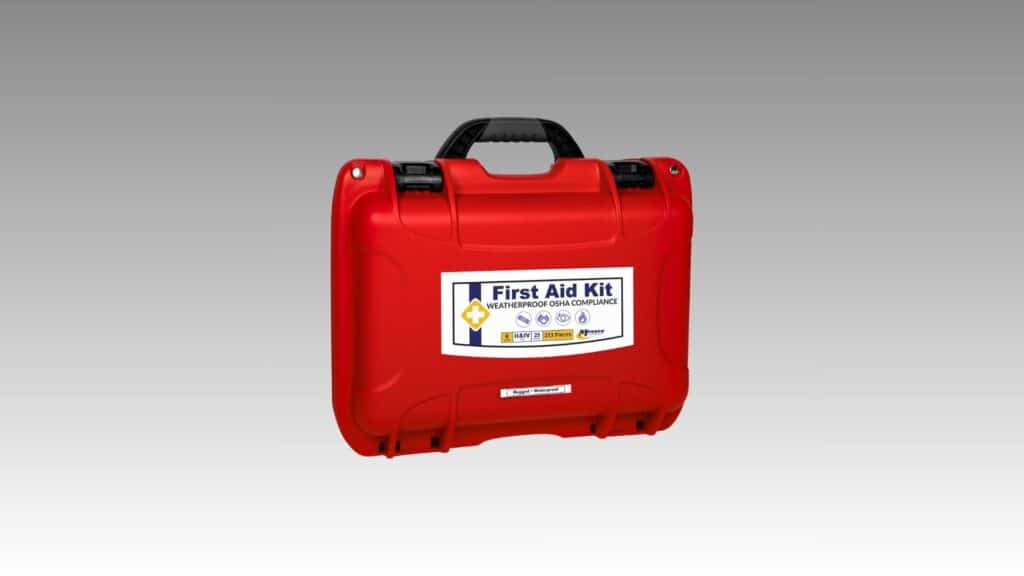
Hazard assessment is central to compliance because not every workplace carries the same risk.
1. Office and Low-Risk Settings
Office environments deal mostly with minor injuries. A Class A kit is usually sufficient, with a focus on basic wound care and accessibility.
2. Construction and Industrial Worksites
Construction sites are covered by OSHA 1926.50, which has its own first-aid provisions. Kits here need larger trauma supplies, weather-resistant containers, and placement throughout the site rather than just one central location.
3. Remote or Field Locations
When workers are far from medical facilities, kits should include expanded trauma supplies and be part of a broader emergency response plan. Factor in how long emergency services would take to arrive.
How Many OSHA First Aid Kits Are Required?
OSHA doesn’t specify an exact number. The right amount depends on:
- Employee count: More workers generally means more kits.
- Facility size and layout: Large spaces may need kits in multiple areas.
- Shift coverage: Kits must be accessible during all working hours.
- Accessibility: No employee should have to travel far to reach one, so spread kits across departments.
OSHA First Aid Training Requirements
Supplies alone aren’t enough. Someone needs to know how to use them.
Under 29 CFR 1910.151(b), employers must ensure that trained first aid personnel are available when the workplace isn’t near a clinic or hospital. Additional requirements include:
- CPR certification for designated first aid responders.
- Bloodborne Pathogens training under 29 CFR 1910.1030 for employees who may be exposed to infectious materials during first aid response.
- Documentation of training completions, certifications, and renewal dates.
Keep records organized. They matter during inspections.
Where to Buy an OSHA-Compliant First Aid Kit
Once you know what your workplace needs, finding the right kit comes down to three options: buying pre-assembled, building your own, or choosing the right format for your setup.
Pre-Assembled Kits
Pre-assembled ANSI Z308.1-compliant kits are available from safety supply companies such as Grainger, Uline, and Zoro, as well as online marketplaces. Always confirm the class rating and compliance labeling before purchasing.
Building Your Own Kit
Customizing a kit is a valid option, especially for specialized environments. Start with ANSI Z308.1 as your baseline, add items specific to your hazards, and document your supply list for compliance purposes.
Wall-Mounted vs Portable Kits
- Wall-mounted kits are suitable for fixed locations such as offices and production floors.
- Portable kits work better for job sites where the work location changes.
- Vehicle kits are essential for field employees working off-site.
What to Look for When Buying an OSHA First Aid Kit
Before purchasing, check for:
- ANSI Z308.1 compliance is clearly stated on the product
- Class A or Class B rating suited to your workplace
- Weather-resistant case for outdoor or industrial use
- Refill availability so restocking specific items is easy
- Expiration tracking some kits include inventory sheets to help manage this
- Appropriate size for your workforce, a kit for 10 people won’t serve a crew of 50
Maintaining OSHA Compliance After Purchase
Buying the kit is just the start. Ongoing maintenance is what keeps you compliant.
Inspect kits regularly: Monthly checks are a common standard. Look for used, damaged, or expired items.
Restock after every use: A depleted kit is a compliance gap. Keep backup supplies on hand so restocking doesn’t get delayed.
Replace expired supplies: Antiseptics, ointments, and some bandages have expiration dates. Swap them out before they lapse.
Document everything: Keep a log of inspections, restocking dates, and any changes made to kit contents. This is valuable during an audit.
Ensure trained personnel are always available: If your designated responder is on leave, someone else needs to be trained and ready. Coverage gaps are a compliance issue, not just a safety one.
Final Thoughts
First aid compliance isn’t something to figure out after an incident.
The good news is it’s not complicated once you know the framework. Audit your workplace hazards, match your kit to the right ANSI class, train your team, and keep everything stocked and documented.
If you’re not sure where your current setup stands, now is a good time to find out.
Review your kits, check your training records, and close any gaps before they become a problem. Need help choosing the right kit for your workplace?
Browse our selection of ANSI-compliant first aid kits built for every industry and team size.