

Every year, companies spend billions filling positions that should never have been vacated in the first place. Talented employees walk out the door, and in most cases, nobody saw it coming.
But Retention isn’t about luck. It’s about strategy. Research shows that organizations with strong employee retention strategies see higher productivity, better morale, and significantly lower costs.
Yet many businesses still treat retention as an afterthought until it’s too late.
This blog breaks down effective strategies to help companies retain their best people. Simple, proven, and worth implementing right away.
What Is Employee Retention?
Employee retention is an organization’s ability to retain its employees over time by creating a work environment where people choose to stay.
It reflects how well a company meets employee expectations, taking into account factors such as compensation, growth opportunities, management quality, and workplace culture.
High retention typically indicates stability and employee satisfaction, while low retention signals underlying issues that may need attention.
Why Employee Retention is Critical for Businesses?
Employee retention is a major financial priority for U.S. companies. Replacing an employee involves recruiting costs, training time, and lost productivity.
When experienced staff leave, businesses also lose knowledge and client relationships. High turnover impacts morale as well.
Remaining employees often carry an extra workload, which can lower engagement.
In a competitive hiring market, constant recruiting becomes expensive and time-consuming. Retaining strong employees provides stability, reduces costs, and supports long-term growth.
Why Employees Leave Organizations?
Employees rarely leave without reason; most decisions are driven by consistent gaps in their work experience.
- Lack of competitive compensation and benefits
- Limited career growth or unclear advancement paths
- Poor management or weak leadership support
- Lack of recognition and appreciation
- Work-life imbalance and burnout
- Limited learning and development opportunities
- Toxic or unsupportive workplace culture
- Poor communication and lack of transparency
- Job role mismatch or unclear expectations
- Better opportunities offered by competitors
Employee Retention Strategies that Work

Strong employee retention starts with consistent action and clear priorities.
1. Offer Competitive Compensation
Review pay regularly to ensure it aligns with current market standards and industry benchmarks. Conduct annual salary audits and adjust for performance, inflation, and role growth.
Fair wages reduce the temptation for employees to explore other opportunities and clearly signal that their contributions are valued.
Companies should also evaluate total compensation packages, including bonuses, stock options, and performance incentives.
2. Provide Strong Health Benefits
Offer comprehensive medical, dental, and vision coverage that meets diverse employee needs. Include mental health support, telehealth options, and wellness resources.
Many organizations are also expanding benefits to include family coverage, counseling support, and wellness reimbursements.
Strong healthcare benefits provide peace of mind and reinforce the company’s commitment to employee well-being.
3. Create Clear Career Growth Paths
Define promotion criteria and outline advancement steps in writing. Provide transparent performance expectations and regular career discussions.
Managers should hold structured career conversations during performance reviews to understand employee goals.
Development plans and promotion pathways help employees feel their long-term ambitions can be fulfilled within the organization.
4. Invest in Professional Development
Provide access to training programs, certifications, workshops, and conferences. Offer tuition reimbursement or stipends for continued education.
Learning opportunities also help organizations build internal expertise and prepare employees for future leadership roles.
Continuous development keeps teams motivated and ensures the workforce remains competitive in evolving industries.
5. Implement Flexible Work Options
Offer hybrid schedules, remote work opportunities, or flexible start and end times when possible. Focus on results rather than rigid hours in the office.
Flexibility can also include compressed workweeks, adjustable schedules, or remote-first policies.
When employees have control over how they manage their time, productivity and satisfaction often improve.
6. Recognize and Reward Performance
Celebrate achievements through bonuses, incentives, and public acknowledgment. Create consistent recognition programs that highlight both individual and team success.
Recognition does not always need to be financial. Simple appreciation through leadership communication, awards, or internal announcements can significantly boost morale and reinforce positive behaviors.
7. Strengthen Onboarding Processes
Develop a structured onboarding plan that extends through the first 60 to 90 days. Assign mentors and schedule regular check-ins with managers.
Early engagement helps employees understand expectations, company culture, and team dynamics. A well-designed onboarding program increases confidence and reduces the likelihood of early turnover.
8. Train Managers to Lead Effectively
Provide leadership training focused on communication, coaching, and conflict resolution. Encourage managers to hold consistent one-on-one meetings with their teams.
Employees often leave managers rather than companies. Investing in leadership development ensures managers are equipped to guide, support, and motivate their teams effectively.
9. Promote Work-Life Balance
Encourage employees to use paid time off without guilt or pressure. Set boundaries around after-hours communication and workload expectations.
Organizations that actively promote balance create healthier work environments. Employees who feel rested and supported are more engaged and less likely to experience burnout.
10. Encourage Employee Feedback
Use engagement surveys, pulse checks, and open forums to gather honest input. Act on feedback and communicate what changes are being made.
Transparency is critical. When leadership shares how employee input drives real improvements, trust grows, and employees feel more invested in the organization.
11. Build a Strong Company Culture
Define shared values and ensure they are reflected in daily operations. Promote inclusion, respect, and collaboration across teams.
Culture should be visible in leadership behavior, hiring decisions, and internal communication. A positive environment creates stronger emotional connections between employees and the organization.
12. Offer Retirement and Long-Term Benefits
Provide 401(k) matching and clear information about retirement planning options. Offer financial wellness resources or access to planning advisors.
Long-term benefits demonstrate that the company cares about employees beyond their current role. Financial security programs can significantly influence long-term loyalty.
13. Support Internal Mobility
Promote open internal job postings and cross-department opportunities. Encourage skill-based transitions and lateral growth.
Internal mobility helps employees explore new challenges without leaving the organization. It also allows companies to retain institutional knowledge while filling roles with experienced internal talent.
14. Reduce Workplace Burnout
Set realistic workloads and clarify role expectations. Monitor overtime patterns and redistribute tasks when needed. Leaders should regularly assess team capacity and project timelines.
Preventing burnout helps maintain productivity, morale, and long-term engagement.
15. Align Leadership With Company Values
Ensure leaders consistently model the company’s principles in their daily decisions and behavior. Hold leadership accountable for maintaining ethical and transparent practices.
When employees see leaders embody the organization’s values, credibility increases. Authentic leadership builds trust and strengthens long-term commitment.
Employee Retention Statistics

Employee retention data highlights its direct impact on cost, productivity, and long-term business stability. The average annual employee turnover rate typically ranges from 15% to 25%, depending on industry.
Replacing an employee can cost anywhere from 30% to 200% of their annual salary, especially for mid- to senior-level roles.
Research also shows that organizations with high employee engagement experience up to 40% lower turnover, while companies that invest in development and internal mobility report significantly stronger retention rates.
The average employee tenure in the U.S. is around four years, and a retention rate of 85% to 90% is generally considered healthy for most organizations.
Sources: U.S. Bureau of Labor Statistics (BLS), SHRM (Society for Human Resource Management)
Measuring the Success of Your Employee Retention Strategies
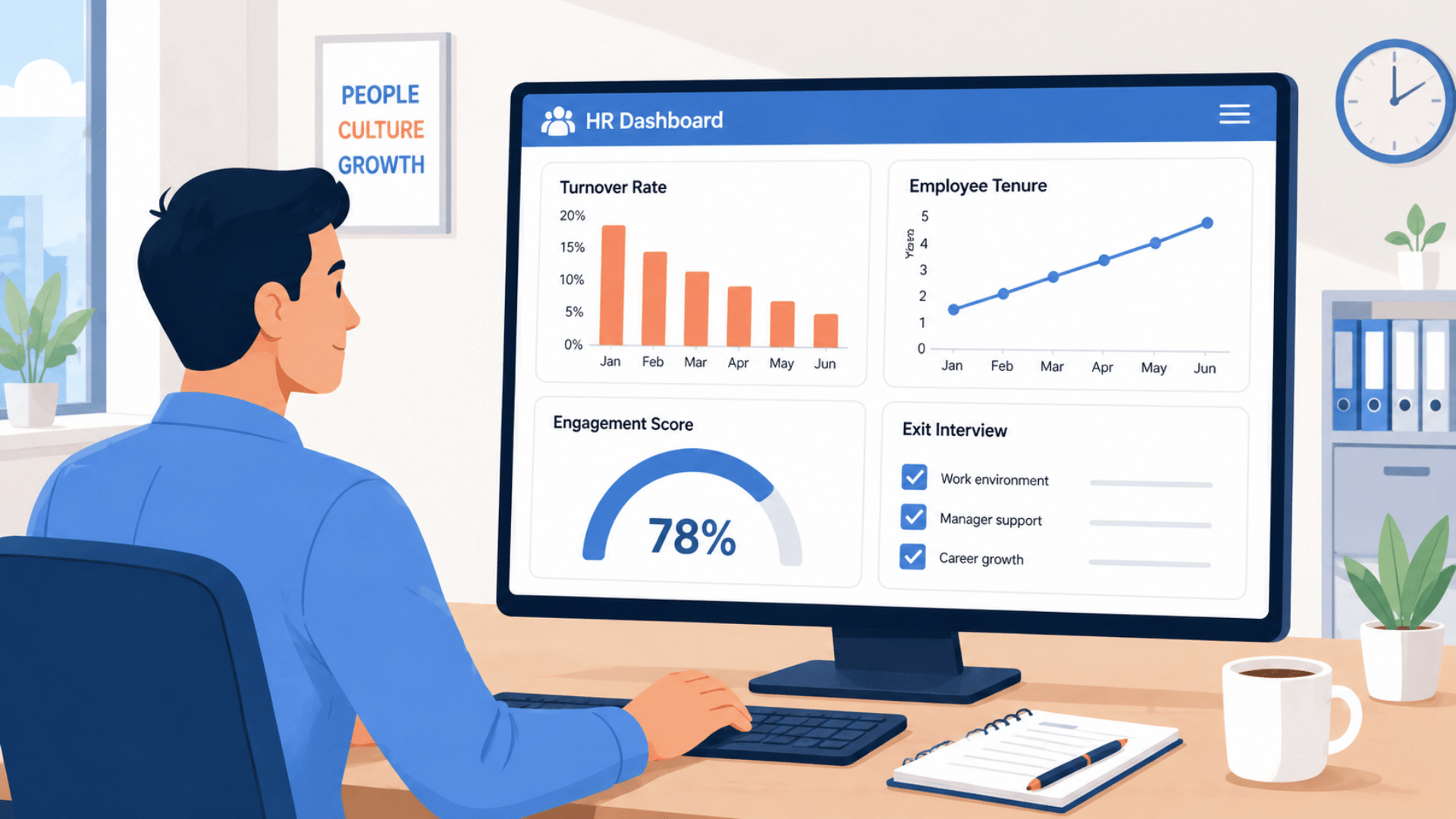
To know if your retention efforts are working, you need clear, consistent measurement.
- Track employee turnover rate to see how often employees leave within a specific period.
- Monitor average tenure by department to identify teams with higher or lower stability.
- Measure employee engagement scores through surveys to gauge morale and satisfaction.
- Review exit-interview patterns to identify recurring reasons employees resign.
- Compare retention rates year-over-year to evaluate long-term progress.
- Calculate cost savings from reduced hiring to understand the financial impact of improved retention.
The Bottom Line
Keeping people isn’t about one big change; it’s about what happens every day at work. Once you understand what employee retention is, the focus shifts from reacting to exits to building reasons to stay.
The most effective employee retention strategies are consistent, simple, and built into how teams operate.
If you’re thinking about how to retain employees, it often comes down to trust, growth, and how valued people feel over time.
When those pieces are in place, retention becomes less of a problem and more of a natural outcome.