

Keeping up with workplace laws can be difficult. HR compliance is not just about following rules; it also helps protect your business, employees, and overall operations.
The challenge is that rules and regulations change often. Missing even a small requirement can lead to problems or extra costs.
This is why having a clear HR compliance checklist is important.
A checklist helps you stay organized and understand what needs to be done. It also makes it easier to avoid mistakes and keep your workplace running properly.
What Is an HR Compliance Checklist?
AnHR compliance checklist is a structured list of all the legal and regulatory requirements your business must follow when managing employees. It covers everything from hiring and payroll to workplace safety and termination procedures.
It helps track legal obligations. Laws vary by location and change frequently. A checklist keeps everything in one place so you’re always aligned with current requirements.
It also prevents fines and lawsuits: Missing something small, like improper documentation or incorrect pay, can quickly turn into a big legal issue.
Finally, compliance is about trust. Employees are more likely to stay when they feel protected and treated fairly.
Key HR Laws and Regulations You Need to Know
These aren’t abstract rules; they’re the reason each step in your HR compliance process exists. Here are the core laws every HR team should be familiar with.
| Law | What It Covers | Who It Applies To | Enforced By |
|---|---|---|---|
| Title VII of the Civil Rights Act (1964) | Prohibits discrimination based on race, color, religion, sex, or national origin | Employers with 15+ employees | EEOC |
| Age Discrimination in Employment Act (ADEA) | Protects workers aged 40+ from age-based discrimination | Employers with 20+ employees | EEOC |
| Fair Credit Reporting Act (FCRA) | Governs background checks and the use of consumer reports | All employers conducting background checks | FTC |
| Fair Labor Standards Act (FLSA) | Sets standards for minimum wage, overtime, and recordkeeping | Most private and public employers | DOL |
| Employee Retirement Income Security Act (ERISA) | Regulates private sector retirement and health benefit plans | Employers offering retirement or health plans | DOL / IRS |
| Affordable Care Act (ACA) | Requires health coverage for full-time employees | Employers with 50+ full-time employees | IRS / HHS |
| Consolidated Omnibus Budget Reconciliation Act (COBRA) | Allows continuation of group health coverage after job loss | Employers with 20+ employees offering group health plans | DOL |
| Occupational Safety and Health Act (OSHA) | Requires a safe and hazard-free workplace | Most private sector employers | OSHA |
| WARN Act | Requires advance notice before mass layoffs or plant closings | Employers with 100+ employees | DOL |
| General Data Protection Regulation (GDPR) | Governs the handling of personal data of EU citizens | Any business handling EU citizen data | EU Data Protection Authorities |
Checklist for Hiring and Onboarding
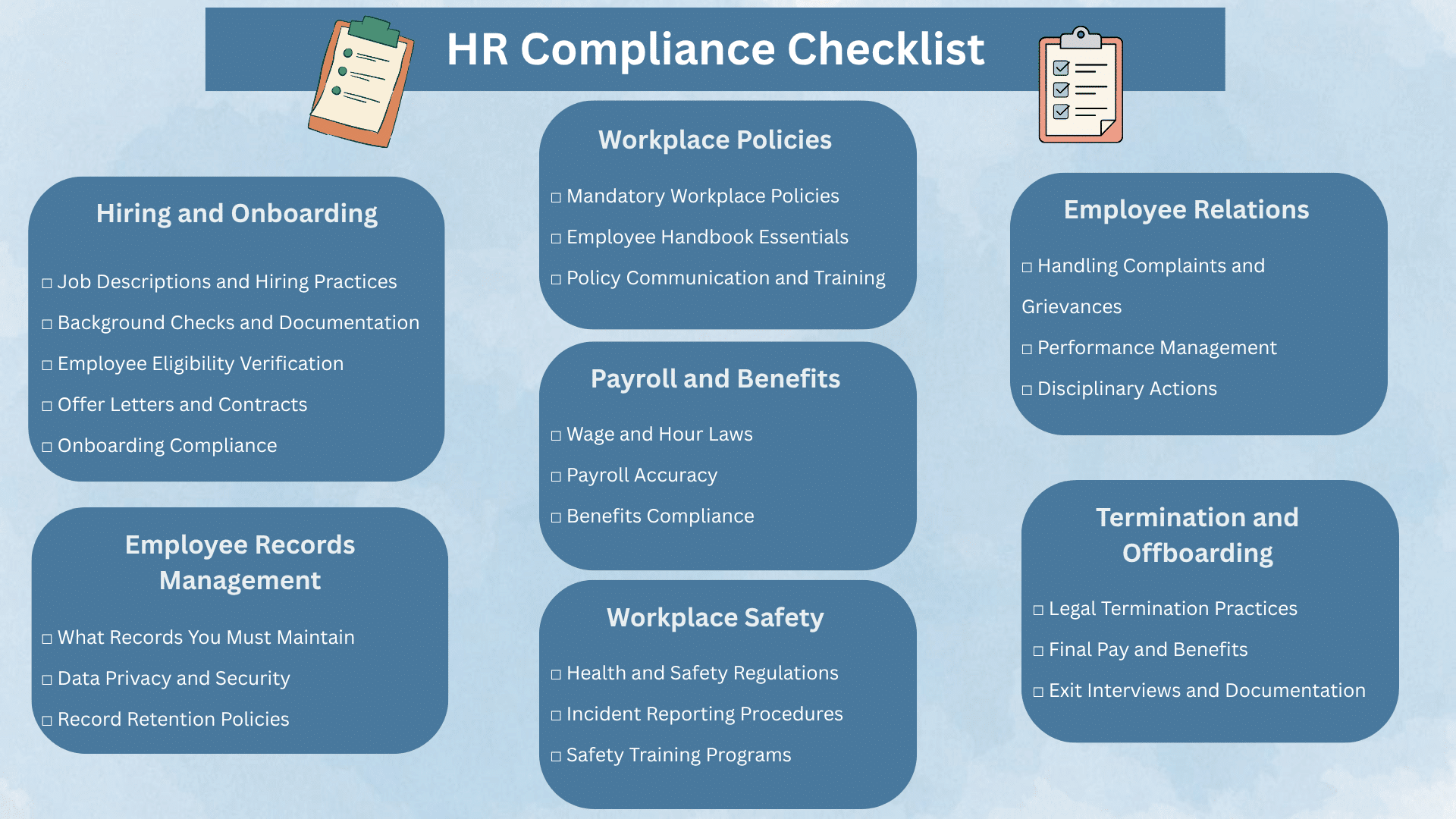
Your hiring process is your first legal touchpoint with every employee. What you ask in interviews, how you run background checks, and what your offer letter says, all of it carries legal weight before a single day of work begins.
Get this foundation right, and everything that follows is easier to manage.
1. Job Descriptions and Hiring Practices
Before you even post a job, make sure your hiring process is fair and legally sound.
- Write clear, accurate job descriptions that reflect actual responsibilities.
- Avoid discriminatory language (age, gender, religion, etc.)
- Follow equal employment opportunity (EEO) guidelines
- Standardize your interview process to reduce bias
2. Background Checks and Documentation
Background checks can be useful, but they come with strict rules.
- Always get written consent before running a background check
- Follow local and federal laws regarding what you can check
- Be consistent. Don’t screen some candidates differently from others
- Keep all documentation secure and confidential
3. Employee Eligibility Verification
You need to confirm that every employee is legally allowed to work.
- Complete required forms (like I-9 in the U.S.)
- Verify identity and work authorization documents
- Store records properly in case of audits
4. Offer Letters and Contracts
Once you’ve chosen a candidate, your offer needs to be clear and compliant.
- Include job role, salary, benefits, and start date
- Define employment terms (full-time, contract, at-will, etc.)
- Add any necessary legal clauses (confidentiality, non-compete if applicable)
5. Onboarding Compliance
Onboarding isn’t just paperwork; it’s your chance to set expectations and stay compliant from day one.
- Provide an employee handbook and get acknowledgment
- Have employees sign required policies (code of conduct, anti-harassment, etc.)
- Set up payroll, tax forms, and benefits enrollment
- Ensure proper classification (employee vs contractor)
Checklist for Employee Records Management
Employee records act as proof, protection, and a legal requirement. Keeping them accurate and organized helps you handle such situations properly.
6. What Records You Must Maintain
You need to keep accurate and up-to-date records for every employee. Having everything documented properly protects both your business and your employees.
- Payroll records: Wages, hours worked, tax deductions, and payment history
- Performance reviews: Evaluations, feedback, and promotion records
- Disciplinary actions: Written warnings, incident reports, and corrective actions
7. Data Privacy and Security
Employee data is sensitive, and mishandling it can result in serious legal consequences.
- Store data in secure systems with restricted access
- Protect both digital and physical records from unauthorized use
- Stay compliant with GDPR or local data protection laws
8. Record Retention Policies
It’s not just about what you keep, but how long you keep it.
- Follow legal guidelines on document retention timelines
- Avoid keeping records longer than necessary
- Use secure disposal methods like shredding or permanent deletion
Checklist for Workplace Policies
Most workplace conflicts don’t start with bad intentions; they start with unclear expectations.
When employees don’t know what’s acceptable, what’s required, or where to go when something goes wrong, problems quietly build until they become expensive ones. Strong workplace policies stop that cycle before it starts.
9. Mandatory Workplace Policies
Every business should have core policies in place to protect employees and maintain compliance.
- Anti-harassment and discrimination policies to ensure a safe work environment
- A clear code of conduct outlining expectations and behavior standards
- Defined leave policies covering sick leave, vacation, and other absences
- A dedicated remote work policy covering equipment reimbursement, data security, working hours, and state or country-specific labor law requirements for employees working outside your primary location
10. Employee Handbook Essentials
Your employee handbook brings all your policies together in one place.
- Keep policies clear, updated, and easy to understand
- Ensure employees can access the handbook anytime
- Regularly review and update it as laws or company practices change
11. Policy Communication and Training
Policies only work if your team actually understands them.
- Conduct regular training sessions on key policies
- Walk employees through updates or changes
- Collect signed acknowledgments to confirm understanding
Checklist for Payroll and Benefits
Nothing erodes employee trust faster than a wrong paycheck. And nothing triggers a regulatory audit faster than a pattern of payroll errors.
Of all the compliance areas on this list, payroll is where mistakes are most visible, most measurable, and most likely to end up in a courtroom. Precision here isn’t optional; it’s the baseline.
12. Wage and Hour Laws
You need to make sure employees are paid correctly and fairly. Getting this wrong can lead to audits, back pay claims, or legal action.
- Follow minimum wage requirements based on your location
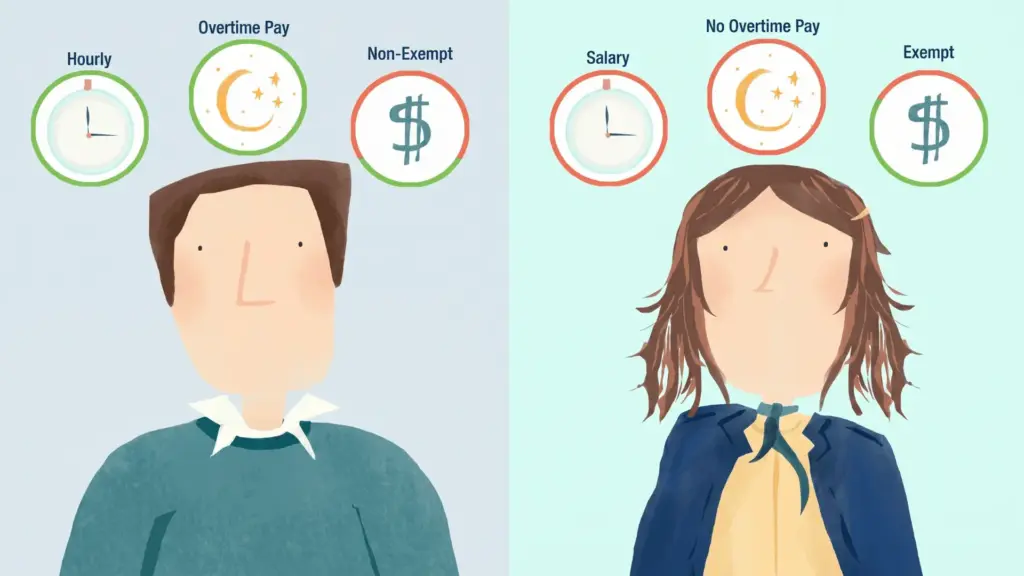
- Apply correct overtime rules for eligible employees
- Track working hours accurately to avoid disputes
- Ensure pay equity across your workforce in compliance with the Equal Pay Act, which requires equal pay for equal work regardless of gender.
- Conduct periodic pay audits to identify and address any unexplained compensation gaps.
13. Payroll Accuracy
Payroll isn’t just about paying employees; it’s about doing it right every time.
- Ensure timely salary payments
- Deduct and report taxes correctly
- Keep detailed payroll records for compliance and audits
14. Benefits Compliance
Employee benefits also come with legal responsibilities.
- Provide required benefits like health insurance or statutory plans
- Clearly communicate benefits, eligibility, and enrollment
Checklist for Workplace Safety
Workplace safety compliance isn’t something you think about after an incident; it’s what prevents the incident from happening in the first place.
OSHA doesn’t wait for patterns; a single uninspected hazard or a missing incident report can trigger an investigation. The checklist below keeps you ahead of it.
15. Health and Safety Regulations
You’re responsible for maintaining a safe working environment.
- Follow OSHA or local workplace safety standards
- Ensure proper equipment, signage, and procedures are in place
- Regularly inspect the workplace for hazards
16. Incident Reporting Procedures
Accidents happen, but how you handle them matters. Proper reporting helps you stay compliant and improve safety over time.
- Document all workplace incidents and injuries
- Follow required reporting timelines
- Maintain clear records for legal and insurance purposes
17. Safety Training Programs
Your team needs to know how to stay safe.
- Conduct regular safety training sessions
- Educate employees on emergency procedures
- Keep records of completed training
Checklist for Employee Relations
How your company handles a complaint, a performance issue, or a disciplinary action tells employees everything about whether they can trust you.
Inconsistency in this area doesn’t just damage morale; it creates legal vulnerability. Every decision about an employee must be fair, documented, and defensible.
18. Handling Complaints and Grievances
Every workplace needs a clear way for employees to raise concerns.
- Set up formal complaint channels that employees can trust
- Investigate issues promptly and confidentially
- Log every interaction
19. Performance Management
Consistent performance management helps avoid bias and legal risk.
- Conduct regular performance reviews
- Provide clear, documented feedback
- Set measurable goals and expectations
20. Disciplinary Actions
Discipline should never be random or emotional; it needs to follow a clear process. This keeps your decisions fair and defensible if issues arise.
- Use consistent disciplinary procedures across all employees
- Maintain a paper trail of warnings, actions, and outcomes
- Give employees a chance to improve before escalation
Checklist for Termination and Offboarding
The way a company ends a working relationship says as much about its culture as the way it begins one. Beyond the reputational stakes, termination is one of the most legally scrutinized HR actions.
One inconsistent decision, one missing document, or one delayed final paycheck can undo months of otherwise solid compliance work.
21. Legal Termination Practices
You need to follow proper procedures when ending employment.
- Avoid wrongful termination by following legal guidelines
- Ensure decisions are based on written performance or behavior
- Apply policies consistently across all employees
22. Final Pay and Benefits
Your obligations don’t end when employment does. This step is often legally regulated, so timing matters.
- Provide final paycheck on time based on legal requirements
- Handle unused leave or benefits correctly
- Inform employees about benefit continuation options
23. Exit Interviews and Documentation
Offboarding is also a learning opportunity. A smooth offboarding process leaves a better final impression and keeps your records clean.
- Conduct exit interviews to gather honest feedback
- Document the reason for termination or resignation
- Maintain records for future reference or audits
How to Maintain Your HR Compliance Checklist
Creating a checklist is one thing; keeping it up to date and effective is another. Compliance is an ongoing process, not a one-time task.
- Conduct regular HR audits (quarterly or annually) to catch compliance gaps early
- Review hiring, payroll, and workplace policies consistently
- Update your checklist whenever laws or regulations change
- Use HR software to automate tracking, reminders, and record management
- Keep employee data organized and easily accessible for audits
- Stay informed by following labor law updates and HR best practices
- Train managers and employees regularly on compliance policies
- Document everything, updates, actions, and decisions
- Consult legal or HR experts when dealing with complex compliance issues
Conclusion
HR compliance covers a lot of ground: hiring, records, payroll, safety, employee relations, and offboarding.
Each area has its own requirements, and staying on top of them all takes consistent effort.
But with a clear checklist in place, it becomes much more manageable. You know what needs to be done, when to do it, and how to document it properly. That consistency is what protects your business and builds trust with your employees over time.
Bookmark this checklist, share it with your HR team, and revisit it every time regulations change or your business grows. Compliance isn’t a one-time task; with the right tools, it’s manageable.
Frequently Asked Questions
Can a Small Business with Fewer than 15 Employees Skip HR Compliance?
No, while some federal laws only apply above certain employee thresholds, most state and local labor laws apply regardless of business size. Every business that has employees has compliance obligations.
Is HR Compliance Different for Contract Workers versus Full-Time Employees?
Yes, contract workers are not entitled to the same benefits, tax withholdings, or legal protections as full-time employees.
How Often Should HR Policies Be Updated?
Policies should be reviewed annually, and any time a relevant law changes, a policy must be updated immediately. Waiting for the annual review when a regulation has already changed puts your business at risk.