
Most people know when payday is. But very few stop to ask how long a pay period is and why it even matters.
The frequency of a paycheck, weekly, bi-weekly, or monthly, plays a bigger role than most people think. It shapes how businesses run payroll and how individuals plan their spending.
For employers, it affects wage calculations and tax filings. For employees, it controls everything from rent payments to savings goals.
Getting familiar with the different types of pay schedules helps both sides make smarter financial decisions and stay ahead of money problems before they start.
What Is a Pay Period?
A pay period is the timeframe for which employees are paid, and how long is a pay period can vary.
The Fair Labor Standards Act (FLSA) does not mandate a specific pay frequency. Instead, pay frequency requirements are determined by individual state laws.
For instance, states like California, New York, and Texas have specific laws governing pay frequency.
The pay period is the span for which an employee is paid, while the pay date is when the paycheck is issued. The payroll cycle is the frequency with which a company processes payroll.
Under federal law, a workweek is 168 hours (seven 24-hour periods), which affects how overtime and wages are calculated for the pay period.
Types of Pay Periods: How Long Is Each One?
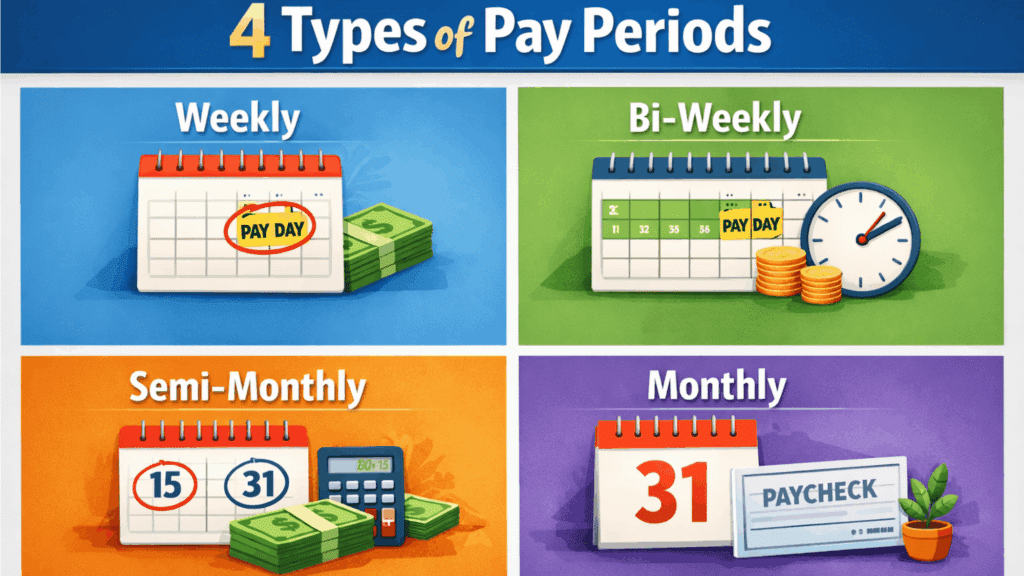
When it comes to managing payroll, understanding the different types of pay periods is crucial for both employers and employees.
1. Weekly Pay Period
- Definition: Employees are paid every 7 days.
- How it Works: Paychecks are issued once a week, totaling 52 per year.
- Duration: It starts on a fixed day of the week (e.g., every Monday) and ends 7 days later.
- Industries: This pay period is common in construction, hospitality, and other industries, including hourly work.
2. Bi-Weekly Pay Period
- Definition: Employees are paid every two weeks.
- How it Works: Paychecks are issued on a fixed day every other week, resulting in 26 paychecks annually.
- Duration: This period starts on a specific day (e.g., every other Friday) and lasts 14 days.
- Industries: Bi-weekly pay is the most common in the U.S. and is used across sectors such as retail, healthcare, and government.
3. Bi-Monthly (Semi-Monthly) Pay Period
- Definition: Employees are paid twice a month, typically on fixed dates such as the 1st and 15th.
- How it Works: Paychecks are issued twice a month, totaling 24 per year.
- Duration: Each period is based on calendar dates rather than a specific weekday.
- Industries: Semi-monthly pay periods are often used for salaried employees, especially in administrative, managerial, and professional roles.
4. Monthly Pay Period
- Definition: Employees are paid once a month.
- How it Works: One paycheck is issued each month, with 12 paychecks per year.
- Duration: The period runs from one specific date to the same date the following month (e.g., the 1st of each month).
- Industries: Monthly pay periods are less common in the U.S. but are more prevalent internationally and often used for senior-level or executive positions.
Pay Period and Pay Date: Know the Difference
Understanding the difference between a pay period and a pay date is essential for both employees and employers to manage payroll accurately. Here’s a comparison to clarify how each one works.
| Aspect | Pay Period | Pay Date |
|---|---|---|
| Definition | The time frame for which an employee is paid for their work. | The actual date on which the employee receives their paycheck. |
| Frequency | Can be weekly, bi-weekly, semi-monthly, or monthly. | Typically occurs on a set date (e.g., every 15th or 30th of the month). |
| Impact on Payroll | Determines how often an employee earns wages. | The day the payroll is processed, and payments are made. |
| Example | From the 1st to the 15th of each month (semi-monthly). | Employees get paid on the 15th of the month. |
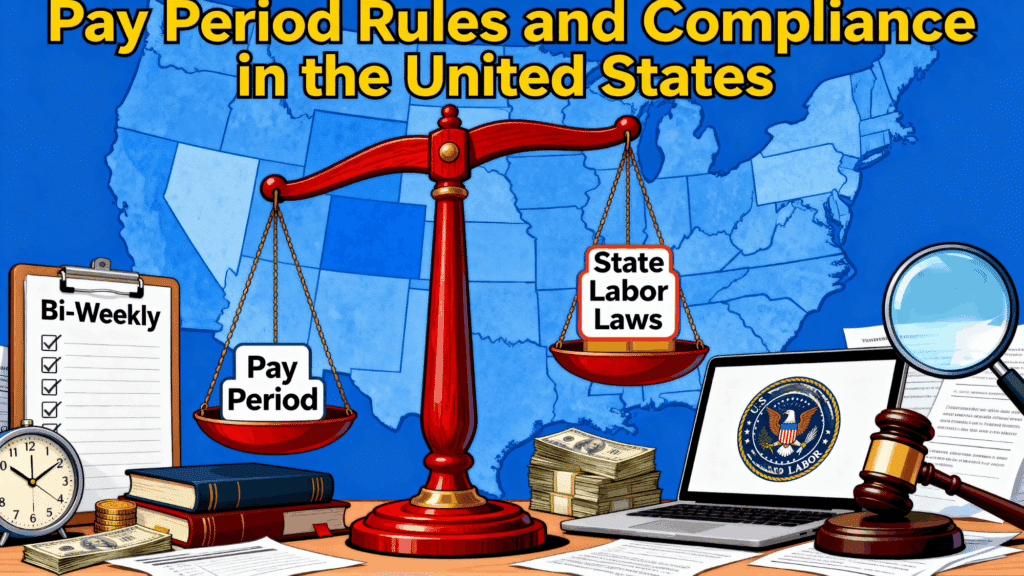
Pay Period Rules and Compliance in the United States
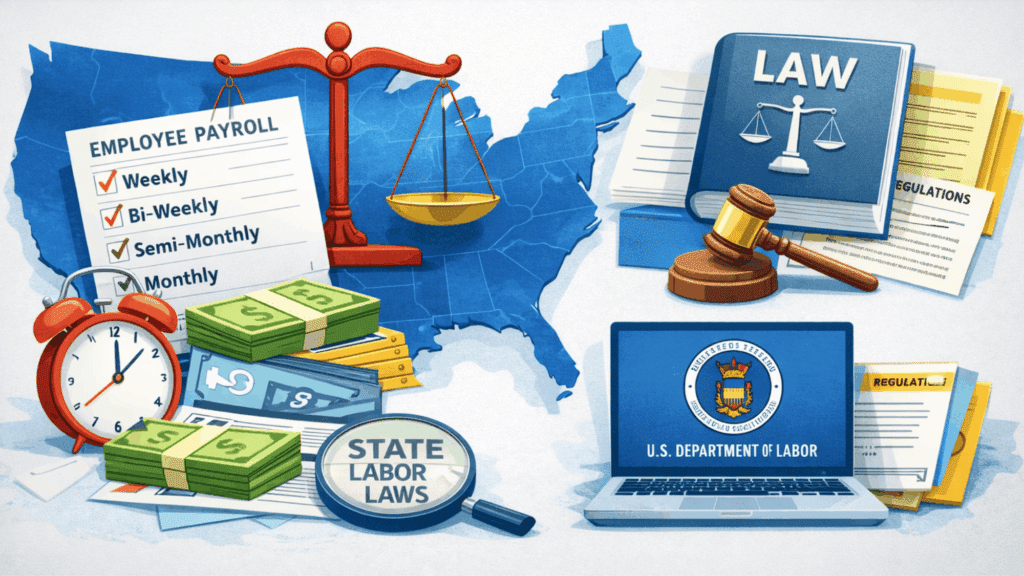
Pay period rules and compliance in the United States are essential to ensure that employees are paid fairly and on time.
1. Federal Requirements (FLSA)
Although there is no federal mandate specifying how long a pay period is, The FLSA requires that wages be paid on a regular, predetermined schedule.
Employers must ensure employees receive their pay consistently, whether weekly, biweekly, or monthly.
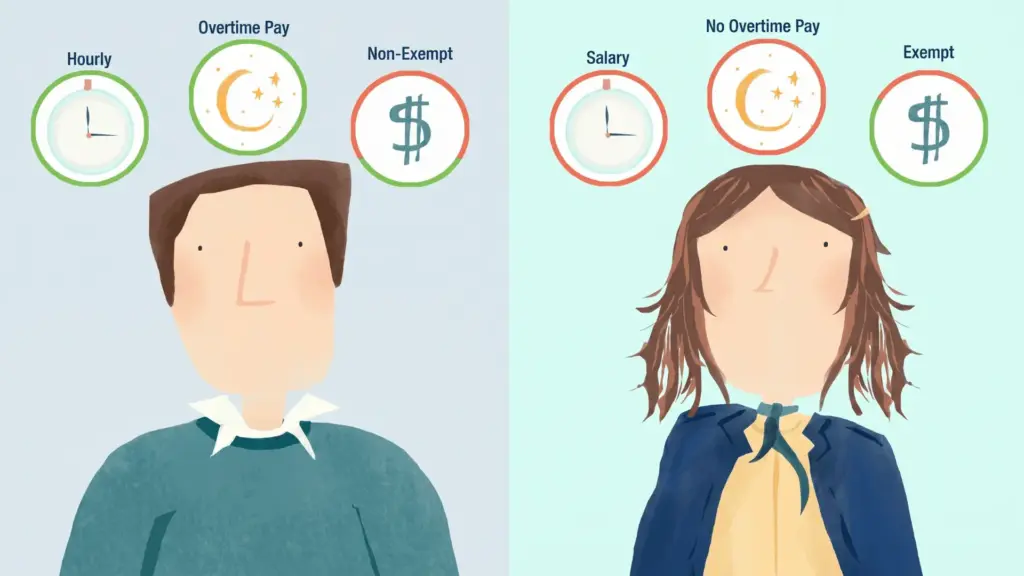
Additionally, must be calculated based on the workweek, not the pay period, meaning that the workweek plays a key role in determining overtime pay.
Example: If an employee works 45 hours in one workweek within a bi-weekly pay period, they are owed 5 hours of overtime even if total hours across the two-week pay period average 40.
2. State-Specific Pay Frequency Laws(state laws)
Each state has its own payday laws that regulate the length of the pay period and the frequency of pay. For example:
- California: Requires semi-monthly or more frequent pay periods for most employees.
- New York: Allows different pay frequencies by industry, with weekly and biweekly being the most common.
- Illinois: Mandates semi-monthly pay periods.
- Texas: Offers more flexibility but still requires regular pay periods.
- Florida: Doesn’t have specific pay frequency laws, but ensures that pay periods are consistent.
To find your state’s payday laws, visit the U.S. Department of Labor’s website for detailed state payday requirements.
3. Penalties for Non-Compliance
Employers who fail to comply with pay period regulations may face penalties for late payments or violations of employee rights.
Late payments can result in fines, and employees may be entitled to recover unpaid wages.
The Wage and Hour Division (WHD) of the U.S. Department of Labor is responsible for enforcing these laws and investigating complaints related to wage violations, ensuring fair pay practices across the country.
4. Direct Deposit & Payday Laws
Payday laws vary across states, with some enforcing strict rules on the timing of paycheck delivery, while others leave it more flexible. Final paycheck rules also vary by state.
Some states require employers to pay final wages within a specified time frame, while others allow a longer period to issue the final paycheck.
Additionally, direct deposit is becoming increasingly common. Many states allow employers to offer it as the primary payment method, but employees must agree to this arrangement in writing.
Late payments can result in fines, and employees may be entitled to recover unpaid wages.
Real Case Studies: How Different Companies Use Pay Periods
Let’s take a look at real case studies to understand how different companies use pay periods and how their approaches impact both employees and business operations.
1. Let Them Name Their Salary
We started with 12 part-timers and now have 75 people. Our approach is unique: we don’t recruit; we let people come to us. Regarding compensation, we set a minimum of $15/hour, but people generally expect to be paid because they see our success. When discussing pay, we ask individuals how much they think they’re worth and need. If their requested rate is too high, we offer partial pay and ask them to justify the value, with the possibility of increasing it later if proven.
2. Pay Extra for Continuity
During the pandemic, we had to recruit for hundreds of new positions and introduced an attendance bonus of $3/hour for those who worked all their hours. To compete with unemployment benefits, we raised wages by over 20% in some roles. We also offered stay bonuses of up to $1,500 and implemented a new attendance policy that allows employees to earn paid personal time. Despite filling all positions, the market remains challenging, and managing schedules has become a key focus to ensure reliability.
3. Innovate for the New World
We’ve updated our outdated compensation models to create a U.S.-wide salary band, basing pay on the role rather than location. This approach offers flexibility, allowing employees to live and work wherever they choose. Similarly, in Europe, we’re transitioning to a single European Union salary band, enabling employees to live in places like Spain while earning a London salary. We’re also addressing new challenges, like global warming, by considering factors like air conditioning, which affects productivity in certain regions.
Source of All Cases: SHRM
How to Choose the Right Pay Period for Your Company?
The choice of pay period is influenced by company size and employee needs.
Smaller businesses may opt for weekly pay periods to ensure regular cash flow, while larger organizations may use bi-weekly or semi-monthly pay periods to improve payroll administration efficiency.
The impact on payroll administration includes the complexity and frequency of processing, which can affect resources and costs.
Additionally, employee satisfaction is influenced by how pay periods align with financial needs. Legal requirements, including state-specific labor laws, must also be considered.
Wrapping It Up
So How long is a pay period? It can vary from weekly (7 days) to monthly (30–31 days), with bi-weekly and semi-monthly being the most common in the U.S.
The best pay period should align with employee needs, business cash flow, and state legal requirements.
To ensure compliance and optimal payroll management, consult an HR professional or payroll specialist to evaluate what works best for your organization.