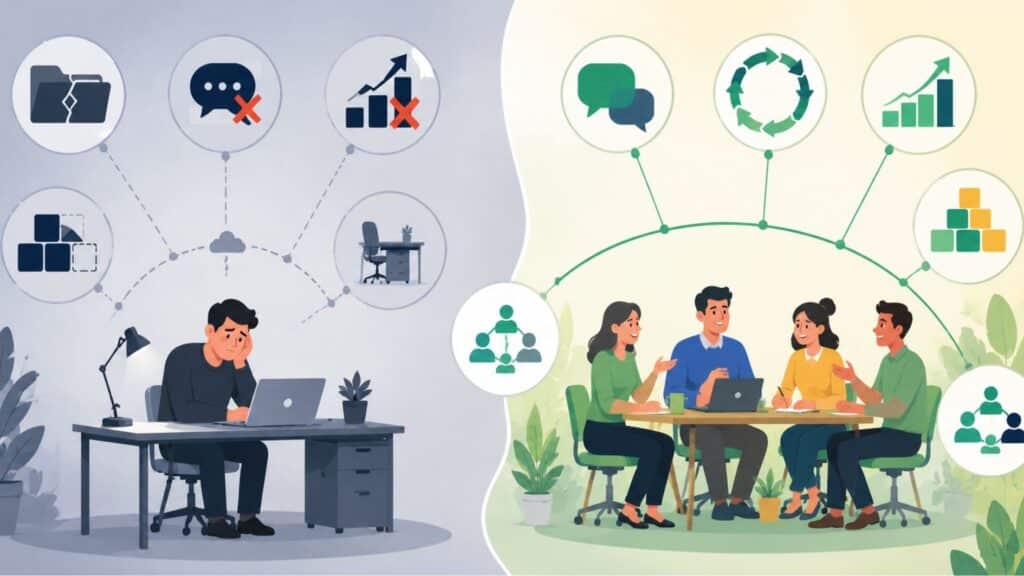
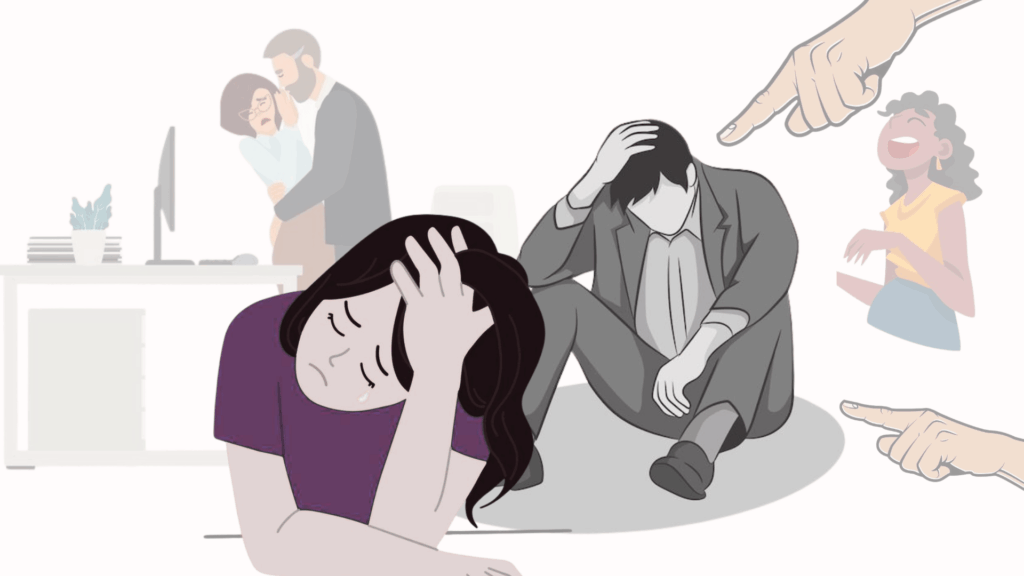

A respectful workplace should feel predictable and safe, yet many employees in the United States still report behavior that crosses personal and professional limits.
The types of harassment in workplace settings often start quietly, through remarks, pressure, or actions that gradually create discomfort.
Recent surveys show that about 24% of employees have faced harassment in the past five years, and 46% have seen it happen to someone else.
These numbers reveal how widespread the issue remains across industries.
What Is Harassment?
Harassment refers to behavior that creates tension, discomfort, or pressure for an individual at work.
It includes actions, comments, or conduct that interfere with a person’s ability to perform their duties or feel safe in the workplace.
Harassment can happen through words, gestures, digital communication, or physical actions.
It may occur as a single severe incident or through repeated behavior that wears down a person’s sense of security.
Workplace standards consider conduct to be harassment when it affects someone’s dignity, targets personal characteristics, disrupts work conditions, or contributes to a hostile environment.
Forms of Harassment
Harassment can appear in several forms, and each affects the workplace in different ways.
These forms show how harassment appears through actions, words, or digital communication. They include verbal, physical, visual, digital, and repeated behaviors that create discomfort, pressure, or an unsafe environment for employees.
Understanding these categories makes it easier to recognize conduct that crosses professional boundaries and creates an unsafe environment.
|
Verbal conduct:
|
|
Physical conduct
|
|
Visual or written conduct
|
|
Digital or online conduct
|
|
Single or repeated behavior One severe incident or ongoing conduct that disrupts safety or creates tension at work. |
9 Common Types of Harassment
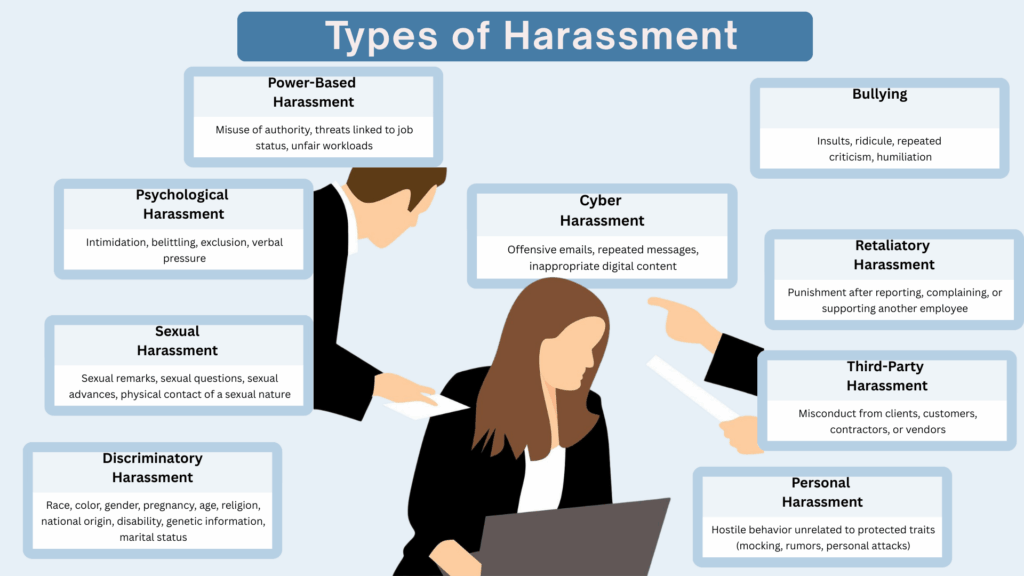
Harassment can take many forms, and each type affects the workplace differently.
The list below outlines the most common categories employees may encounter across various work settings:
1. Discriminatory Harassment
Discriminatory harassment involves behavior targeting protected traits such as race, color, gender, religion, national origin, disability, age, marital status, pregnancy, or genetic information.
It includes comments, actions, or patterns that create tension or discomfort for the affected person.
This form of harassment disrupts fairness in the workplace and interferes with equal access to opportunities, respect, and safe working conditions.
2. Sexual Harassment
Sexual harassment includes unwanted sexual comments, gestures, messages, or actions that interfere with comfort or work conditions.
It may involve requests for sexual favors, inappropriate remarks, or physical contact.
This type of conduct can occur in person or through digital platforms.
It affects a person’s sense of safety, disrupts concentration, and creates an uncomfortable work atmosphere.
3. Psychological Harassment
Psychological harassment involves repeated behavior that causes emotional strain, discomfort, or intimidation.
This may include ongoing criticism, isolation, insults, or attempts to undermine someone’s confidence.
Even without physical contact, the conduct affects mental well-being and work performance.
It often develops slowly, making it difficult for employees to identify early, but its long-term effects can be significant.
4. Power-Based Harassment
Power-based harassment occurs when someone in a position of authority misuses that power to pressure, intimidate, or mistreat an employee.
This may include unfair assignments, controlling behavior, threats, or public criticism.
The imbalance of authority makes it difficult for the employee to respond or report the issue.
Over time, this behavior reduces morale, confidence, and overall workplace comfort.
5. Bullying
Bullying includes repeated hostile actions intended to embarrass, insult, or undermine a person.
It may involve verbal remarks, exclusion, spreading false information, or constant fault-finding.
While not always linked to protected traits, bullying still affects an employee’s well-being and sense of security.
The ongoing nature of the behavior can create a stressful working environment, impacting productivity.
6. Retaliatory Harassment
Retaliatory harassment occurs when someone is treated poorly after reporting an issue, supporting a colleague, or participating in an investigation.
The behavior may include reduced opportunities, hostility, exclusion, or unfair criticism.
This type of conduct discourages individuals from speaking up when problems occur. It weakens trust in workplace systems and creates fear around reporting future concerns.
7. Cyber Harassment
Cyber harassment includes unwanted messages, offensive jokes, repeated contact, or inappropriate content sent through email, messaging platforms, or social media.
The digital nature of the behavior allows it to continue outside work hours, affecting an employee’s ability to disconnect.
Cyber harassment disrupts comfort, creates tension, and can spread quickly across communication channels.
8. Third-Party Harassment
Third-party harassment comes from individuals who are not direct employees, such as customers, clients, vendors, or contractors.
It includes verbal remarks, inappropriate requests, aggressive behavior, or actions that impact staff members’ comfort and safety.
Even though the conduct originates externally, it still affects the workplace environment. Employers play a role in reviewing incidents and supporting affected employees.
9. Personal Harassment
Personal harassment involves hostile actions or remarks that are not connected to protected traits but still cause discomfort or stress.
Examples include insults, mocking, rumors, or repeated criticism. Although it may not violate discrimination laws, this behavior disrupts a respectful workplace and reduces morale.
Over time, it creates an unhealthy environment that affects performance and well-being.
To learn more about your options when workplace conduct affects your well-being, read our post: “Can I Sue My Employer for Emotional Distress? Know Rights”
Insights From Real Workplace Experiences
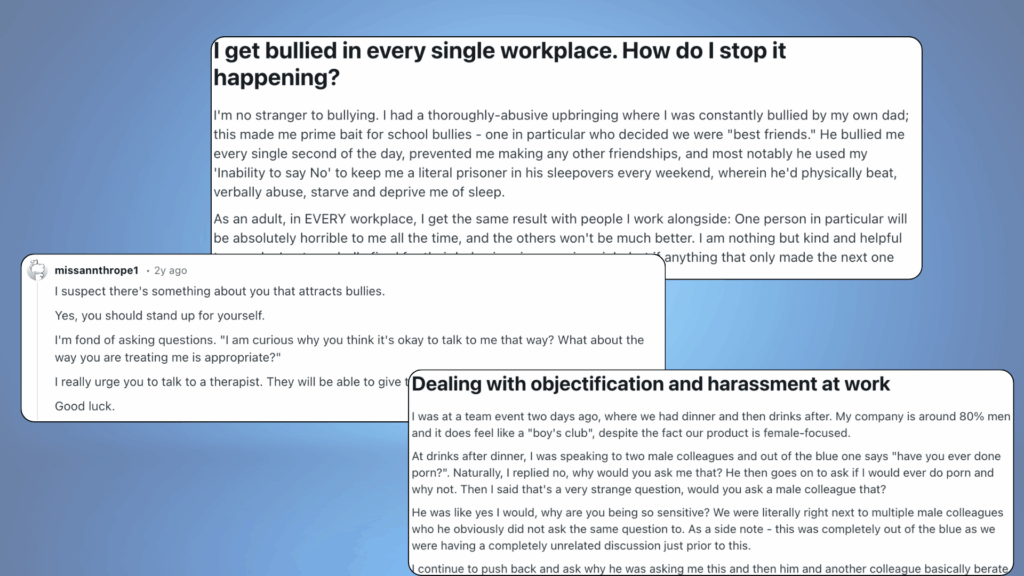
Many Reddit users shared experiences of inappropriate comments, exclusion, or repeated criticism from colleagues.
Some described harassment during team events, while others talked about long-term bullying across multiple jobs.
The discussions showed how workplace culture, lack of oversight, and power imbalances often shape these situations.
They also highlighted the emotional impact, especially when employees feel isolated or unable to report concerns safely.
Common themes observed:
- Colleagues making inappropriate or objectifying remarks in group settings.
- Repeated bullying aimed at individuals who seem quiet, unsure, or withdrawn.
- Public criticism used to embarrass or control someone.
- Difficulty reporting issues when offenders have influence or senior connections.
- Emotional strain that appears after the incident, not always in the moment.
- The importance of clear boundaries and documented incidents for personal protection.
Key Statistics on Workplace Harassment Charges
Recent federal data highlights how often employees file harassment-related complaints and the patterns seen across different types of workplace misconduct.
| Category | Number of Charges | Time Period |
|---|---|---|
| Total Harassment Charges | 98,411 | 2018–2021 |
| Sexual Harassment Charges | 27,291 | 2018–2021 |
| Retaliation Charges (All Bases) | 56% of all charges | FY 2021 |
| Discrimination-Related Charges (race, sex, disability, national origin, religion, age, genetic information) | 61,331 | 2018–2021 |
| State-Level Sexual Harassment Increases | Reported in multiple states | FY 2021 |
Source:U.S. Equal Employment Opportunity Commission (EEOC)
Creating a Safe Work Environment
This section outlines key legal protections and practical steps that help employees address harassment concerns and access the support they need:
- Legal protections: Federal and state laws require fair treatment, clear conduct standards, and timely investigations.
- Accessible policies: Employers must provide reporting procedures on the official website or internal portal.
- Documentation: Employees can keep written records of incidents, dates, conversations, and saved messages.
- Confidential reporting: HR, supervisors, and online forms provide discreet channels for reporting when concerns arise.
- Reliable resources: Government websites and workplace policy pages provide information about rights and available support.
- Seeking help: Contacting HR, a trusted manager, or a legal support service can help address issues safely and promptly.
To know more also read: Hostile Environment Harassment: Legal Rights and Protections
End Notes
Workplace behavior carries real influence on comfort, confidence, and daily performance.
Looking at the many types of harassment shows how easily a comment, action, or pattern can shift an environment from supportive to stressful.
From verbal conduct and discriminatory behavior to retaliation and cyber misconduct, each form affects employees differently and requires clear steps from both individuals and employers.
Statistics show how internal issues turn into formal charges, emphasizing prevention and accountability. Awareness, quick response, and solid policies promote safer environments where concerns are addressed.
If you’ve faced similar situations or have advice that helped you, feel free to share your experience or thoughts below.