
Conflict is something every professional will face, no matter the industry, the role, or the size of the team. It shows up in meetings, in group projects, between colleagues, and sometimes between entire departments.
And while most people know how to recognize conflict when it happens, very few actually know how to handle it in a way that moves things forward rather than making them worse.
That is where conflict management skills become truly valuable. Understanding them clearly is the first step toward handling conflict with real confidence.
What Are Conflict Management Skills and Why Are They Important?
These are the abilities that help people handle disagreements calmly, respectfully, and productively.
These skills include active listening, clear communication, emotional control, empathy, and problem-solving.
Differences in opinions, responsibilities, deadlines, and work styles can easily lead to misunderstandings if not handled properly.
Strong executive education helps prevent small issues from becoming bigger problems. They also improve teamwork, reduce stress, and create a work environment where people feel heard and respected.
It is not about avoiding disagreements or proving who is right. It is about resolving issues fairly, maintaining trust, and finding solutions that support better working relationships.
Essential Conflict Management Skills
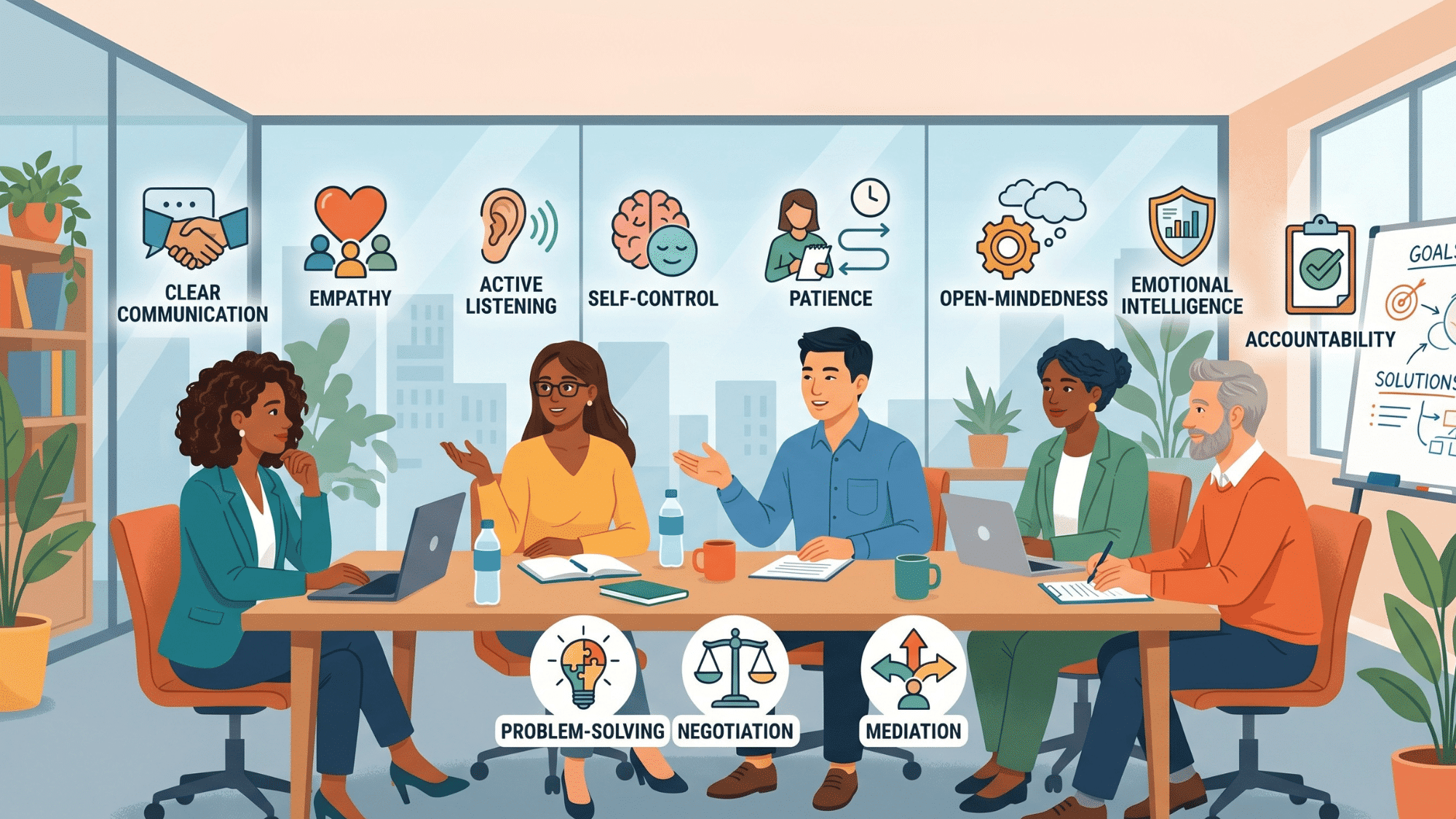
Essential skills help professionals handle disagreements calmly, communicate clearly, and find solutions that support stronger workplace relationships.
1. Active Listening
Active listening is one of the most important conflict management skills for leaders because it helps them fully understand different perspectives before responding.
It means giving your full attention to the other person instead of simply waiting for your turn to speak.
This skill includes maintaining eye contact, avoiding distractions, asking thoughtful questions, and summarizing what the other person has said.
2. Emotional Intelligence
Emotional intelligence is the ability to recognize, understand, and manage emotions, both your own and others’. In conflict situations, emotions can quickly influence words, tone, and behavior.
Emotional intelligence also helps you understand how the other person might be feeling. This does not mean you have to agree with them, but it allows you to respond with awareness instead of judgment.
In the workplace, emotional intelligence can prevent disagreements from turning into personal conflicts.
3. Clear Communication
Clear communication helps prevent confusion during conflict. When people speak vaguely, use blame, or make assumptions, the issue can become harder to resolve.
Clear communication focuses on facts, specific examples, and the impact of the issue. It also involves using a calm tone and choosing words carefully.
This skill makes it easier for both sides to understand the problem and discuss possible solutions without unnecessary tension.
4. Empathy
Empathy is the ability to understand another person’s feelings, experiences, or point of view. It plays a major role because disagreements often become worse when people feel dismissed or misunderstood.
Showing empathy does not mean accepting unfair behavior or giving up your own position. It means acknowledging the other person’s experience.
5. Patience
Conflict resolution often takes time. People may need space to explain their views, process emotions, and consider different solutions. Patience helps you avoid rushing the conversation or forcing an immediate answer.
In professional settings, patience shows maturity. It helps maintain respect and gives both sides a better chance of reaching a thoughtful resolution.
6. Problem-Solving
Problem-solving shifts the focus from blame to action. Instead of spending too much time arguing about who caused the conflict, this skill helps people identify what needs to change.
A strong problem-solving approach includes understanding the root cause, discussing possible options, comparing outcomes, and agreeing on practical next steps.
For example, if two team members disagree about responsibilities, the solution may involve clarifying roles, updating deadlines, or improving communication channels.
7. Negotiation
Negotiation is the ability to find a fair agreement when people have different needs, preferences, or priorities. Negotiation helps both sides move toward a solution they can accept.
Good negotiation is not about one person winning and the other losing. It is about finding common ground. This may involve compromise, flexibility, or adjusting expectations.
8. Self-Control
Self-control is the ability to manage your reactions during stressful or emotional conversations. It helps you stay professional when you feel angry, criticized, or misunderstood.
In conflict, a lack of self-control can lead to raised voices, harsh words, sarcasm, or body language that worsens the situation. Once a conversation becomes hostile, it becomes harder to solve the actual problem.
9. Open-Mindedness
Open-mindedness means being willing to consider different ideas, opinions, and solutions. During conflict, people often become fixed in their own position. This can make resolution difficult.
This skill helps teams find better solutions by allowing room for new information. Sometimes, a conflict exists because each person has only part of the picture.
10. Accountability
Accountability is the willingness to take responsibility for your actions, words, or role in a conflict. It is a key skill because many disagreements become worse when people deny mistakes or shift blame.
Taking accountability might involve admitting a misunderstanding, apologizing for poor communication, or correcting an error. For example, saying, “I should have shared that update earlier,” can help rebuild trust.
In the workplace, accountability creates credibility. It shows others that you are serious about resolving the issue, not just ending the conversation.
11. Mediation
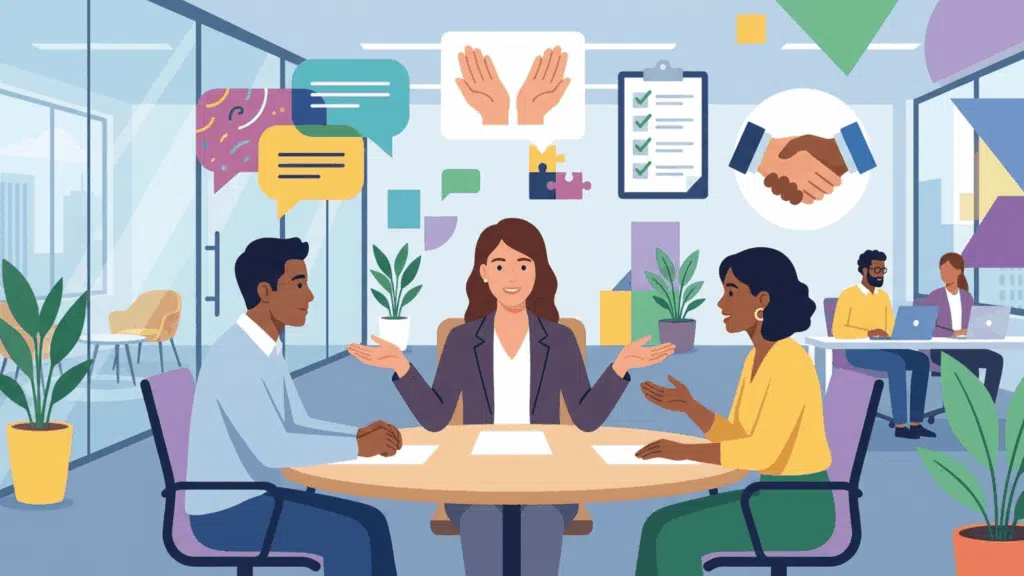
Mediation is useful when a conflict cannot be resolved directly between the people involved. It involves a neutral third party who helps guide the conversation and support a fair resolution.
A mediator may be a manager, an HR professional, a team lead, or a trained facilitator. Their role is not to take sides, but to help each person explain their concerns, identify the main issue, and agree on next steps.
Executive Education for Better Conflict Management
Executive training and conflict management skills training give managers and team leaders practical tools to handle difficult conversations, reduce workplace tension, and guide teams toward productive solutions
- Builds stronger communication skills: Helps leaders express expectations clearly and listen more effectively.
- Improves emotional control: Trains executives to remain calm in stressful, high-pressure situations.
- Strengthens decision-making: Supports fair, balanced decisions during team disagreements.
- Develops negotiation skills: Helps leaders find solutions that meet business goals and employee needs.
- Encouragement: It promotes stronger team relationships by fostering a more respectful, collaborative, and positive work environment.
Real Tips for HR Professionals and Team Leaders
HR professionals and team leaders play an important role in preventing workplace conflict from becoming bigger issues. The tips below are based on guidance from trusted workplace, HR, and leadership sources.
Assess serious conflict risks: OSHA states that workplace violence includes threats, harassment, intimidation, verbal abuse, and physical violence. Leaders should take warning signs seriously and include prevention steps in workplace policies when needed.
Keep policies clear and practical: EEOC guidance recommends written, plain-language anti-retaliation policies with practical examples of what managers should and should not do.
Create agreed procedures for disagreements: The Health and Safety Executive advises employers to have agreed processes in place to deal with disagreements and use those procedures wherever possible.
Protect employees from retaliation: The U.S. Equal Employment Opportunity Commission explains that retaliation can include punishment, threats, verbal abuse, increased scrutiny, or making someone’s work more difficult after they raise a protected concern. HR should ensure employees can report issues without fear.
Conflict Management and Conflict Resolution: Key Differences
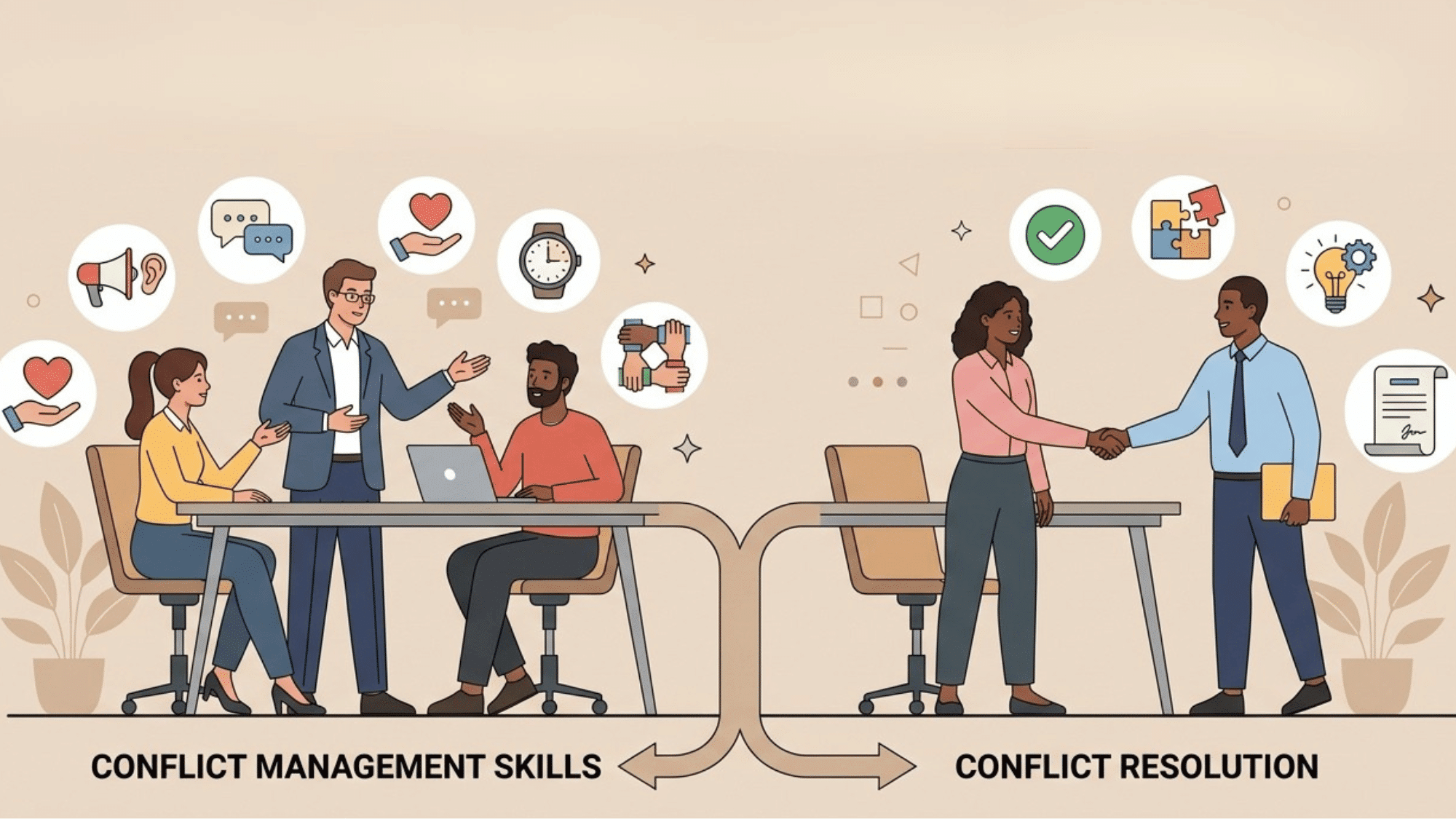
Conflict management skills and prevention of conflict are closely connected, but they serve different purposes in the workplace.
| Aspect | Conflict Management | Conflict Resolution |
|---|---|---|
| Meaning | Focuses on handling conflict in a healthy and controlled way. | Focuses on finding a final solution to end the conflict. |
| Main Goal | Reduce tension, improve communication, and prevent the issue from getting worse. | Solve the problem and reach an agreement. |
| Approach | An ongoing process for managing disagreements as they arise. | Usually used when a specific conflict needs to be settled. |
| Focus | Maintains relationships and keeps the work environment positive. | Removes the cause of the disagreement. |
| Best Used When | The conflict is complex, repeated, or cannot be solved immediately. | The issue is clear, and both sides are ready to agree on a solution. |
| Example | A manager helps two employees communicate better during an ongoing project. | Two employees agree on how to divide tasks to avoid future confusion. |
The Bottom Line
Conflict is never completely avoidable, and trying to eliminate it entirely is not the goal.
The goal is to handle it in a way that protects relationships, maintains trust, and keeps teams moving in the right direction even when things get difficult.
Conflict will always be a part of professional life, but with the right skills, it no longer has to feel like something to fear or avoid.
Start building those skills today and take the first step toward becoming the kind of professional every team genuinely needs.
Have you ever handled a difficult workplace conflict? Share your experience or thoughts in the comments below.
Frequently Asked Questions
What Should HR Do When Conflict Involves Serious Risks?
HR should take warning signs seriously, follow workplace policies, protect employees from retaliation, and use agreed procedures to handle serious concerns.
Why Should Conflict Not Be Ignored?
Ignoring conflict can allow small misunderstandings to grow into bigger problems that affect trust, morale, productivity, and team relationships.
How Can Managers Stop Conflict from Becoming Personal?
Managers can keep the discussion focused on facts, behavior, impact, and solutions instead of allowing blame, sarcasm, or emotional reactions to take over.